Catedral de Sal de Zipaquira: Colombia’s underground salt cathedral
Published on 08/06/2026 at 22:29 | Editorial responsibility: Rafael Müller, Editor-in-Chief AD HOC NEWS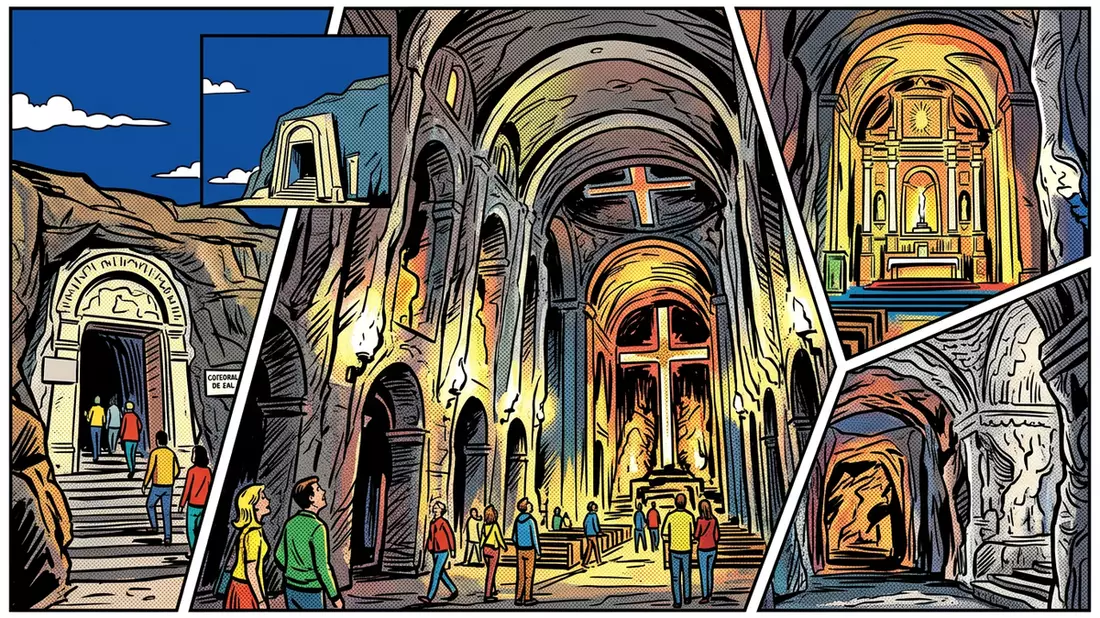
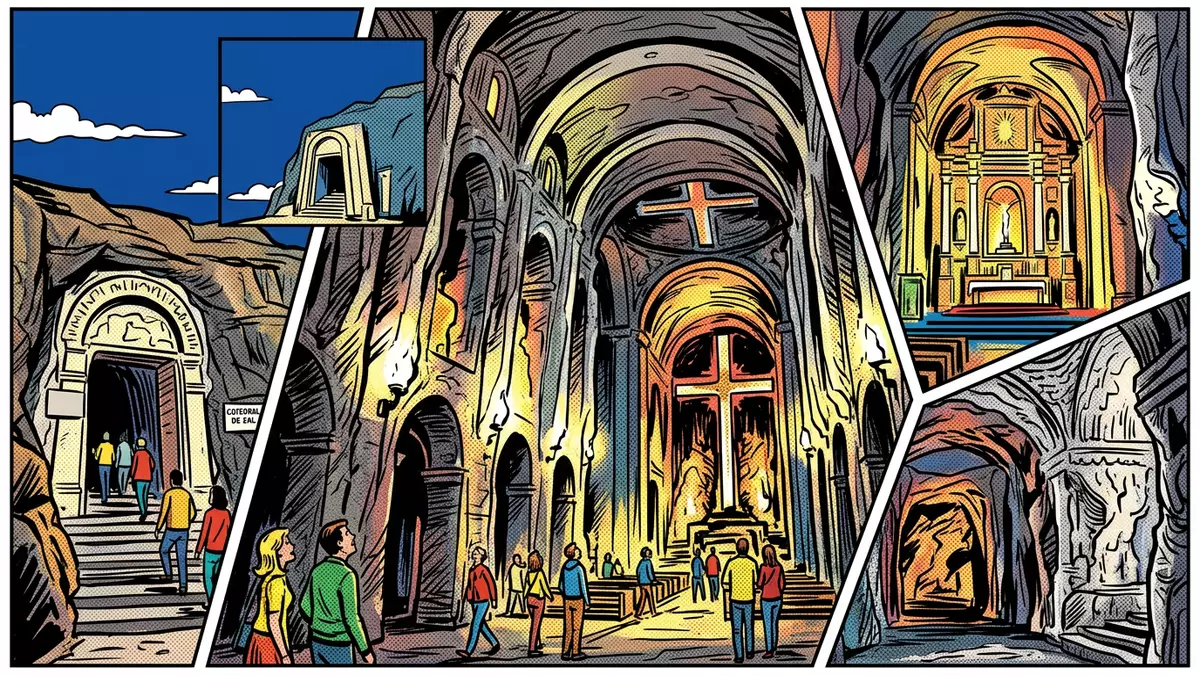
Far beneath the town of Zipaquira in Colombia, Catedral de Sal de Zipaquira turns an old salt mine into a vast underground church chiselled out of rock and mineral veins. Visitors descend into former extraction tunnels to find chapels, altars and crosses carved directly into the salt-rich strata, creating one of the most striking sacred spaces in Latin America. The current cathedral dates to the late twentieth century and follows an earlier sanctuary created by miners, but the industrial workings on this hill go back many centuries.
From working salt mine to subterranean cathedral
Zipaquira’s hill has long been associated with salt, and organised extraction in the area was well established by the nineteenth century. In the mid-twentieth century miners created a small sanctuary underground where they could mark religious festivals and give thanks, placing crosses and altars along the galleries. That first chapel lay within active workings and remained modest in scale. Later, in the 1990s, a larger cathedral space was laid out deeper in the hill, with a main nave and side chapels set in chambers excavated from the rock. The modern layout retains the mining character, with long corridors, chambers and structural pillars left in place as part of the architecture.
The cathedral’s rock is rich in halite, the mineral form of sodium chloride, giving many walls a pale, crystalline appearance. Streaks of other minerals run through the surfaces, adding darker veins and occasional colour shifts to the raw stone. Work to shape the chapels and reliefs was carried out by Colombian sculptors and engineers, including Roswell Garavito and other specialists who took part in the redesign in the 1990s. Their project turned former extraction spaces into a series of devotional environments connected by a single route, bringing together industrial and religious heritage in one site.
An underground route through stations of the cross and the main nave
A visit to Catedral de Sal de Zipaquira follows a descending route that passes a sequence of chapels before arriving at the main cathedral space. Early sections of the path are lined with sculpted stations of the cross, each carved into the rock and accompanied by an abstract cross or relief. These chapels occupy alcoves that have been cut wider and higher than the access tunnels, and lighting emphasises the carved surfaces and mineral textures. Some stations use simple geometric forms, while others include more figurative elements, but all are integrated into the rock rather than standing as separate structures.
Deeper inside, the galleries open out into larger halls and eventually the main nave, which extends along the axis of one of the primary excavated chambers. At one end stands a prominent cross carved from stone and set against a recessed wall, forming the focal point of the cathedral. Benches arranged along the nave allow for religious services and concerts, and acoustic effects arise naturally from the size and shape of the chambers and the rough texture of the surfaces. Smaller auxiliary chapels branch from the main route, offering quieter spaces for reflection, and side chambers contain sculptures inspired by biblical themes and the history of mining. The sense of scale increases progressively as the visitor moves from narrow access tunnels into wide halls, reinforcing the impression of entering a hidden underground city of rock and light.
Art, light and geology in a living religious space
Art and geology intertwine throughout Catedral de Sal de Zipaquira. Many sculptural works draw directly on the material of the hill, cutting figures, relief crosses and inscriptions into the salt-bearing rock rather than adding separate stone blocks. The natural stratification of the mineral layers becomes part of the visual effect, and in some areas the walls show the marks of extraction alongside more deliberate smoothing and carving. Electric lighting is carefully positioned along floors, walls and ceilings, picking out the forms of crosses and highlighting the surfaces, so the chapels appear as pools of coloured light within the darker tunnels. In places, projections or illuminated panels add further visual depth, though the underlying structure remains that of the mine.
The cathedral functions as a working church with regular services and special ceremonies on major religious dates, particularly during Holy Week and at Christmas. At the same time it serves as a cultural venue for concerts, exhibitions and civic events, making the underground space a focal point for Zipaquira. Above ground, facilities around the entrance include viewing areas, a small museum about salt mining and local history, and commercial spaces selling crafts and souvenirs related to the mine and the wider region. Taken together, the religious, industrial and artistic dimensions turn Catedral de Sal de Zipaquira into one of Colombia’s best-known examples of reused industrial heritage, where a former production site has become a place of worship and cultural gathering without losing its geological character.
Visiting Catedral de Sal de Zipaquira: what travellers from Western Europe should know
- Catedral de Sal de Zipaquira lies outside the town of Zipaquira, reached from Bogotá by road and by local transport services that connect the capital with the salt mining area.
- Admission arrangements and opening hours are set by the site's operator and change with the season; the official website is the only binding source.
- The underground setting makes the cathedral a rewarding visit in both dry and wet weather, and many travellers choose morning or late afternoon for gentler light on the surrounding landscape.
- The approach from the entrance involves a walk through tunnels with steps, ramps and uneven surfaces, so sturdy footwear is advisable and travellers should be prepared for a period of walking underground.
- On site, Spanish is the main language, while some staff members speak basic English; payment for services and souvenirs is generally made in Colombian pesos, and local customs around religious spaces, such as respectful dress and quiet behaviour in chapels, are observed.
- Entry requirements depend on your nationality. UK travellers should check the FCDO travel advice at gov.uk/foreign-travel-advice; Irish travellers the Department of Foreign Affairs at ireland.ie; EU and EEA citizens their own national foreign ministry.
Searching for Catedral de Sal de Zipaquira on social platforms
These links open searches for Catedral de Sal de Zipaquira on each platform.
Frequently asked questions about Catedral de Sal de Zipaquira
Where is Catedral de Sal de Zipaquira located?
Catedral de Sal de Zipaquira lies beneath a hill on the edge of the town of Zipaquira in central Colombia, north of Bogotá.
What should visitors expect on a visit underground?
Visitors walk through mine tunnels and chapels carved in rock, experiencing an underground route that leads to a large nave with a stone cross.
What makes Catedral de Sal de Zipaquira distinctive among churches?
The cathedral occupies former salt mine chambers, so its chapels, altars and sculptures are carved directly into mineral-rich rock deep below the surface.