
Catedral de Sevilla and the Giralda’s layered architecture
Published on 09/22/2026 at 20:40 | Editorial responsibility: Rafael Müller, Editor-in-Chief AD HOC NEWS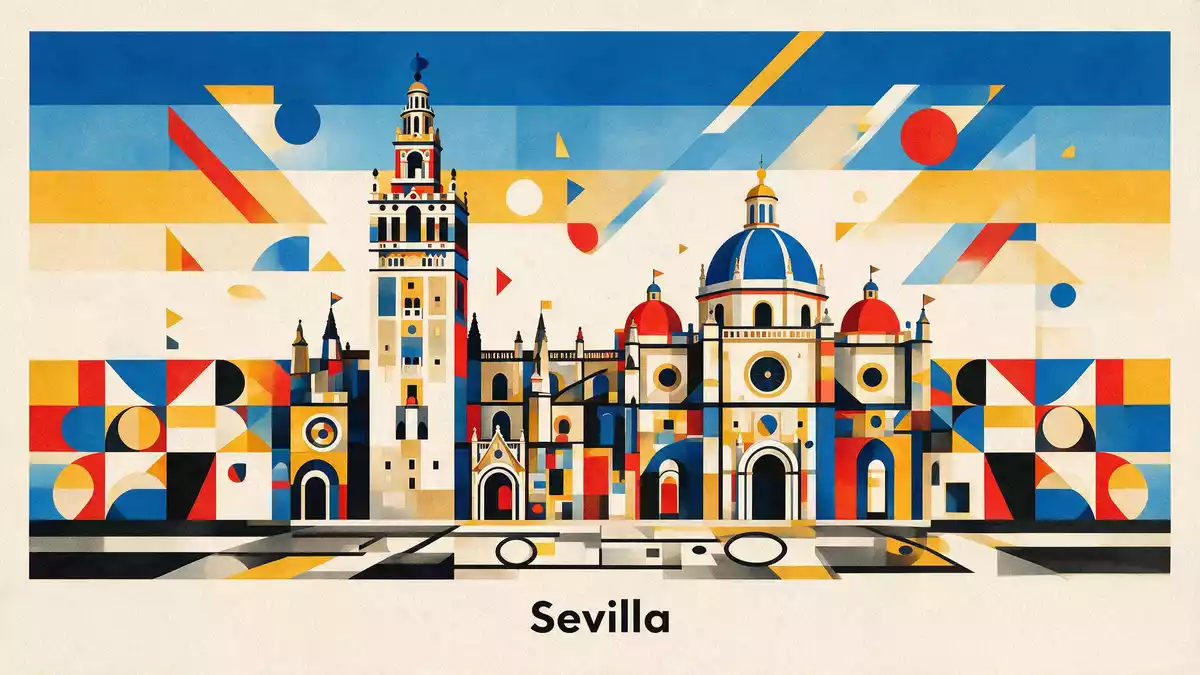
Catedral de Sevilla is a vast Gothic cathedral whose stone interior is joined to the Giralda, an Almohad minaret transformed into a bell tower. The building brings together medieval Islamic, Gothic Christian and Renaissance forms within Sevilla’s historic centre.
Catedral de Sevilla: a Gothic interior on a monumental scale
The cathedral’s principal body was constructed mainly from stone during the fifteenth and early sixteenth centuries. Its plan extends through multiple naves, chapels and transepts, creating a broad interior marked by high vaults and substantial piers.
Construction is traditionally dated to 1401, while documented work on the Gothic building belongs to the fifteenth century. The main Gothic campaign continued into the early sixteenth century, and the cathedral’s history includes later Renaissance spaces such as the Royal Chapel, Main Sacristy and Chapter House.
The building’s scale is expressed through its length, width and vertical spaces rather than through a single isolated tower. A principal nave rises above 40 m (131 ft), while the central crossing reaches roughly 37 m (121 ft). The cathedral covers more than 20,000 square metres, placing its architecture on an urban scale within Sevilla.
The Giralda preserves Sevilla’s Almohad past
The Giralda is the cathedral’s most recognisable adjoining structure. Its lower body was built as the minaret of Sevilla’s Great Mosque between 1172 and 1198, during the Almohad period, before becoming a Christian bell tower after 1248.
The tower’s lower masonry belongs to Almohad architecture, with patterned surfaces and carefully ordered openings. Its upper belfry belongs to the Renaissance period and carries the bronze Giraldillo, a weather vane associated with the tower’s name.
The tower rises to 97.52 m (320 ft) including the Giraldillo. A ramped interior ascends through the tower, and the changing masonry records the transition from an Almohad minaret to a Christian campanile.
The cathedral and Giralda therefore form a visible sequence of architectural layers. The tower is not separate from the cathedral’s history: it is part of the monumental complex that links Islamic Sevilla with the Christian city that followed.
Chapels, courtyards and the World Heritage complex
Inside Catedral de Sevilla, chapels line the broad body of the church, while the Royal Chapel and Main Sacristy add distinct spaces to the Gothic core. The Chapter House has a Renaissance character, with a different architectural vocabulary from the great vaulted church.
The Patio de los Naranjos preserves the courtyard tradition associated with the former mosque. Orange trees occupy the open space, while the cathedral’s stone walls and the Giralda frame its edges.
Catedral de Sevilla, the Alcázar and the Archivo de Indias form a World Heritage complex inscribed in 1987. Their buildings occupy the same historic area and represent Muslim, Christian and sixteenth-century phases of Sevilla’s urban development. The formal World Heritage designation includes the cathedral and Giralda as a connected monumental ensemble.
The result is a place where architectural periods remain legible in adjacent materials and forms. The Gothic cathedral provides the dominant interior volume, while the Almohad tower, Renaissance belfry and orange courtyard preserve other chapters of Sevilla’s built history.
Visiting Catedral de Sevilla: what travellers from Western Europe should know
- Catedral de Sevilla stands in Sevilla’s historic centre, beside the Giralda, the Archivo de Indias and the Real Alcázar. The cathedral belongs to the central monumental area of the city.
- The visit includes large stone interiors, chapels, vaulted spaces and the Patio de los Naranjos. The Giralda contains an ascending ramp rather than a conventional narrow stairway.
- Sevilla is in Spain. The official language is Spanish and the currency is the euro.
- The cathedral’s setting includes paved urban streets and open courtyards. The Giralda involves an uphill interior route and high-level views across the city.
Searching for Catedral de Sevilla on social platforms
These links open searches for Catedral de Sevilla on each platform.
Frequently asked questions about Catedral de Sevilla
Where is Catedral de Sevilla?
Catedral de Sevilla stands in the historic centre of Sevilla, beside the Giralda, the Real Alcázar and the Archivo de Indias.
What can visitors expect inside?
The cathedral contains a broad Gothic interior, stone vaults, chapels, the Royal Chapel, the Main Sacristy, the Chapter House and the Patio de los Naranjos.
What makes Catedral de Sevilla distinctive?
Its Gothic cathedral is joined to the Almohad Giralda, a former minaret built between 1172 and 1198 and converted into a Christian bell tower after 1248.


