
Catedral de Sevilla and the Giralda tower of layers
Published on 08/17/2026 at 13:03 | Editorial responsibility: Rafael Müller, Editor-in-Chief AD HOC NEWS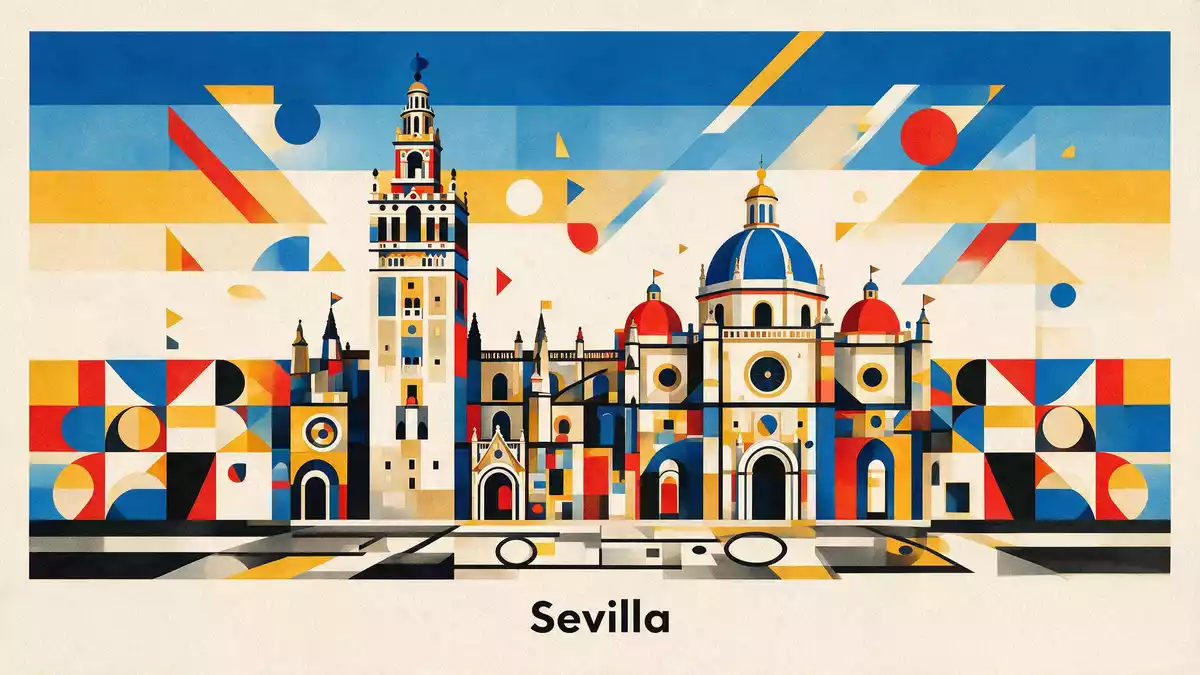
Catedral de Sevilla in Sevilla is a vast Gothic cathedral raised over Almohad mosque foundations, with the Giralda tower beside it marking centuries of architectural change.
From Almohad mosque to Gothic cathedral
The story of Catedral de Sevilla begins with the Great Mosque of Seville, constructed under the Almohad dynasty in the twelfth century.Founded in 1403 on the site of a former mosque is a description that captures the way the later cathedral re-used the mosque’s foundations and footprint.Originally it was the site of a large mosque built in the twelfth century anchors this continuity.
Christian forces under Ferdinand III of Castile took Sevilla in 1248, and the mosque became the city’s cathedral, adapting its interior to Christian worship while retaining key structural elements such as the courtyard and minaret.The Sevillian mosque is transformed into the church of Santa Maria around 1220 shows the transition from Islamic prayer hall to Christian church.
The Gothic interior and its sheer scale
In the early fifteenth century the cathedral chapter embarked on a new building that reused the mosque’s rectangular plan but expanded it into a soaring Gothic space with multiple naves.The Cathedral of Seville was built in the fifteenth century as the great construction project of the period expresses the ambition behind the work, and records show that construction decisions date from around 1401.
Work on the Gothic fabric extended through the fifteenth and into the early sixteenth century, producing a cathedral that is widely described as the largest Gothic church in Europe.Groundbreaking in 1402 and completion in 1519 are common reference points for the building’s main phase. Across its many chapels and the long central nave the architecture blends Gothic ribbed vaults with later Renaissance details, reflecting an extended period of construction.
The Giralda tower and layered materials
Beside Catedral de Sevilla stands the Giralda, first built as the mosque’s minaret and later adapted as the cathedral’s bell tower.The Giralda is the bell tower of Seville Cathedral and was built as the minaret for the Great Mosque of Seville links the tower directly to both phases of the site.
The lower part of the Giralda uses Roman stone blocks for its foundations, above which rise Almohad brick walls patterned with sebka reliefs and horseshoe-arched openings, and above that a Renaissance belfry designed by Hernán Ruiz II in the sixteenth century.Roman ashlars, Islamic bricks and a Christian belfry combine in the Giralda describe the way these materials and styles stack one above another.
A World Heritage complex in the centre of Sevilla
Catedral de Sevilla forms part of a monumental ensemble with the Real Alcázar of Sevilla and the Archivo de Indias, a group recognised by UNESCO as a World Heritage Site in 1987.UNESCO declared the monumental complex formed by the Cathedral, the Royal Alcazar and the Archive of the Indies a World Heritage Site in 1987 ties the building to the wider history of the city, from Almohad rule through the Christian Reconquest and the age of transatlantic trade.
The cathedral and the Giralda are protected within Spanish heritage designations that recognise both Almohad and Christian contributions to the site.The complex is an exceptional testimony to Almohad civilisation and Christian Andalusia places Catedral de Sevilla within the narrative of Andalusian history as a whole.
Visiting Catedral de Sevilla: what travellers from Western Europe should know
- Catedral de Sevilla stands in the historic centre of Sevilla, close to the Real Alcázar and the Archivo de Indias and reached on foot from central tram and bus stops.
- The interior includes long stone pavements and steps between levels; the ascent inside the Giralda follows a series of gently sloping ramps enclosed within the tower.
- The cathedral lies within Andalusia in southern Spain; the official language is Spanish and the currency is the euro.
- Entry requirements depend on your nationality; UK travellers can check the FCDO travel advice at gov.uk/foreign-travel-advice, Irish travellers the Department of Foreign Affairs at ireland.ie.
Searching for Catedral de Sevilla on social platforms
These links open searches for Catedral de Sevilla on each platform.
Frequently asked questions about Catedral de Sevilla
Where is Catedral de Sevilla located?
Catedral de Sevilla stands in the historic centre of Sevilla in southern Spain, near the Real Alcázar and the Archivo de Indias.
What can visitors expect inside Catedral de Sevilla?
Visitors encounter a large Gothic interior with multiple naves, chapels and stone pavements, along with access to the Giralda tower via internal ramps.
What makes Catedral de Sevilla distinctive among European cathedrals?
It combines the footprint of an Almohad mosque with a vast Gothic structure and a tower that layers Roman foundations, Islamic brickwork and Renaissance stone.


