
Catedral de Sevilla and the Giralda tower of many eras
Published on 09/02/2026 at 18:50 | Editorial responsibility: Rafael Müller, Editor-in-Chief AD HOC NEWS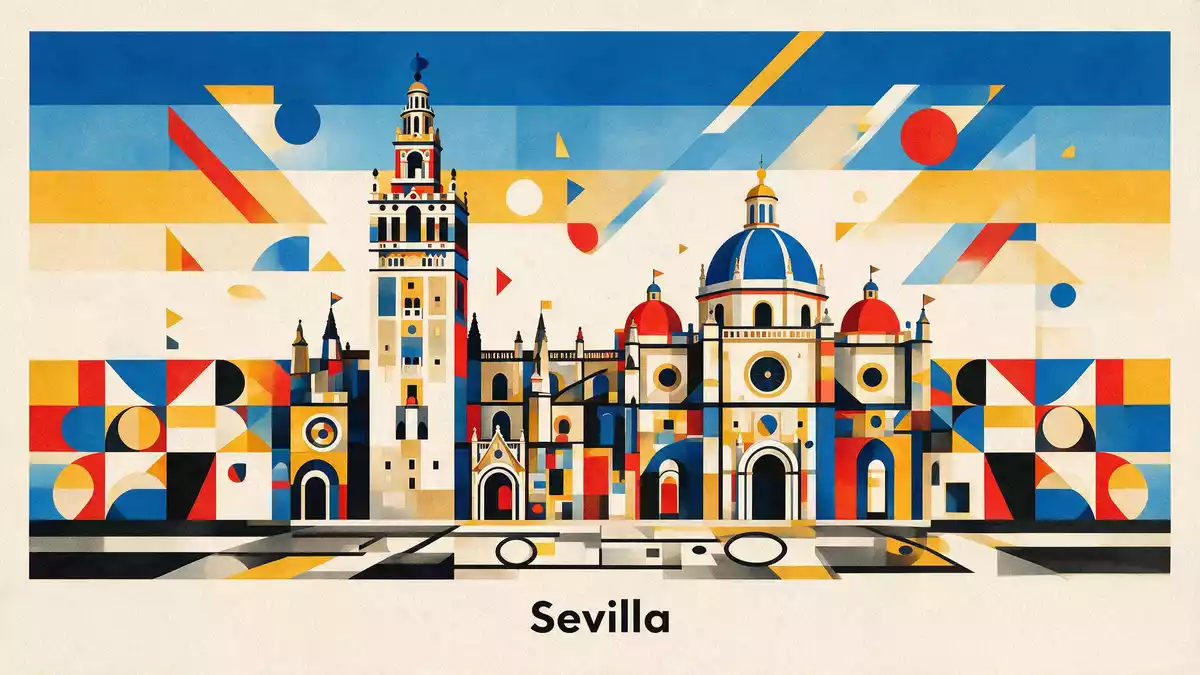
Catedral de Sevilla dominates central Sevilla as a vast Gothic cathedral backed by the tall Giralda tower, together forming a layered record of Andalusian history in stone. Built on the site of the city’s main Almohad mosque and shaped over successive centuries, it stands beside the Royal Alcázar and the Archivo de Indias as part of a World Heritage ensemble that links Islamic al-Andalus with Christian Castile and Spain’s age as Puerto de Indias in the sixteenth century.
A Gothic giant raised over an Almohad mosque
The building known in English as Seville Cathedral is formally dedicated as the Cathedral of Saint Mary of the See, and its foundations lie within the former great mosque of the Almohad period.Founded in 1403 on the site of a former mosque the cathedral rose where the city’s congregational prayer hall and courtyard once stood, a decision that shaped its size and outline within the medieval street grid. The surviving courtyard of the mosque, today known as the Patio de los Naranjos, still brings light and open air into the complex, with arcades framing a planted space that recalls the building’s Islamic phase.
Construction of the Gothic fabric began in the early fifteenth century and the main body of the church was consecrated in 1507, after decades of work that turned the site into one of the largest churches in the world.Consecrated 1507 and completed in the early 16th century Inside, five long naves run east–west, forming the largest Gothic cathedral by floor area in Europe and giving the interior its characteristic forest of high clustered columns and ribbed vaults.The immense Cathedral with its five naves is the largest Gothic building in Europe Chapels open from the outer aisles, each with its own altarpiece and artwork, while the crossing and choir bring together stone tracery, carved stalls and large canvases in a space scaled to processions and liturgy rather than everyday parish use.
The Giralda: minaret turned bell tower
On the north-west side of Catedral de Sevilla stands the Giralda, a tower whose lower sections date to the twelfth century as the minaret of the great mosque and whose upper portions carry a sixteenth-century Renaissance finial with the Giraldillo statue.The last body of the Almohad tower was replaced by a Renaissance finial by Hernán Ruiz in the sixteenth century The Almohad work follows the classic minaret form, with a central mass and outer walls enclosing ramps that rise gradually enough for a mounted rider to ascend. Windows and decorative panels on these faces mix stone latticework and arches drawn from the Almohad repertoire, giving the tower its recognisable texture.
When the mosque became a cathedral after 1248, the Giralda was retained and later heightened to match the enlarged church, eventually reaching over 97 m (318 ft) without the weathervane.With a height of 97.5 metres not including the weathervane The Renaissance addition, designed by Hernán Ruiz the Younger, crowns the square tower with tiers that introduce classical motifs and openings for bells, and carries the bronze Giraldillo figure, whose turning with the wind gives the tower its name.The tower stands 98.5 metres tall and reaches 104.1 metres with the statue Visitors who climb the ramps move through these layered phases, emerging onto viewing platforms where the roofs of the cathedral and the dense fabric of central Sevilla lie spread below.
Styles, spaces and a World Heritage ensemble
Catedral de Sevilla is known for a fusion of architectural styles, reflecting the long span of its construction and later alterations: Gothic in its main structure, traces of Almohad work in the reused fabric, Mudéjar treatments in certain decorative elements, Renaissance interventions in the Giralda and some interior spaces, and Baroque additions in altarpieces and chapels.Fusion of styles: Almohad, Mudéjar, Gothic, Renaissance, Baroque This mixture makes a walk through the building a survey of Andalusian artistic history, from pointed Gothic vaults to polychrome sculpture and later painting.
In 1987 the monumental ensemble formed by the cathedral, the Royal Alcázar and the Archivo de Indias was inscribed on the World Heritage List, acknowledging how these neighbours trace major chapters of Sevilla’s urban evolution.UNESCO declared the monumental complex a World Heritage Site in 1987 The cathedral and Giralda carry evidence of Almohad civilisation and Christian Andalusia, while the Alcázar shows palace architecture across Islamic and Christian phases, and the Archivo de Indias holds records linked to Spain’s transatlantic empire. Standing in the plaza outside the west front, the traveller sees stone elevations from several centuries around a shared open space, with the cathedral’s multiple portals and the tower rising behind them.
Visiting Catedral de Sevilla: what travellers from Western Europe should know
- Catedral de Sevilla stands in the historic centre of Sevilla, immediately south of the broad Avenida de la Constitución and close to tram stops and local bus routes.
- The interior involves movement across large stone floors, with steps at certain thresholds; climbing the Giralda means following rising ramps inside the tower to reach upper viewing levels.
- The cathedral complex lies beside the Royal Alcázar and the Archivo de Indias, placing three major historic sites within a short walk of each other in the same district.
- Spain lies within the European Union; the official language is Spanish and the currency is the euro.
Searching for Catedral de Sevilla on social platforms
These links open searches for Catedral de Sevilla on each platform.
Frequently asked questions about Catedral de Sevilla
Where is Catedral de Sevilla located?
Catedral de Sevilla stands in the historic centre of Sevilla in southern Spain, close to the Royal Alcázar and the Archivo de Indias.
What should a visitor expect inside the cathedral?
Visitors encounter a vast Gothic interior with multiple naves, chapels and a former mosque courtyard, along with access to the Giralda tower via internal ramps.
What makes Catedral de Sevilla distinctive among European cathedrals?
Its scale as the largest Gothic cathedral, the reuse of an Almohad mosque and the Giralda’s blend of minaret and Renaissance bell tower make it unusually layered.


