
Cenotes de Valladolid and the limestone underworld of Yucatán
Published on 09/18/2026 at 19:50 | Editorial responsibility: Rafael Müller, Editor-in-Chief AD HOC NEWS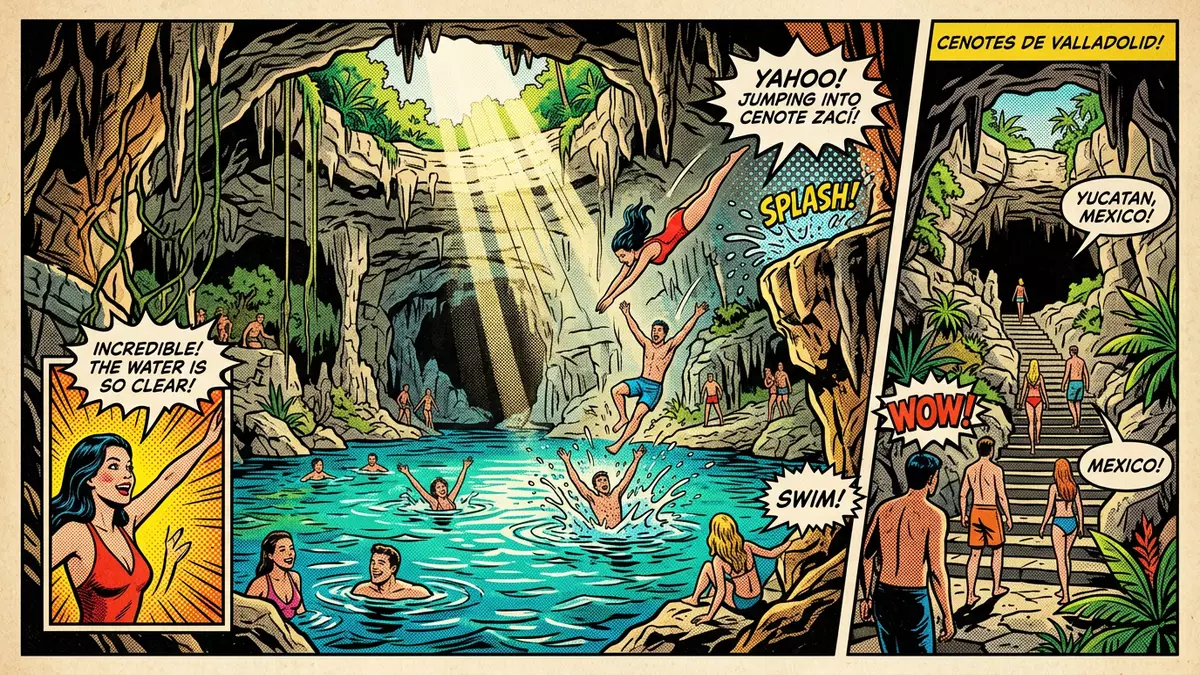
Cenotes de Valladolid describes the cluster of water?filled sinkholes and caverns scattered around Valladolid in Mexico’s Yucatán Peninsula, where the limestone ground opens into clear pools and underground chambers.
Limestone, groundwater and the cenote belt around Valladolid
Valladolid stands in the north?eastern part of the Yucatán Peninsula, on a broad plateau of porous limestone that stores and channels groundwater rather than surface rivers.
In this setting, cenotes form where the rock collapses or erodes, revealing circular depressions, shafts and cave?like spaces that collect the region’s underground water and create natural basins for swimming and ritual use.cenotes near Valladolid Around Valladolid, cenotes appear both as open pools exposed to the sky and as enclosed caverns where daylight reaches the water through openings in the rock.open and cave cenotes
Cenote Zaci and the city’s nearest descent underground
Among Cenotes de Valladolid, Cenote Zaci is distinctive for lying within Valladolid itself, close to the colonial centre rather than out in the countryside.cenote in the City of Valladolid Here the rock drops away into a broad limestone basin, with vertical walls, hanging vegetation and a pool that receives both daylight and water from the surrounding plateau.cenote in Valladolid’s city centre
Other cenotes lie a short journey from Valladolid and present different forms in the same geological setting, from the cavern atmospheres of X’keken and Samulá at Dzitnup to the hacienda?side basin at Cenote Oxman and the more distant pools such as Sac Aua and Xcanahaltún.cenotes of Dzitnup and Oxman Guides and local overviews describe dozens of cenotes within reach of Valladolid, reflecting the density of sinkholes in this part of Yucatán.cenotes in the Valladolid area
Forms, light and water in Cenotes de Valladolid
Cenotes around Valladolid range from open basins that resemble natural wells to cave cenotes with vaulted ceilings and rock formations, all shaped by the interaction of limestone and water over long periods.
At some sites, such as Cenote Suytun east of Valladolid, visitors encounter a cavern with a flat platform projecting towards the centre of the pool, with shafts of light reaching the water from an opening above.Cenote Suytun east of Valladolid Others, including Cenote Oxman at Hacienda San Lorenzo Oxman and open cenotes used in excursions to Chichén Itzá or Ek Balam, present more exposed pools edged by stone walls, stairways and platforms.Cenote Oxman and nearby sites Across Cenotes de Valladolid, details such as stalactites, overhanging rock ledges, suspended roots and clear groundwater underline the link between the region’s geology and its distinctive swimming and exploration sites.
Visiting Cenotes de Valladolid: what travellers from Western Europe should know
- Cenotes de Valladolid lie in and around Valladolid in the Mexican state of Yucatán, reached overland from larger gateways in the peninsula such as Mérida and Cancún.
- Many cenotes near Valladolid stand in rural terrain with uneven limestone surfaces, stairways down to the water and paths through vegetation, so visiting involves walking and descending steps.
- Several cenotes form part of wider excursions, for example combined with visits to archaeological sites at Chichén Itzá or Ek Balam, and are approached along regional highways and local roads.
- The official language is Spanish and the currency is the Mexican peso.
- Entry requirements depend on your nationality; UK travellers can check the FCDO travel advice at gov.uk/foreign-travel-advice, Irish travellers the Department of Foreign Affairs at ireland.ie.
Searching for Cenotes de Valladolid on social platforms
These links open searches for Cenotes de Valladolid on each platform.
Frequently asked questions about Cenotes de Valladolid
Where are Cenotes de Valladolid located?
Cenotes de Valladolid are spread in and around Valladolid in the Mexican state of Yucatán, in the interior of the peninsula away from the coasts.
What should visitors expect on a visit?
Visitors encounter limestone basins and caves filled with clear groundwater, reached by stairways and paths and surrounded by rock formations, vegetation and, at some sites, hacienda buildings or nearby archaeological remains.
What makes Cenotes de Valladolid distinctive?
The combination of an urban cenote such as Zaci within Valladolid and numerous rural cenotes in the surrounding landscape, all formed in the same limestone plateau, makes Cenotes de Valladolid a concentrated glimpse of Yucatán’s subterranean water world.


