
Centro Historico de Managua and its lakeside plazas
Published on 08/16/2026 at 13:18 | Editorial responsibility: Rafael Müller, Editor-in-Chief AD HOC NEWS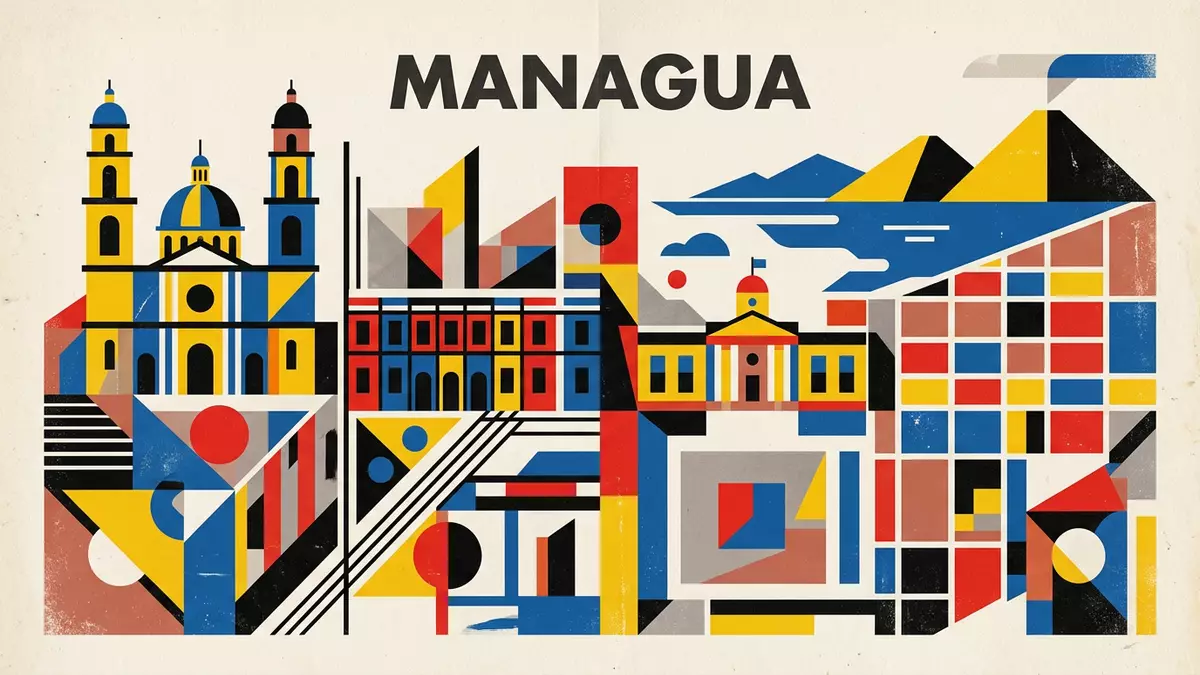
Centro Historico de Managua is the historic core of Managua, the capital of Nicaragua, where open plazas, damaged cathedral walls and the shoreline of Lake Managua form a compact urban ensemble shaped by a twentieth-century earthquake. Standing between civic buildings and the lake, this district carries the city’s older urban memory in its streets and squares.
Cathedral ruins and civic façades around the main square
The visual centre of Centro Historico de Managua is a broad plaza known as Plaza de la Revolución, earlier called Plaza de la República, set close to the southern shore of Lake Managua. Around its paved expanse rise several of Managua’s best-known landmarks: the shell of the Old Cathedral of Managua, the National Palace of Culture and governmental buildings that frame the space on multiple sides.Plaza de la Revolución The Old Cathedral, also referred to as the Catedral de Santiago, stands with its exterior walls and towers preserved while its interior remains closed because of structural damage from the earthquake that struck Managua in 1972.structural damage from the earthquake
Facing the cathedral across the plaza is the National Palace of Culture, a neoclassical building in pale stone that houses cultural collections and exhibitions. Beside it sit Managua Central Park and the Casa de los Pueblos, together forming a civic ensemble that gives the historic centre its governmental character.National Palace of Culture and Managua Central Park A short walk away, the Rubén Darío National Theatre adds a different architectural note, representing the city’s cultural life in the years before the earthquake and remaining an emblematic building of old Managua.Rubén Darío National Theater
From pre-1972 city core to open-air memory
Before the earthquake of 23 December 1972, Centro Historico de Managua was the nucleus of Managua’s urban, political and commercial life, concentrating ministries, markets, hotels and transport facilities in a dense grid of streets.nucleus of Managua’s urban, political and commercial life The earthquake devastated much of this area, leaving many buildings damaged and prompting the later shift of everyday commerce and offices to other districts of the city. In the historic centre, some structures were stabilised and preserved as ruins, while others were restored or replaced by newer constructions and monuments.
Walking through Centro Historico de Managua today, the mix of preserved façades, memorials and more recent landscaping makes the district feel like an open-air record of Managua’s twentieth-century history. Around the plaza, monuments and statues commemorate national heroes and political events, including memorials in the park that form part of the Plaza de la Revolución complex.monuments in the Plaza de la Revolución complex Towards the lakeside, promenades and recreational spaces such as the Paseo Xolotlán line the shore, connecting the historic administrative zone with views over Lake Managua.Paseo Xolotlán line the shore
Lakeside setting and layout of the historic district
Geographically, Centro Historico de Managua occupies a strip of land along the southern shore of Lake Managua, also known as Lake Xolotlán, in the northern part of the urban area.southern shore of Lake Managua The main plaza and surrounding streets form a relatively compact district, with the lakefront promenade on one side and city streets leading towards other Managua neighbourhoods on the other. Within this area, civic buildings, the theatre, the cathedral ruins and landscaped parks sit within walking distance of one another.
The historic centre belongs to Managua’s District I and is integrated into the wider urban fabric rather than separated as an outlying quarter.part of Managua’s District I Views across the lake and towards other parts of the city underline how the old core and the modern commercial districts relate spatially: the historic plazas and cultural buildings remain close to the waterfront, while newer high-rise structures and shopping areas stand further inland. For visitors, this layout makes it straightforward to combine time in the historic centre with journeys to other parts of Managua.
Visiting Centro Historico de Managua: what travellers from Western Europe should know
- Centro Historico de Managua lies near the southern shore of Lake Managua in the northern part of the city, centred on Plaza de la Revolución and the blocks around the Old Cathedral and the National Palace of Culture.
- The terrain is largely level, with broad paved plazas and streets; approaches to buildings such as the Old Cathedral include steps and elevated terraces that require short climbs on foot.
- Managua is reached via Augusto C. Sandino International Airport; from there, road connections lead towards the historic centre, and taxis or other local transport can take travellers to the vicinity of the main plaza and lakefront.
- The official language is Spanish and the currency is the Nicaraguan córdoba.
- Entry requirements depend on your nationality; UK travellers can check the FCDO travel advice at gov.uk/foreign-travel-advice, Irish travellers the Department of Foreign Affairs at ireland.ie.
Searching for Centro Historico de Managua on social platforms
These links open searches for Centro Historico de Managua on each platform.
Frequently asked questions about Centro Historico de Managua
Where is Centro Historico de Managua located within the city?
Centro Historico de Managua is in the northern part of Managua along the southern shore of Lake Managua, centred on Plaza de la Revolución and the surrounding civic blocks.
What can visitors expect when walking through the historic centre?
Visitors encounter open plazas framed by the ruins of the Old Cathedral, the National Palace of Culture, Managua Central Park and other civic buildings, with lake views and memorials nearby.
What makes Centro Historico de Managua distinctive among Managua’s districts?
Its combination of preserved cathedral walls, neoclassical palace architecture, cultural venues like the Rubén Darío National Theatre and lakeside promenades makes it a compact district where Managua’s political and cultural history is visibly concentrated.


