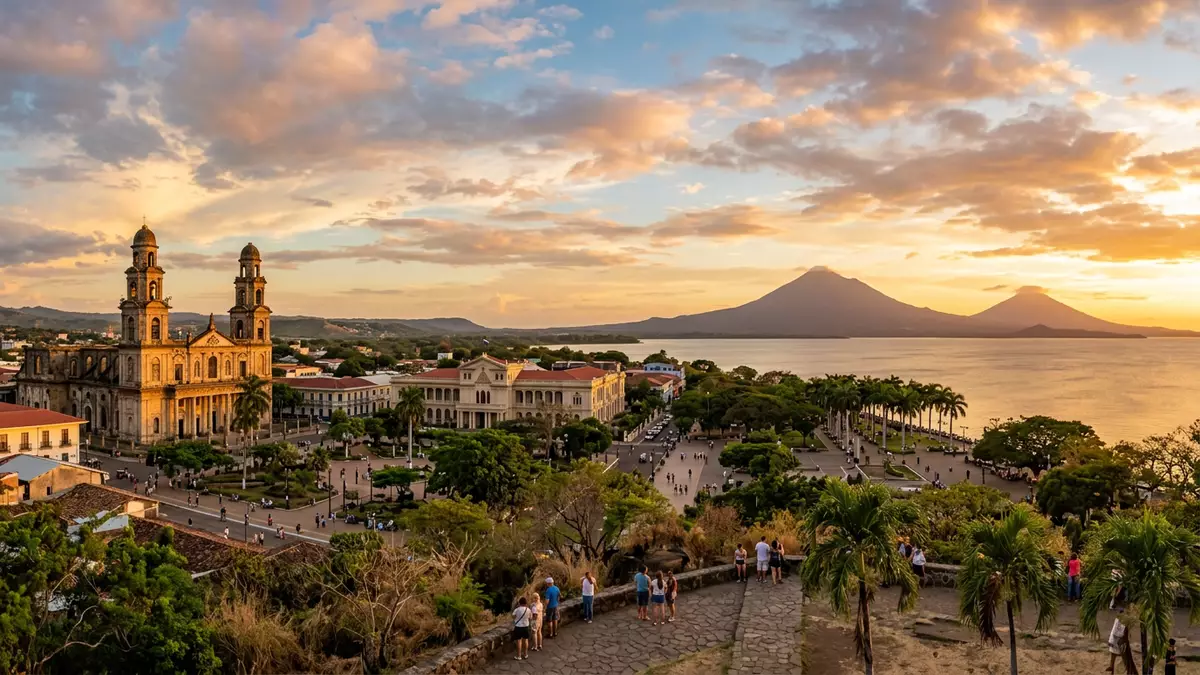
Centro Historico de Managua and its layered city centre
Published on 08/09/2026 at 15:12 | Editorial responsibility: Rafael Müller, Editor-in-Chief AD HOC NEWS
Centro Historico de Managua is the historic core of Nicaragua’s capital, shaped by the city’s cathedral, civic buildings and open squares. It carries Managua’s older urban memory in a district where modern streets meet traces of the colonial and republican city.
Managua’s historic core and civic centre
The area is identified with the old centre of Managua, where public life once clustered around churches, government buildings and commercial streets. Its name points to that inherited city centre rather than to a single monument.
Managua itself became the national capital in 1852, and the historic core reflects the political weight that followed. The district belongs to the city’s broader story of rebuilding after the 1931 earthquake and the later transformations of the capital.
Cathedral, squares and urban memory
The most familiar landmark is the Cathedral of Managua, also known as the Old Cathedral, a neoclassical structure completed in 1920. Its façade, towers and weathered shell remain among the clearest visible reminders of the pre-earthquake city.
Around it, the centre includes public space, broad streets and civic buildings that belong to different periods of Managua’s development. The result is less a preserved old quarter than a historic district marked by survival, loss and reconstruction.
A city centre shaped by interruption
Managua’s historic centre does not read as a tidy museum district. It shows the layered effects of earthquakes, political change and repeated rebuilding in a capital that has shifted its focus across different parts of the city.
That makes Centro Historico de Managua interesting for travellers who want the city’s deeper frame rather than a single showpiece. The district links the capital’s present public life with the memory of its older streets and institutions.
Visiting Centro Historico de Managua: what travellers from Western Europe should know
- The site is in central Managua and is reached by road from the city’s main districts.
- Admission arrangements and opening hours are set by the site's operator and change with the season; the official website is the only binding source.
- Late morning and early evening can suit a visit, when street activity is easier to combine with walking.
- The area is urban and mostly level, with normal city pavements and crossings rather than rough terrain.
- Spanish is the main language, and cash in local currency is useful for small purchases and transport.
- Entry requirements depend on your nationality. UK travellers should check the FCDO travel advice at gov.uk/foreign-travel-advice; Irish travellers the Department of Foreign Affairs at ireland.ie; EU and EEA citizens their own national foreign ministry.
Searching for Centro Historico de Managua on social platforms
These links open searches for Centro Historico de Managua on each platform.
Frequently asked questions about Centro Historico de Managua
Where is Centro Historico de Managua?
It is in Managua, the capital of Nicaragua, in the city’s historic centre. The district is part of the urban core rather than a separate suburb.
What should a visitor expect?
Expect a central city area with streets, squares and landmarks linked to Managua’s older civic life. The most prominent sight is the Old Cathedral, with other public spaces around it.
What makes it distinctive?
Its value lies in the way it preserves the memory of Managua’s older centre after earthquakes and rebuilding. The district connects the city’s present-day capital role with its earlier urban history.