
Centro Historico de Morelia and its pink stone grid
Published on 09/16/2026 at 13:27 | Editorial responsibility: Rafael Müller, Editor-in-Chief AD HOC NEWS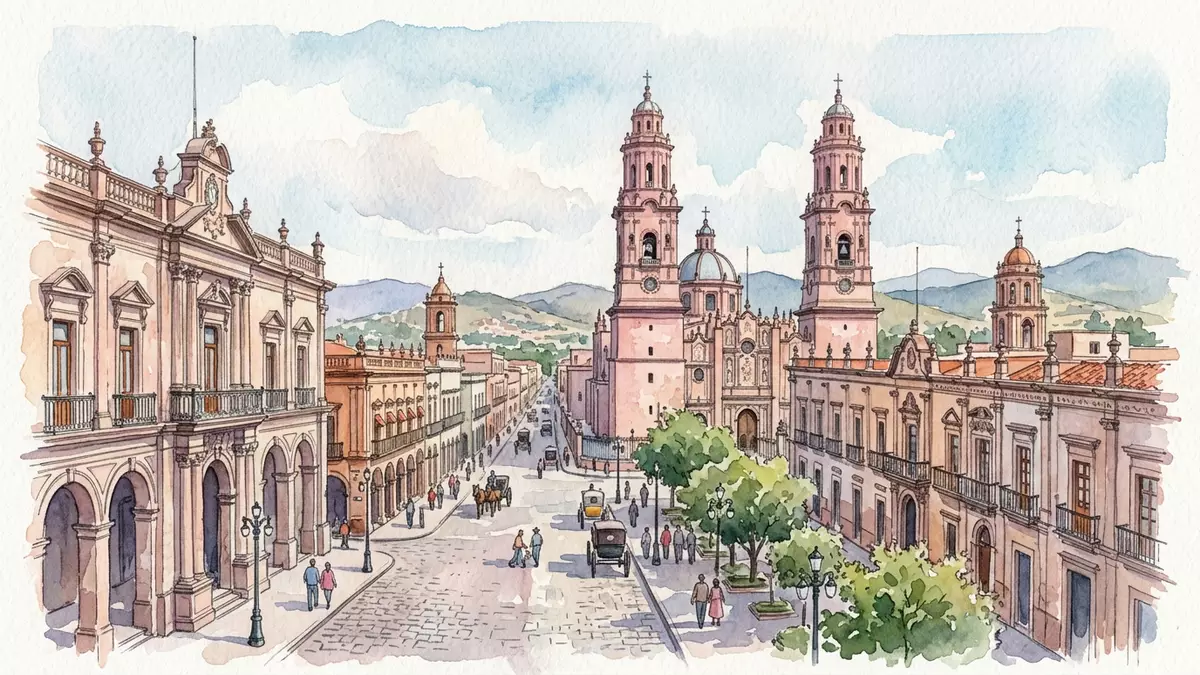
Centro Historico de Morelia, the historic centre of Morelia in Mexico, is a colonial cityscape laid out on a straight street grid and built largely from warm pink volcanic stone that gives the whole area a distinctive rose-coloured hue. Recognised internationally as the Historic Centre of Morelia, it is inscribed as a cultural UNESCO World Heritage Site for an urban plan and architecture shaped between the sixteenth and eighteenth centuries.
A Renaissance grid in volcanic stone
The historic centre was built in the sixteenth century on a checkerboard pattern of streets and blocks that reflected Spanish Renaissance town-planning theories combined with experience of urban life in Mesoamerica.built in the sixteenth century The grid climbs gently over the slopes of the hill site, yet the streets largely keep to straight alignments, so long perspectives open up towards church towers, plazas and civic buildings.
Within this grid, the central part of Centro Historico de Morelia contains a high concentration of historic structures, with hundreds of buildings registered as monuments that together form the core of the city.more than 200 historic buildings The regular plan means religious complexes, town houses and college buildings stand flush with the street, their façades forming continuous stone fronts along each block and their courtyards and cloisters hidden behind carved portals.
Pink cantera and layered architecture
A defining feature of the Centro Historico de Morelia is the extensive use of local pink cantera, a volcanic stone quarried in the region and adopted as the principal building material for churches, houses and civic monuments.cantera as principal material This stone gives façades a warm colour that shifts with the daylight and visually unifies religious and civil architecture across the centre, so that arcades, cornices and balconies share the same rose-toned backdrop even when their detailing belongs to different styles.
The architectural language visible in the historic centre ranges from Renaissance lines to richly ornamented Baroque fronts and later neoclassical reworkings, often within the same ensemble.Baroque and neoclassical styles Many complexes belong to religious orders that shaped the colonial city, and cupolas with ceramic tiles, long arcades along plazas and stone balconies with wrought-iron railings appear repeatedly as visitors move through the streets carved out of pink stone.
Plazas, cathedral and aqueduct
The heart of Centro Historico de Morelia is marked by the cathedral and the plazas around it, which form a sequence of open spaces framed by pink stone façades.the heart of the historic centre is the cathedral and its surrounding plazas Plaza de Armas, also known historically under other names, is the largest of these, laid out in the sixteenth century and remodelled several times, while adjacent squares such as Juárez Plaza and Melchor Ocampo Plaza complete a group of civic spaces at the core of the city.
Beyond the cathedral ensemble, the historic centre extends towards an eighteenth-century aqueduct built in the same characteristic stone and lined with arches that mark the edge of the colonial city.the central part includes 249 monuments Churches such as Santa Rosa, de las Monjas and Guadalupe contribute towers and cupolas to the skyline, and together with college buildings and palaces they make the historic core feel like a three-dimensional record of Mexican architecture across the colonial centuries.
Visiting Centro Historico de Morelia: what travellers from Western Europe should know
- Centro Historico de Morelia lies in the city of Morelia in Mexico’s state of Michoacán, in central Mexico at the foot of the Sierra Madre Occidental, and is reached by urban streets leading into the grid of the historic centre.
- The old streets in the centre are laid on a gentle slope, and many routes between plazas and churches involve walking on stone pavements and crossing wide plazas with minimal shade.
- A walk through the historic core brings travellers past numerous churches, college buildings and town houses, with some routes passing under arcades beside plazas and along the line of the historic aqueduct.
- The official language is Spanish and the currency is the Mexican peso.
- Entry requirements depend on your nationality; UK travellers can check the FCDO travel advice at gov.uk/foreign-travel-advice, Irish travellers the Department of Foreign Affairs at ireland.ie.
Searching for Centro Historico de Morelia on social platforms
These links open searches for Centro Historico de Morelia on each platform.
Frequently asked questions about Centro Historico de Morelia
Where is Centro Historico de Morelia located?
Centro Historico de Morelia is the historic centre of the city of Morelia in the state of Michoacán in central Mexico, at the foot of the Sierra Madre Occidental.
What should visitors expect on a visit to Centro Historico de Morelia?
Visitors encounter a Renaissance-inspired grid of straight streets lined with pink stone façades, churches, plazas, college buildings and an aqueduct, all forming a coherent colonial cityscape.
What makes Centro Historico de Morelia distinctive among historic centres?
The combination of a sixteenth-century checkerboard urban plan, extensive use of local pink cantera stone and a concentration of colonial architecture from Renaissance to Baroque and neoclassical periods gives the historic core a recognisable character.


