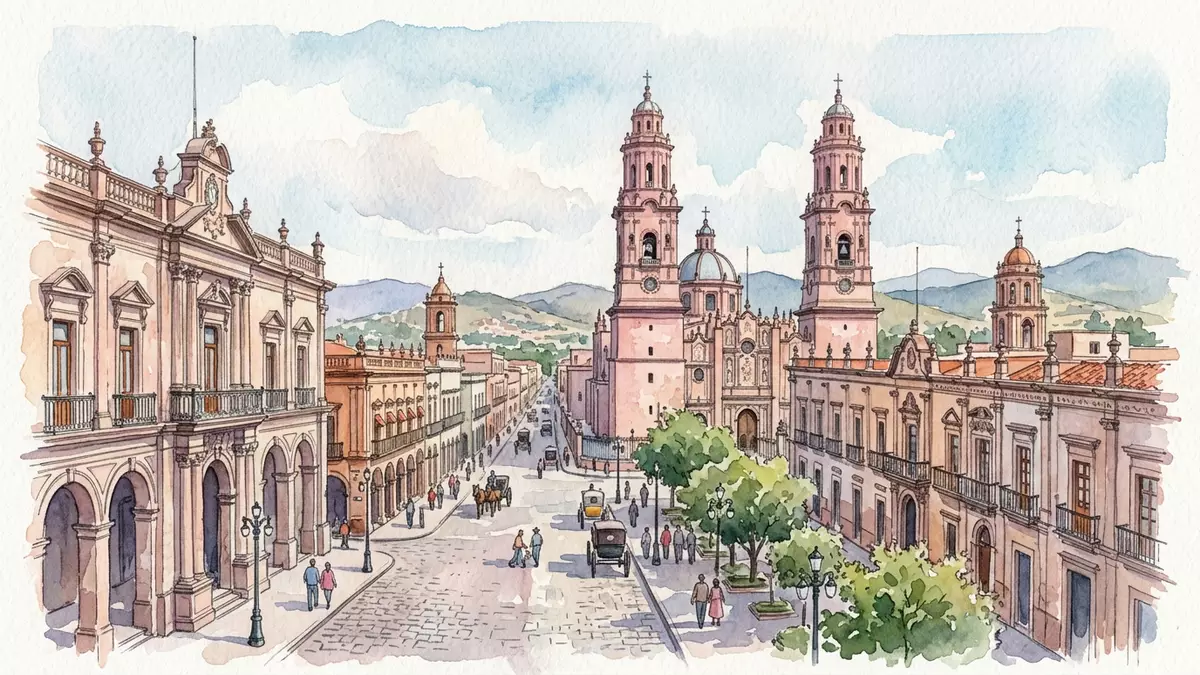
Centro Historico de Morelia and its pink-stone streets
Published on 08/12/2026 at 13:58 | Editorial responsibility: Rafael Müller, Editor-in-Chief AD HOC NEWS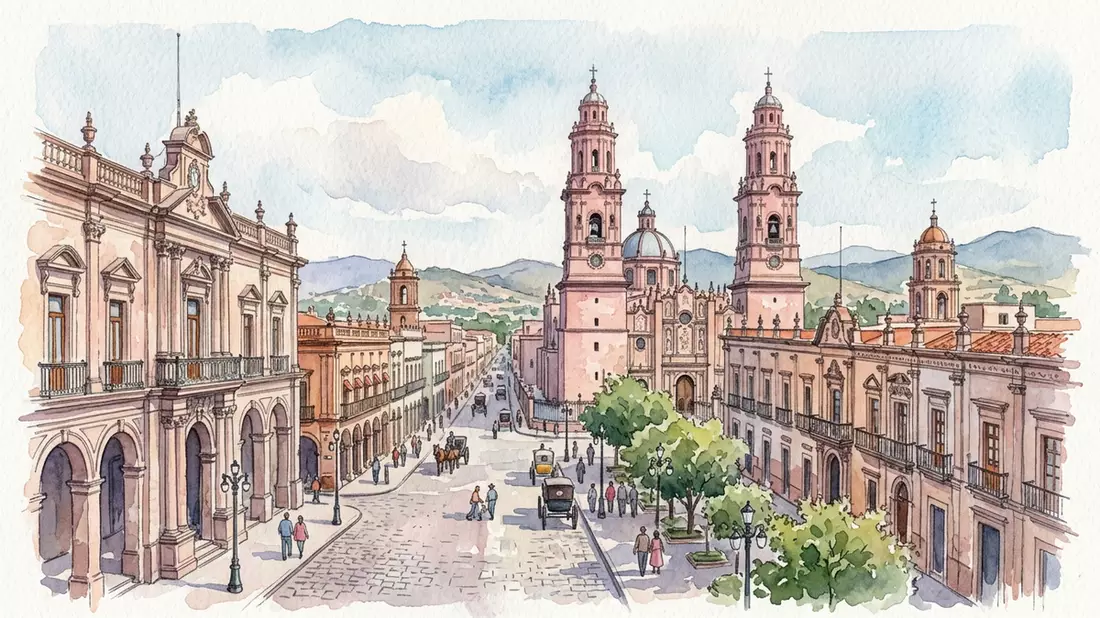
Centro Historico de Morelia is built around a 16th-century grid and a dense field of pink stone buildings in the centre of Morelia. Its streets and monuments give the district a clear visual unity, and its UNESCO status reflects that urban form.16th-century grid
Pink stone and civic streets in Morelia
The district is known for cantera stone, the material that gives many façades a warm rose tone. Morelia’s historic core gathers religious, civic and domestic buildings into a compact urban fabric, rather than a single monument.cantera stone
Its plan follows the Spanish colonial checkerboard pattern, and that layout remains legible in the streets today. The historic centre contains a large concentration of monuments, including churches and civil buildings that span several centuries of city life.checkerboard pattern
UNESCO status and the historic core
UNESCO inscribed the Historic Centre of Morelia in 1991 as a cultural World Heritage site. The designation rests on the district’s urban layout and the survival of its historic buildings across the centre of the city.inscribed in 1991
That heritage extends beyond a single square or church front. It includes streets, façades, courtyards and public buildings that still form an urban whole, with the Cathedral and the aqueduct among the best-known landmarks.historic buildings
Baroque fronts and the aqueduct line
Many of the church fronts in the centre belong to the baroque and neoclassical tradition, while the Cathedral gives the skyline a strong vertical accent. The aqueduct, with its long line of stone arches, adds a separate civic note to the district’s religious architecture.
The mix is not only about style but about scale. Tall towers, broad façades and long streets sit within the same urban pattern, and the result is a centre that reads as a city rather than a museum piece.
Visiting Centro Historico de Morelia: what travellers from Western Europe should know
- Centro Historico de Morelia lies in Morelia, in the Mexican state of Michoacán. The historic core is reached on foot through the city streets, with the aqueduct and cathedral area serving as familiar reference points.
- The streets are laid out in a regular grid, and the centre is best experienced as an urban walk. Stone façades, church fronts and civic buildings are close together across a compact area.
- The district includes many protected monuments, so the strongest impression comes from the ensemble rather than a single building. Pink cantera, baroque ornament and neoclassical fronts recur across the streets.
- English is not an official language in Mexico. The official language is Spanish and the currency is the Mexican peso.
- Entry requirements depend on your nationality; UK travellers can check the FCDO travel advice at gov.uk/foreign-travel-advice, Irish travellers the Department of Foreign Affairs at ireland.ie.
Searching for Centro Historico de Morelia on social platforms
These links open searches for Centro Historico de Morelia on each platform.
Frequently asked questions about Centro Historico de Morelia
Where is Centro Historico de Morelia?
It is the historic centre of Morelia, in Michoacán, Mexico. The district sits in the city’s central urban fabric.
What should a visit feel like?
Expect a walk through a regular street grid lined with stone façades, churches and civic buildings. The district reads as a lived-in city centre with a strong historic profile.
What makes it distinctive?
Its pink cantera stone, colonial grid and dense collection of monuments create a coherent historic landscape. UNESCO inscribed it in 1991, and the centre keeps that urban unity intact.