
Centro Historico de Ouro Preto and its baroque hillsides
Published on 08/21/2026 at 14:09 | Editorial responsibility: Rafael Müller, Editor-in-Chief AD HOC NEWS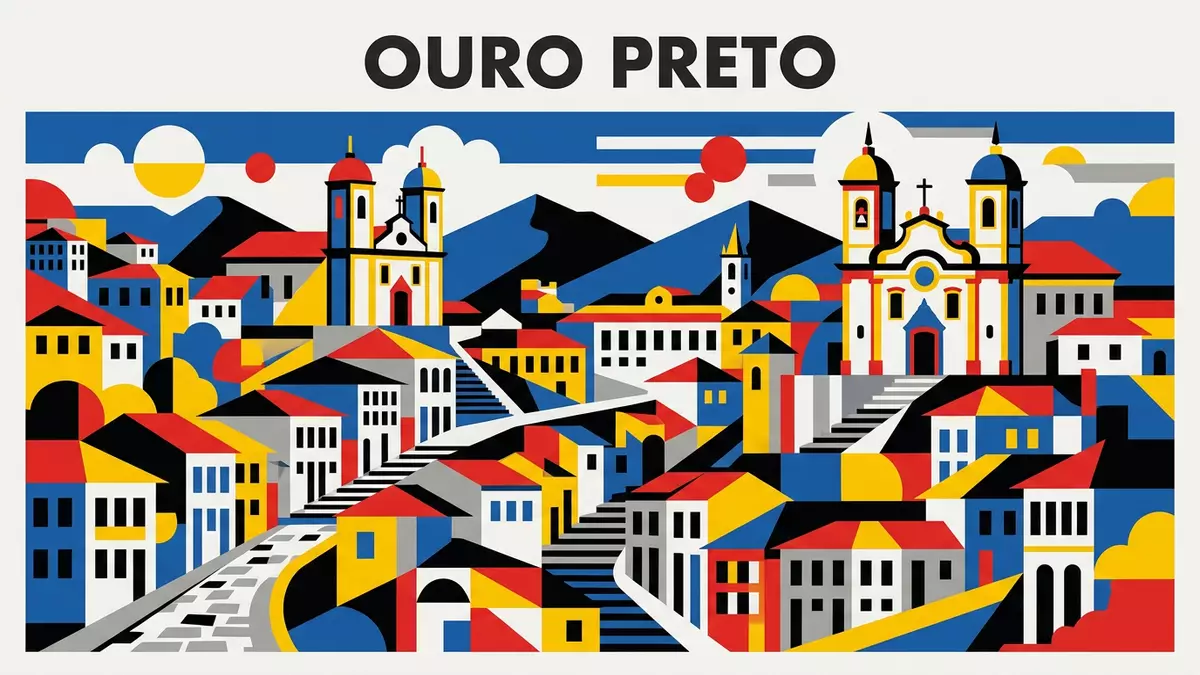
Centro Historico de Ouro Preto is the historic centre of Ouro Preto in south-eastern Brazil, a hillside district where colonial streets rise past baroque churches and tiled houses from the eighteenth century.
Baroque Ouro Preto on the slopes of Minas Gerais
Centro Historico de Ouro Preto occupies the old urban core of Ouro Preto in the state of Minas Gerais, a former mining town in the Serra do Espinhaço mountains.Historic Town of Ouro Preto The historic centre spreads across steep hills, with streets and stairways climbing between clusters of churches, civic buildings and tightly packed residences. From many points in the district there are layered views of whitewashed facades, terracotta roofs and towers rising above them, a dense townscape shaped by the terrain.
The city grew during the gold boom of the early eighteenth century, when Vila Rica, as Ouro Preto was then known, became a major colonial centre for mining wealth.former colonial mining town As gold from the surrounding hills was extracted and processed, religious orders and civic authorities commissioned substantial churches and public buildings, many in baroque and rococo forms. The result is an urban ensemble where religious and secular architecture stand side by side, tied together by cobbled streets that follow the natural folds of the hills.
Churches, museums and urban spaces in the historic centre
Within Centro Historico de Ouro Preto, several churches are recognised for their architecture and interior decoration, including the Church of Nossa Senhora do Pilar and the Church of São Francisco de Assis.principales monumentos de Ouro Preto Their facades combine curved walls, towers and ornamented portals, while interiors feature gilded altars and carved woodwork associated with the Brazilian baroque. These religious buildings punctuate the skyline of the centre, often set above street level on terraces reached by steps, with forecourts opening onto sloping squares.
Civic and cultural institutions occupy prominent positions in the historic core. The Museu da Inconfidência stands on Praça Tiradentes in a former government and municipal building that once housed the town hall and jail.Museu da Inconfidência Nearby, other museums and historic houses illustrate the mining history and political movements linked to Ouro Preto, while the streets themselves retain rows of colonial houses with balconies, shuttered windows and stone bases. Squares such as Praça Tiradentes form focal points where civic architecture faces churches and fountains, giving Centro Historico de Ouro Preto a sequence of defined urban spaces.
Heritage status and preservation of the historic town
Ouro Preto’s historic centre has long been recognised for its architectural and urban value. It was declared a national monument in the 1930s, reflecting efforts in Brazil to preserve its ensemble of colonial buildings and streets.declarada como patrimonio del Estado en 1933 Later, in 1980, the Historic Town of Ouro Preto became the first Brazilian cultural property inscribed on the UNESCO World Heritage List, underlining the international significance of its baroque architecture and urban fabric.UNESCO World Heritage inscription in 1980
The inscription emphasises not only individual churches and palaces but also the coherence of the townscape, where cobbled streets, squares, bridges and fountains together convey the scale of the eighteenth-century gold economy.Old City of Ouro Preto Preservation initiatives have sought to maintain this character even as Ouro Preto continues as a living city. The historic centre remains an urban district of residences, shops, institutions and places of worship, with conservation measures focusing on materials, proportions and streetscapes rather than separating it from daily life.
Visiting Centro Historico de Ouro Preto: what travellers from Western Europe should know
- Centro Historico de Ouro Preto lies within Ouro Preto in the state of Minas Gerais in south-eastern Brazil and is reached along the city’s streets, which rise steeply in places.
- The terrain in the historic centre involves noticeable gradients, cobbled surfaces and flights of steps, particularly around the churches and squares set on the hillsides.
- The official language is Portuguese and the currency is the Brazilian real.
- Entry requirements depend on your nationality; UK travellers can check the FCDO travel advice at gov.uk/foreign-travel-advice, Irish travellers the Department of Foreign Affairs at ireland.ie.
Searching for Centro Historico de Ouro Preto on social platforms
These links open searches for Centro Historico de Ouro Preto on each platform.
Frequently asked questions about Centro Historico de Ouro Preto
Where is Centro Historico de Ouro Preto located?
Centro Historico de Ouro Preto is in the city of Ouro Preto in the state of Minas Gerais in south-eastern Brazil, within the Serra do Espinhaço region.
What can visitors expect in the historic centre?
Visitors encounter steep cobbled streets, colonial houses, baroque and rococo churches, museums in former civic buildings and squares such as Praça Tiradentes framed by historic architecture.
What makes Centro Historico de Ouro Preto distinctive?
The district combines eighteenth-century religious and civic architecture with a hillside urban layout, and its Historic Town of Ouro Preto is inscribed as a UNESCO World Heritage Site.


