
Centro Historico del Cusco’s Inca walls and colonial streets
Published on 08/16/2026 at 14:32 | Editorial responsibility: Rafael Müller, Editor-in-Chief AD HOC NEWS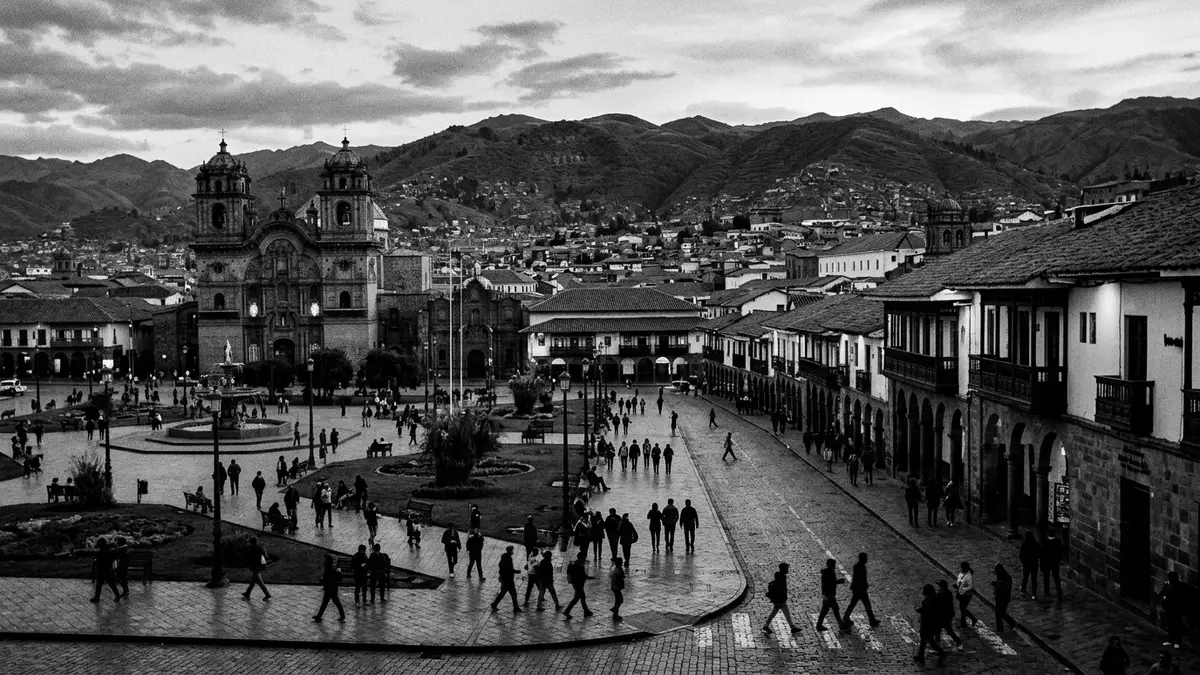
Centro Historico del Cusco sits at the heart of Cusco, where Inca masonry and Spanish colonial buildings share the same streetscape. The area is part of the City of Cuzco World Heritage site, inscribed in 1983, and its fabric makes the overlap visible at every turn.
Inca stonework beneath colonial frontages
The clearest feature of Centro Historico del Cusco is the way tightly fitted Inca stone bases carry later walls and facades. The result is a street scene of different periods stacked in one frame, from heavy lower courses to lighter upper storeys and balconies.1983 inscription
Plaza de Armas, the Cathedral, Qorikancha and the lanes around them form the best-known core of the historic centre. Their value lies less in any single monument than in the dense, walkable setting where churches, arcades and old walls sit close together.historic centre
Cusco’s colonial city on older foundations
Cusco became the capital of the Inca Empire under Pachacuti in the fifteenth century, and the city’s later colonial phase left a very different layer on the same urban ground. That double history is visible in the Centro Historico del Cusco, where older stonework and Spanish-era construction remain legible in the same blocks.capital of the Inca Empire
The UNESCO listing identifies the place as the City of Cuzco, and the protected area is known locally as the Centro Histórico de Cusco. The historic centre preserves the urban core that grew from the Inca capital into a colonial city, without erasing the earlier stonework beneath it.City of Cuzco
Streets, plazas and sacred buildings
The historic centre is not a single monument but a district of streets, plazas and religious buildings. Stone paving, narrow lanes and close building lines give it a compact urban character that rewards slow walking and repeated turns through the same blocks.
Qorikancha and the Cathedral are the two names that most clearly anchor the centre’s historical range. One belongs to the Inca past, the other to the colonial city that rose over it, and both remain part of the same urban landscape.
Visiting Centro Historico del Cusco: what travellers from Western Europe should know
- The historic centre lies in Cusco, in southern Peru, and is reached on foot through the old streets around Plaza de Armas. Cusco airport serves the city.
- The district sits at high altitude, and the streets rise and fall across the old urban grid. Some lanes are paved in stone and the terrain is uneven.
- In English-language sources the place is commonly called Cusco Historic Centre or Historic Centre of Cusco, while local Spanish usage keeps Centro Historico del Cusco and Centro Histórico de Cusco.
- The area brings together Inca masonry, colonial churches and civic buildings in one compact urban core. That mix is visible in walls, facades and the structure of the streets.
Searching for Centro Historico del Cusco on social platforms
These links open searches for Centro Historico del Cusco on each platform.
Frequently asked questions about Centro Historico del Cusco
Where is Centro Historico del Cusco?
It is the historic centre of Cusco in Peru, concentrated around Plaza de Armas and the surrounding streets. The district sits within the city’s older urban core.
What does a visit feel like?
The place is a compact city district of stone streets, plazas, churches and colonial facades over older Inca masonry. The experience comes from moving between blocks and seeing different periods in one view.
What makes it distinctive?
Its defining feature is the visible layering of Inca and colonial construction. Few urban centres preserve that relationship so clearly in the same streetscape.


