
Cerro Rico, the silver mountain shaping Potosi
Published on 08/25/2026 at 18:57 | Editorial responsibility: Rafael Müller, Editor-in-Chief AD HOC NEWS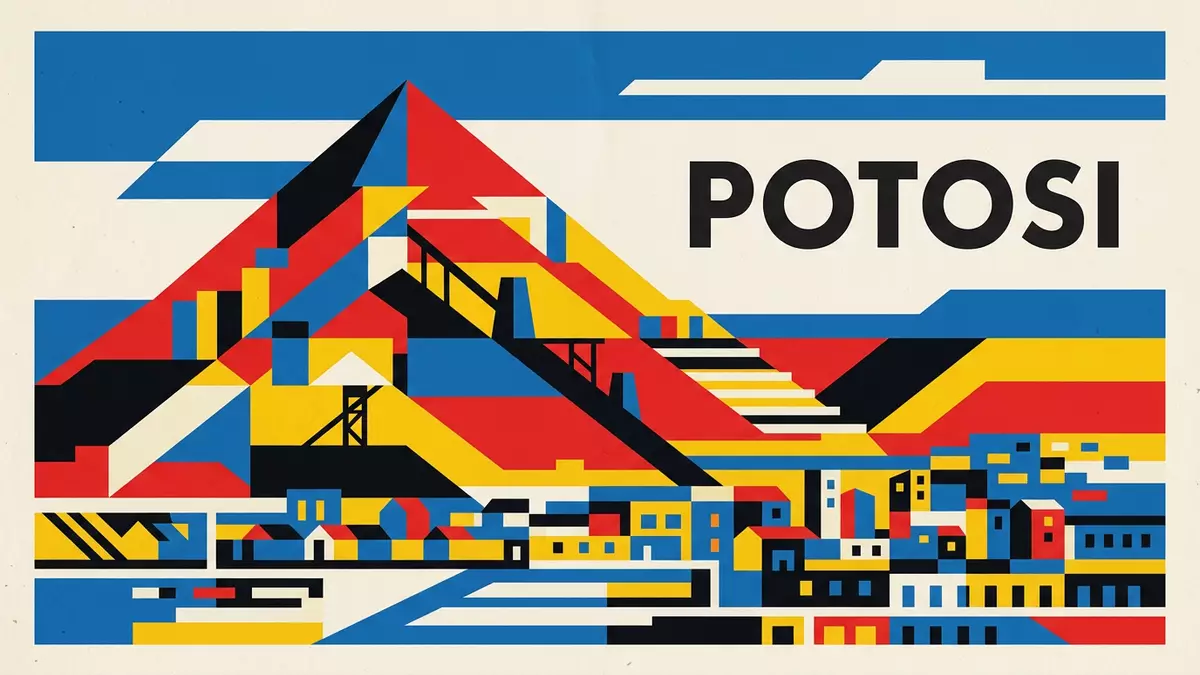
Cerro Rico towers over the Andean city of Potosi in southern Bolivia, a rust?coloured mountain whose silver?rich interior reshaped both the city beneath it and economies far beyond the Andes. Rising above the high plateau of the Altiplano, this “rich hill” became one of the most intensively worked mining landscapes in the early modern world during the Spanish Empire of the sixteenth century.
A volcanic dome packed with silver
Cerro Rico is an extinct volcanic dome that formed along a belt of mineral?rich rock in the central Andes, created when volcanic material rose through older sedimentary layers and cooled into a hard, fractured mass riddled with ore veins.Cerro Rico is an extinct volcano Beneath a cap of tough, reddish silica, the mountain carries a dense network of fissures filled with silver, tin, zinc, lead and other metals bound up with quartz and other minerals.a dome of volcanic material The result is a steep, conical summit with flanks scarred by centuries of mine entrances, waste tips and access tracks.
Geological studies describe Cerro Rico as a dacitic volcanic dome, its rocks altered by hydrothermal fluids that deposited metals along fractures.a dacitic volcanic dome The visible mountain rises above the city like a backdrop of oxidised reds and browns, while the mining district spreads across its slopes in a patchwork of adits, processing plants and rough tracks cut into the volcanic rock.
From imperial silver mountain to World Heritage landscape
Mining on Cerro Rico began on a large scale in 1545, when silver ore extraction under Spanish colonial rule turned Potosi into one of the principal mining centres of the empire.extraction of mineral ores began in 1545 For several centuries the mountain yielded huge quantities of silver, and sources describe it as one of the richest silver deposits ever worked, with an industrial complex of mines, smelting works and hydraulic systems spreading across the slopes.fabulously rich silver mines
The colonial mining landscape of Cerro Rico forms a core part of the “City of Potosi” inscription on the UNESCO World Heritage List, alongside the Casa de la Moneda, churches and hydraulic infrastructure on the surrounding high plateau.City of Potosí was inscribed on the World Heritage List in 1987 The World Heritage property includes the industrial monuments of Cerro Rico, aqueducts and artificial lakes that supplied water to ore?processing mills, and the grid of colonial streets in Potosi that expanded as mine output grew during the sixteenth century.
Cerro Rico as a living mining mountain
A visit to Cerro Rico reveals a layered mining landscape, where colonial?era workings coexist with later galleries excavated for tin, zinc and other ores during the nineteenth and twentieth centuries.silver, then tin and zinc have been mined Long spoil heaps, rough tracks and simple structures used by mining cooperatives mark the slopes, while the summit carries signs of subsidence after centuries of underground extraction.portions of the summit have collapsed
Within the mountain, a maze of tunnels, shafts and side passages extends through the volcanic rock, reflecting successive phases of extraction from the sixteenth century onwards.mines now in their fifth century of production On the surface, shrines, simple workshops and transport yards punctuate the route up from Potosi, while the outline of the conical summit remains the constant visual reference from almost every street in the city.
Visiting Cerro Rico: what travellers from Western Europe should know
- Cerro Rico rises directly above the city of Potosi in southern Bolivia, on the Bolivian Altiplano, and is reached from the urban neighbourhoods climbing its lower slopes.
- The mountain stands at high altitude on the Andean plateau, and access roads and paths on its flanks run over uneven volcanic rock and loose mine waste.
- Old mining installations, adits and spoil heaps are scattered across the slopes, and some paths pass close to steep drops and excavated ground.
- The official language is Spanish and the currency is the Bolivian boliviano.
- Entry requirements depend on your nationality; UK travellers can check the FCDO travel advice at gov.uk/foreign-travel-advice, Irish travellers the Department of Foreign Affairs at ireland.ie.
Searching for Cerro Rico on social platforms
These links open searches for Cerro Rico on each platform.
Frequently asked questions about Cerro Rico
Where is Cerro Rico?
Cerro Rico stands beside the city of Potosi in southern Bolivia, rising above the Bolivian Altiplano as a conical mountain immediately south of the urban area.
What should visitors expect on a visit?
Visitors encounter a high?altitude mining landscape, with steep tracks, mine entrances, spoil heaps and views over Potosi and the surrounding plateau from the slopes of the mountain.
What makes Cerro Rico distinctive?
Cerro Rico is distinctive as a silver?rich volcanic dome that underpinned Potosi’s role as a major mining centre from 1545, and forms part of a World Heritage cultural landscape.


