

Changdeokgung and its garden landscape in Seoul
Published on 08/12/2026 at 14:10 | Editorial responsibility: Rafael Müller, Editor-in-Chief AD HOC NEWS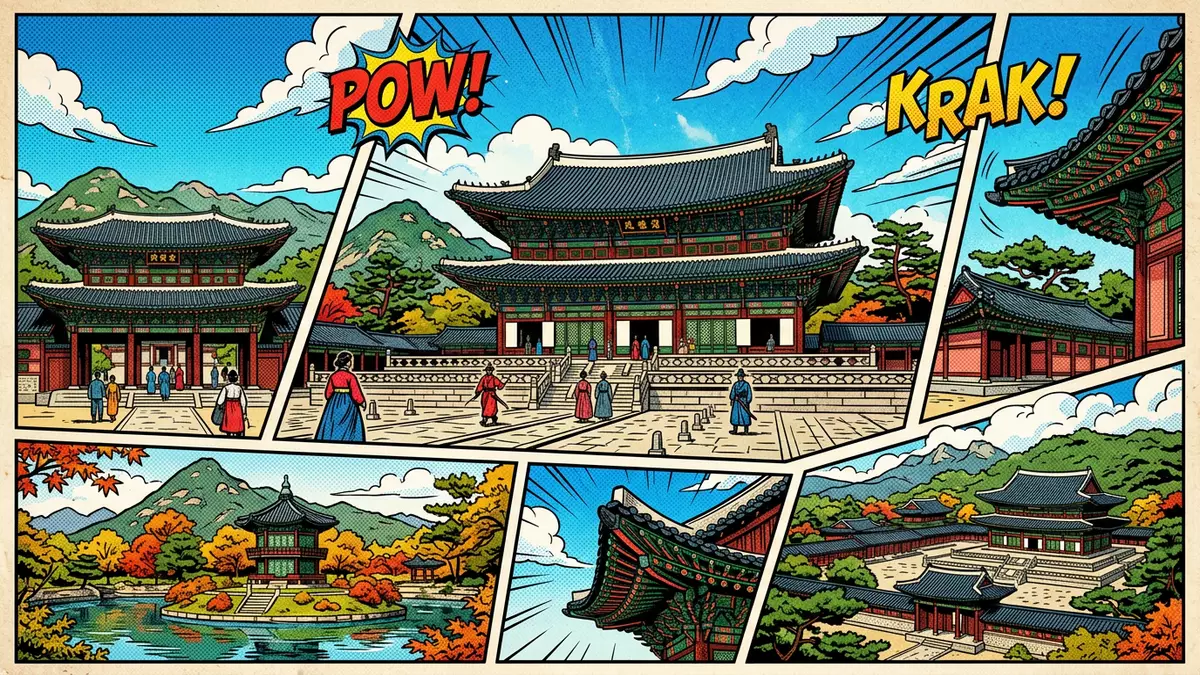
Changdeokgung in Seoul is a former royal palace of the Joseon dynasty, laid out against wooded hills and terraced gardens rather than on a flat ceremonial platform. Built in the early fifteenth century and inscribed as the Changdeokgung Palace Complex on the UNESCO World Heritage List in 1997, it remains one of Korea’s clearest expressions of how power and landscape were brought together in a single residence.
A palace shaped by the Joseon dynasty
Changdeokgung belongs to the group of royal palaces created for the Joseon dynasty, which ruled the Korean peninsula from 1392 to 1910, and its architecture reflects that long period. It was established as a secondary palace to Gyeongbokgung during the reign of King Taejong in 1405, giving the court another seat in the northern part of Seoul.Built as a secondary palace in 1405 The palace complex extends over a large tract of land in Jongno-gu at the foot of Baegaksan, and its pavilions are set along natural contours rather than a strict rectilinear grid.Occupies a 57.9 ha site at the foot of Mount Baegaksan
The history of Changdeokgung includes destruction and rebuilding during warfare in the sixteenth and seventeenth centuries, but the palace returned to use as a principal residence of Joseon kings once reconstruction was complete in the early seventeenth century.Rebuilt in 1610 and used as the major residence of kings Later monarchs such as King Sejo and King Heonjong oversaw extensions that brought libraries, pavilions and study houses into the grounds, turning the palace into a dense assemblage of halls, courtyards and retreat spaces.
Timber halls, tiled roofs and stone terraces
The architecture of Changdeokgung is characterised by timber-frame halls raised on stone platforms, with gently pitched tiled roofs and painted brackets supporting the eaves. Major buildings such as the throne hall stand within paved courtyards, while residential quarters form more intimate clusters of rooms and verandas around smaller yards. The use of stone for steps, platforms and retaining walls gives the palace a physical connection to the hillside on which it sits.A former royal palace with official and residential buildings
Further inside the complex, pavilions such as Juhamnu and Yeongyeongdang are placed beside streams and ponds, with their timber columns and balustrades looking onto water and planting rather than formal processional axes.Ongnyucheon Stream, Juhamnu Pavilion, Aeryeonji Pond and Yeongyeongdang Complex within the palace premises Stone bridges, lanterns and staircases link these structures, and the contrast between the painted wooden architecture and the subdued colours of rock and earth is one of the defining visual experiences of the site.
The Secret Garden and harmony with nature
North of the main palace buildings lies the area known as the Secret Garden, a landscape of wooded slopes, clearings, streams and ponds that was attached to Changdeokgung in the fifteenth century. Formed soon after the palace itself and expanded under King Sejo in the 1460s, it became a setting for pavilions and small courtyards where official and residential life met the forest edge.Secret Garden formed north of the palace and expanded in 1463 The garden’s layout uses existing topography, with paths that climb or follow ridges, and ponds formed within natural depressions.
This relationship between architecture and landscape is central to the way Changdeokgung is understood as heritage. The palace complex is recorded by UNESCO as an outstanding example of official and residential buildings harmonised with their natural setting, and the wooded backdrop is treated as part of the monument rather than a separate park.Listed as a World Heritage Site for exceptional harmony with nature In the garden, modest timber pavilions sit beside features such as Ongnyucheon Stream and Aeryeonji Pond, and terraces carry planting up the slopes, so that structures and vegetation share the same stepped ground.
Visiting Changdeokgung: what travellers from Western Europe should know
- Changdeokgung stands in Jongno-gu in central Seoul, east of Gyeongbokgung, and can be reached by Seoul Metro services that stop at stations in the palace’s vicinity.
- The palace grounds include slopes, staircases and stone terraces; visiting the Secret Garden involves walking on uneven paths and climbing gradients through wooded terrain.
- The complex lies within the city’s historic core, close to other former royal palaces and to Bukchon Hanok Village, so it often forms part of a wider circuit through traditional Seoul neighbourhoods.
- South Korea’s official language is Korean and the currency is the won (KRW); English-language information panels are present at many points within the palace.
- Entry requirements depend on your nationality; UK travellers can check the FCDO travel advice at gov.uk/foreign-travel-advice, Irish travellers the Department of Foreign Affairs at ireland.ie.
Searching for Changdeokgung on social platforms
These links open searches for Changdeokgung on each platform.Frequently asked questions about Changdeokgung
Where is Changdeokgung located in Seoul?
Changdeokgung stands in Jongno-gu in the northern part of Seoul, on ground that rises towards Mount Baegaksan and close to other former royal palaces.
What should visitors expect on a visit to Changdeokgung?
A visit brings a sequence of timber halls, stone courtyards and landscaped terraces, followed by the more wooded environment of the Secret Garden with its streams and ponds.
What makes Changdeokgung distinctive among Korean palaces?
Changdeokgung is distinguished by the way its official and residential buildings are woven into wooded hillsides and water features, a quality recognised in its UNESCO World Heritage inscription from 1997.


