
Chateau d'Azay-le-Rideau and its mirrored facades
Published on 08/15/2026 at 14:18 | Editorial responsibility: Rafael Müller, Editor-in-Chief AD HOC NEWS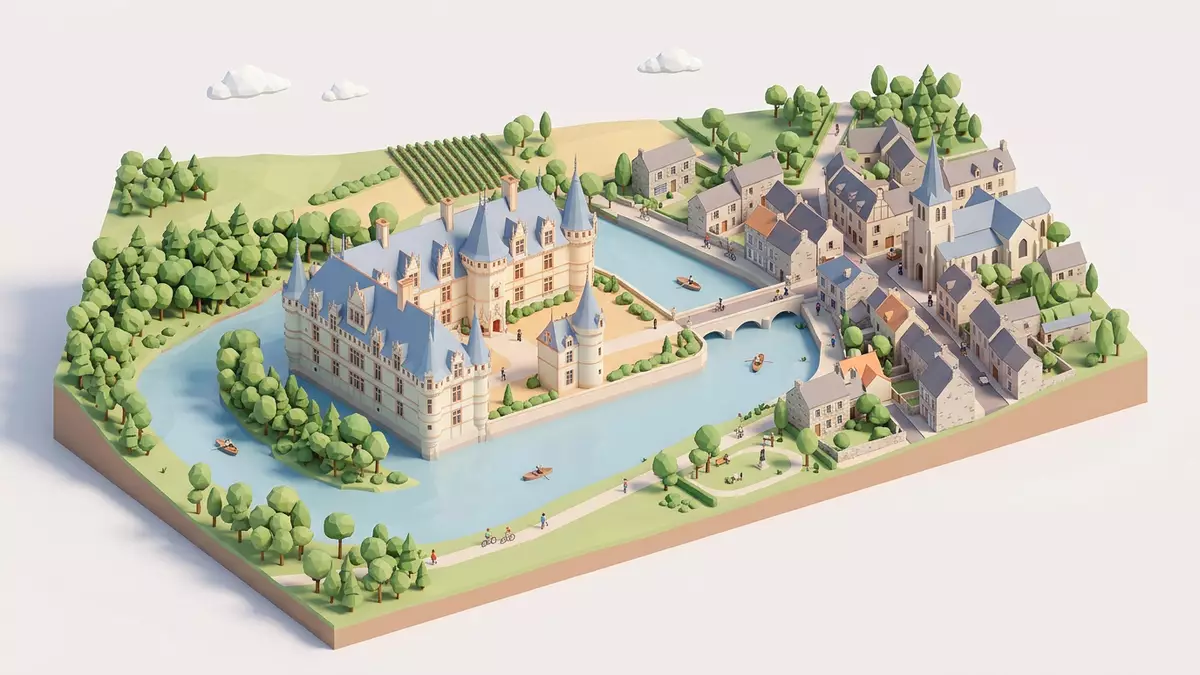
Chateau d'Azay-le-Rideau rises on a small island in the Indre, in the Loire Valley, and its mirrored façades are as memorable as its Renaissance stonework. Built under Francis I by Gilles Berthelot, it belongs to the first wave of French Renaissance châteaux. The building’s compact mass, slate roof and water setting give it a clear identity at a glance.
Renaissance stone on an island in the Indre
The château stands in Azay-le-Rideau, about 19 rue Balzac, and the river runs tight around the site. Its setting places the building between water and garden rather than within a broad open court.
The exterior mixes French traditions with decorative details drawn from Italy. That blend is one of the reasons the château is closely linked to early Renaissance architecture in the Loire Valley. The current château dates from the early sixteenth century, and its profile is finished off by dormers, machicolations and a steep roofline.
The château’s later shaping
The building reached its present form through changes in the nineteenth century, when the Marquis de Biencourt altered the wings and gave the château greater visual unity. That later work sits clearly alongside the earlier shell, so the house reads as a layered piece of architecture rather than a frozen single moment.
The north façade, the straight staircase and the corbelled tower give the interior elevation a formal rhythm. The staircase rises in straight flights, and the façade carries sculptural detail that keeps the eye moving across windows, bays and carved surfaces. The architecture of the château also makes clear how the stonework and roofline work together as a single composition.
Water, reflection and the Loire tradition
One of the strongest features is the water mirror around the south and west sides. The château seems to sit between stone and reflection, with the river arm running close to the façades and the building doubled in the water.
That reflection belongs to the monument’s identity as much as the masonry itself. The result is a château that is read through surface, outline and setting, with Gilles Berthelot’s early sixteenth-century residence and Biencourt’s nineteenth-century alterations still visible in the same view. The site is also part of the Loire Valley landscape of grand houses and river estates. The castle of Azay-le-Rideau presents that relationship without needing any explanatory flourish.
Visiting Chateau d'Azay-le-Rideau: what travellers from Western Europe should know
- The château is in the town of Azay-le-Rideau in Indre-et-Loire, in central France. Rail travellers usually reach the town first, then continue to the château through the historic centre.
- The building sits on an island in the Indre, and the approach includes water on several sides. The ground around it is level, but the island setting keeps the site compact.
- The façade, staircase and roof are the main architectural features to watch. The château also preserves a clear contrast between the early Renaissance core and later nineteenth-century additions.
- The official language is French and the currency is the euro.
Searching for Chateau d'Azay-le-Rideau on social platforms
These links open searches for Chateau d'Azay-le-Rideau on each platform.
Frequently asked questions about Chateau d'Azay-le-Rideau
Where is Chateau d'Azay-le-Rideau?
It stands in the town of Azay-le-Rideau, in Indre-et-Loire, in the Loire Valley. The château sits on an island in the Indre, close to the centre of the town.
What does a visit show?
The main impression comes from the exterior: stone façades, a steep roof, straight staircases and the surrounding water. Inside, the architecture reflects both the sixteenth-century core and nineteenth-century alterations.
What makes it distinctive?
The mix of Renaissance masonry and reflective water is the château’s strongest visual feature. Francis I, Gilles Berthelot and the Marquis de Biencourt all belong to its story, and their marks remain legible in the building.


