
Chateau de Chenonceau and its stone gallery over the Cher
Published on 09/19/2026 at 17:18 | Editorial responsibility: Rafael Müller, Editor-in-Chief AD HOC NEWS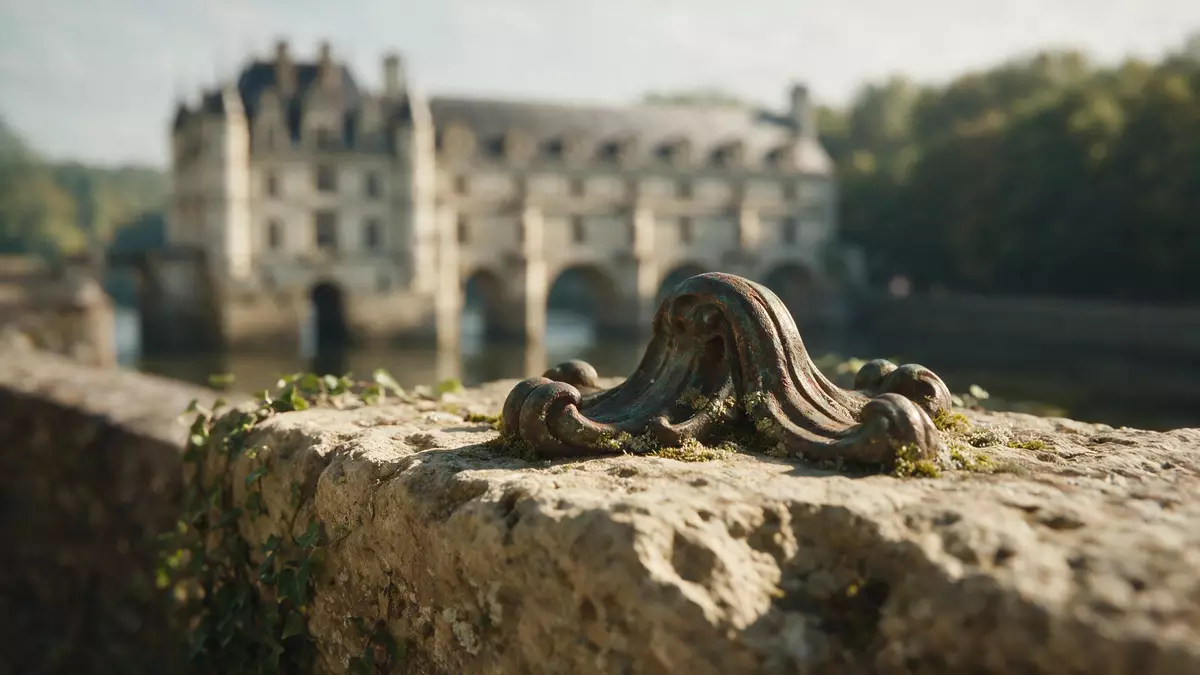
Chateau de Chenonceau in Chenonceaux is a French Renaissance residence that extends in a continuous band of stone across the River Cher, uniting a riverside manor with a long gallery above a bridge. Built in the early sixteenth century for Thomas Bohier and his wife Catherine Briçonnet, and reshaped later in that century under Diane de Poitiers and Catherine de’ Medici, it stands within the cultural landscape of the Loire Valley in France.
A Renaissance house beside the River Cher
At the core of Chateau de Chenonceau is a rectangular residence aligned along the north bank of the Cher, created as a Renaissance house in the second decade of the sixteenth century rather than as a defensive stronghold.The château in its current form was built between 1513 and 1517 by Thomas Bohier, a royal official, and above all his wife Catherine Briçonnet, who replaced most of an earlier medieval complex with this more regular structure.Bohier’s project marked a transition from Gothic forms to Renaissance architecture.
The house presents pale masonry walls, rhythmic window lines and steep slate roofs, with dormers and chimneys that rise above the main volumes in a carefully ordered skyline.Architects associated with this phase include Philibert de l’Orme and Jean Bullant, whose designs helped to blend late Gothic detailing with emerging French Renaissance motifs. Beside the main wing stands the Tour des Marques, a cylindrical medieval tower that is the surviving dungeon of the twelfth- and thirteenth-century stronghold documented on this site, giving the ensemble a visible link back to the earlier fortress and mill that once controlled traffic along the river.The first château was a medieval fortress dating from the twelfth and thirteenth centuries, of which only the Tour des Marques remains.
The long gallery carried across the Cher
What makes Chateau de Chenonceau distinct within the Loire Valley is the way its architecture steps out from the riverbank and spans the Cher in stone, forming an inhabited bridge.The château’s principal extension over the river began with a bridge built between 1556 and 1559 to designs by the French Renaissance architect Philibert de l’Orme, whose series of arches carry the structure from the original house towards the opposite bank. In the 1570s this bridge gained a full gallery rising above its deck, designed by Jean Bullant, so that the stone span became a multi-storey wing in its own right.This gallery was built between 1570 and 1576 on top of the earlier bridge.
From outside, the river façade shows evenly spaced windows set above robust piers, with the water flowing under a rhythm of arches that link one bank to the other. Inside, the gallery is laid out as a sequence of rooms and halls that run the full length of the bridge, turning circulation across the river into an interior experience framed by stone walls and window openings. This configuration, combining a substantial dwelling on the bank with an enclosed gallery above a bridge, gives Chenonceau a profile that is strongly associated with the Cher and has led to its description as a château astride the river.The château carries its gallery across the Cher in a continuous band of stone.
Women, gardens and the Loire Valley setting
The history of Chateau de Chenonceau in the sixteenth century is closely tied to a succession of women who left enduring marks on its architecture and gardens, which is why it is widely known as the “Château des Dames”.Figures such as Diane de Poitiers and Catherine de’ Medici shaped the château after Bohier and Briçonnet, reworking both built fabric and landscape. Diane de Poitiers, granted the estate by King Henry II in the mid-sixteenth century, oversaw the creation of formal gardens aligned with the main wing and connected to the river, with geometric parterres framed by terraces and water, so that planting and architecture appear as a single ordered composition along the bank.Her work established the principal riverside garden layout below the château.
After Henry II’s death in 1559, Catherine de’ Medici took control of Chenonceau and extended the building with the long gallery above Philibert de l’Orme’s bridge, using the new rooms for courtly festivities and gatherings that made the river-spanning wing a setting for royal occasions.Catherine de’ Medici added the gallery above the bridge and used Chenonceau as a residence for royal events. The château’s broader landscape belongs to the Loire Valley, a region recognised as a UNESCO World Heritage site for its concentration of Renaissance châteaux, historic towns and river scenery.Chenonceau forms part of the Val de Loire cultural landscape inscribed on the World Heritage List, and its combination of manor, medieval tower, bridge and gallery offers a compact example of how architecture, water and gardens intersect in this part of France.
Visiting Chateau de Chenonceau: what travellers from Western Europe should know
- Chateau de Chenonceau stands on the River Cher in the village of Chenonceaux in central France’s Loire Valley, reached by regional trains that stop at Chenonceaux station and by roads that follow the Cher valley.
- The estate combines built and garden areas with paths, terraces and staircases, and the main house and gallery are arranged over several floors linked by interior stairways.
- Chenonceaux lies in France, where the official language is French and the currency is the euro.
Searching for Chateau de Chenonceau on social platforms
These links open searches for Chateau de Chenonceau on each platform.
Frequently asked questions about Chateau de Chenonceau
Where is Chateau de Chenonceau located?
Chateau de Chenonceau is situated on the River Cher in the village of Chenonceaux in the Loire Valley region of central France.
What can visitors expect when exploring Chateau de Chenonceau?
Visitors encounter a Renaissance manor house, the medieval Tour des Marques and a long enclosed gallery carried on a stone bridge over the Cher, alongside formal riverside gardens and wooded walks.
What makes Chateau de Chenonceau distinctive among Loire Valley châteaux?
Chateau de Chenonceau is distinctive because its architecture spans the River Cher in an inhabited bridge and gallery, combining a riverside residence, a medieval tower, gardens and multi-storey rooms over the water.


