
Chateau de Fontainebleau, a palace of layered French royal history
Published on 08/25/2026 at 12:24 | Editorial responsibility: Rafael Müller, Editor-in-Chief AD HOC NEWS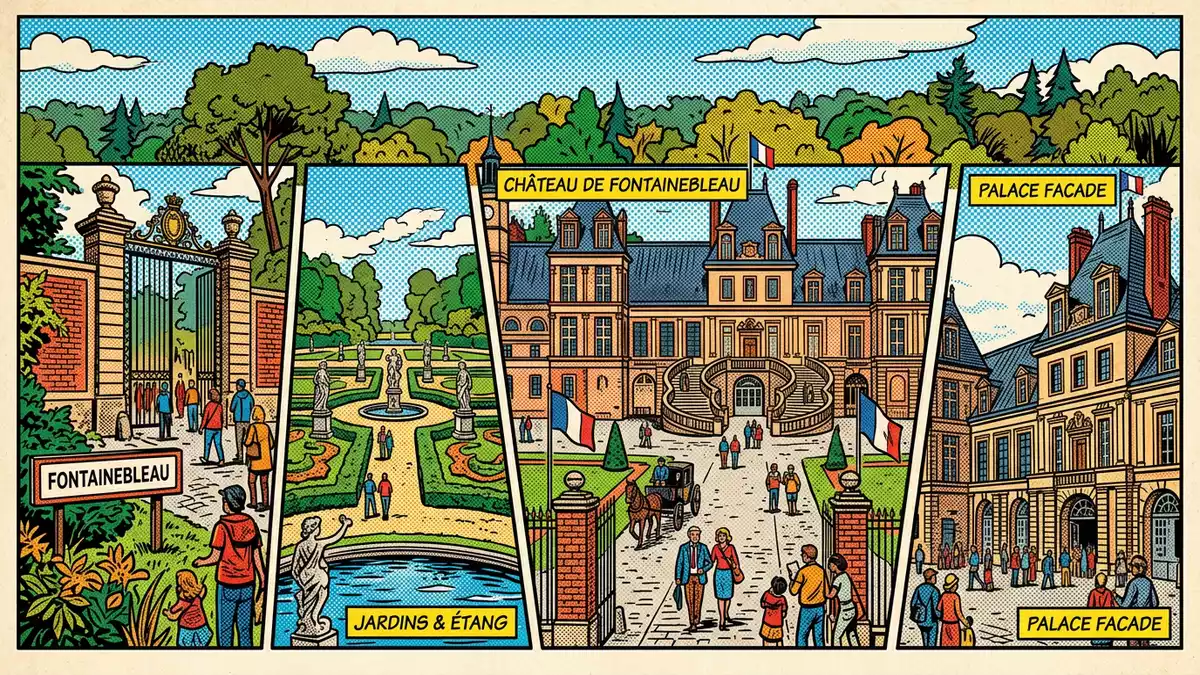
Chateau de Fontainebleau in Fontainebleau brings together centuries of French royal life in a single palace, wrapped in formal gardens and a vast historic park. Used as a residence by French rulers from the medieval period through to the nineteenth century, it combines Renaissance exuberance with classical order in a way few other royal houses in France display quite so clearly.
From medieval hunting lodge to Renaissance palace
Fontainebleau began as a royal residence amid the forests of Île-de-France, south-east of Paris, where kings of France used a lodge as a base for hunting from at least the twelfth century.kings of France from the 12th century The earliest recorded royal residence dates to the reign of Louis VII, placing the origins of the site firmly within the medieval Capetian era.earliest reference to a royal residence
The transformation that gives Chateau de Fontainebleau much of its character took place in the sixteenth century under King Francis I, who invited Italian artists and craftsmen to reshape the old complex in the spirit of the Renaissance.transformed, enlarged and embellished in the 16th century by François I Renaissance wings, galleries and ornamental details were added around the surviving medieval core, creating a palace that blends French building traditions with Italianate decoration, and that became a key setting for what came to be known as the School of Fontainebleau.
Architectural layers: Renaissance, classical and imperial
Chateau de Fontainebleau is known for its combination of Renaissance and classical architecture, with later additions from the nineteenth century sitting beside sixteenth and seventeenth-century structures.styles principalement Renaissance et classique Around its courtyards, long façades line up with arcades, steep roofs and tall chimneys, while inside, galleries and apartments are decorated with frescoes, stucco work and carved panelling that showcase changing royal tastes over several reigns.
The palace layout draws together a series of major courts, including spaces such as the Cour du Cheval Blanc and the Cour Ovale, which organise the transition between the town and the royal apartments.structured around four main courtyards Beyond the buildings, the design of the park and gardens developed with features such as a grand canal and extensive parterres, creating long vistas and water surfaces that connect the architecture with the surrounding landscape.the first Grand Canal in France was created
Napoleon, UNESCO and the palace as museum
In the nineteenth century, Napoleon Bonaparte adopted Chateau de Fontainebleau as one of his residences and ordered extensive refurbishments, leaving a strong imperial imprint on the interiors.decided to make the Château de Fontainebleau one of his residences State apartments, throne rooms and private quarters from this period form a distinct layer within the complex, alongside rooms associated with earlier monarchs such as Francis I and later rulers of the Bourbon and Bonaparte dynasties.diversity of its décor bear witness to the times and tastes of the sovereigns
The palace became a national museum in the twentieth century and is recognised as part of the Palace and Park of Fontainebleau UNESCO World Heritage Site, inscribed in 1981 for its architecture, decor and historic role.national museum in 1927 and UNESCO World Heritage in 1981 Its status as a historic monument is reinforced by French heritage protection, and the museum presentation highlights how successive dynasties shaped the rooms, from Renaissance galleries to Second Empire furnishings, within a palace that contains over 1,500 rooms.over 1,500 rooms
Visiting Chateau de Fontainebleau: what travellers from Western Europe should know
- Chateau de Fontainebleau stands in the town of Fontainebleau in the Île-de-France region, south-east of Paris, and is reached by regional rail services and local buses that link the capital with the town.
- The palace complex covers a large area with multiple courtyards, long corridors and garden paths, so a visit involves considerable walking over paved surfaces, gravel paths and gentle slopes.
- The surrounding park and historic forest extend beyond the formal gardens, and paths radiate from the chateau into wooded areas that offer longer walks for those who wish to explore the wider landscape.
- The official language is French and the currency is the euro.
Searching for Chateau de Fontainebleau on social platforms
These links open searches for Chateau de Fontainebleau on each platform.
Frequently asked questions about Chateau de Fontainebleau
Where is Chateau de Fontainebleau located?
Chateau de Fontainebleau stands in the town of Fontainebleau in the Île-de-France region of France, south-east of Paris, surrounded by historic forest and formal gardens.
What can visitors expect inside Chateau de Fontainebleau?
Visitors encounter layers of French royal history in a complex of galleries, apartments and ceremonial rooms, with Renaissance frescoes, classical interiors and imperial-era furnishings.
What makes Chateau de Fontainebleau distinctive among French palaces?
The palace is distinctive because it was occupied by French sovereigns from the twelfth to the nineteenth century and combines medieval origins, Renaissance architecture, classical additions and Napoleonic interiors in a single estate.


