
Cinque Terre: terraces, cliffs and five Ligurian villages
Published on 09/21/2026 at 22:58 | Editorial responsibility: Rafael Müller, Editor-in-Chief AD HOC NEWS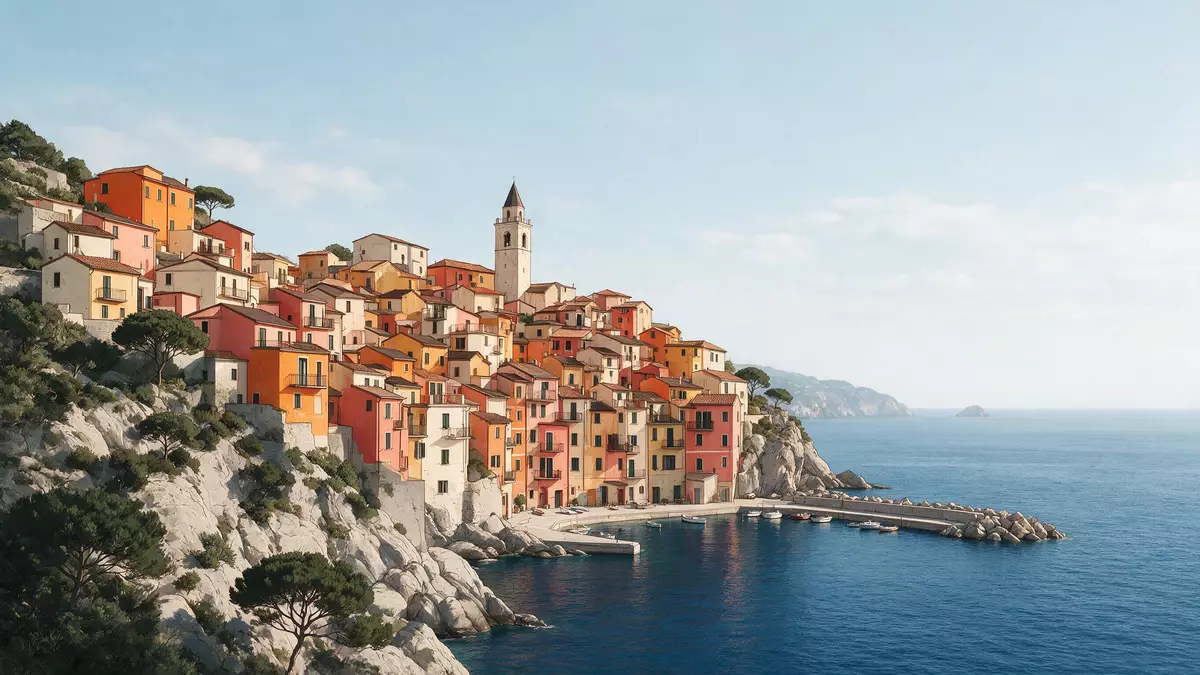
Cinque Terre on the Ligurian coast near La Spezia is a short stretch of steep seaside hills where terraces, cliffs and five compact villages form a continuous cultural landscape above the Ligurian Sea. In Liguria in north?western Italy, the area has been recognised as part of a UNESCO World Heritage site since 1997, bringing the coastal band between Punta Mesco and headlands near La Spezia into a single protected setting of cultivated slopes and rocky shoreline.
Five villages along a narrow coastal band
Cinque Terre takes its name from the five small settlements that occupy ledges and spurs above the sea: Monterosso al Mare, Vernazza, Corniglia, Manarola and Riomaggiore. These villages stand within the province of La Spezia on the Riviera di Levante, enclosed between the promontory of Punta Mesco to the west and coastal headlands nearer La Spezia to the east, in a coastal band that extends for about 15 km.the coastal band
The settlements occupy different positions on this narrow strip of land. Monterosso al Mare lies towards the western end, with built?up areas and shorefronts set beside the water. Vernazza clusters around a small harbour on a rocky inlet, with buildings arranged up the slopes behind it. Corniglia stands further inland on a spur high above the sea, surrounded by cultivated terraces and without direct contact with the shoreline. Manarola and Riomaggiore both occupy steep ravines that open towards the coast, with houses rising above small inlets and paths climbing towards the terraces.
Terraced hillsides and a protected cultural landscape
The hills above Cinque Terre rise quickly from the shore, creating short but steep catchments where small streams run towards the Ligurian Sea. Over centuries, these slopes have been developed into narrow terraces, supported by dry stone walls, which create belts of cultivation for vines and olive trees that follow the contours of the terrain.terraces supported by dry stone walls The result is a band of landscape where cultivated steps, rocky outcrops and small settlements together form a single visual whole.
The coastline, the five villages and the surrounding hillsides form part of Cinque Terre National Park, a protected area described as Italy’s smallest national park by area, which covers territory in the communes of Monterosso al Mare, Vernazza, Corniglia, Manarola, Riomaggiore, Levanto and La Spezia.Cinque Terre National Park The wider coastal setting is recognised by UNESCO as the property “Portovenere, Cinque Terre, and the Islands (Palmaria, Tino and Tinetto)”, inscribed in 1997 as a cultural landscape that links terraced hills, small harbours and offshore islands into one coastal ensemble.Portovenere, Cinque Terre, and the Islands
Paths, coves and compact spaces between rock and water
The terrain of Cinque Terre is mainly mountainous and hilly, forming a narrow band of cliffs above the sea with secondary ridges and extensive terracing.a narrow strip of land with cliffs The coast itself is largely rocky, punctuated by small inlets, coves and a limited number of beaches where the slopes break to meet the water.rocky coast with coves This mixture of steep slopes, short watercourses and irregular shoreline creates compact spaces where terraces, paths and buildings stand close together above the sea.
Ancient paths and more recent tracks run along the contours and link the villages, crossing terraces planted with vines and olive trees and passing viewpoints over the water.paths across terraced slopes Where these routes drop towards the settlements they pass through narrow streets and stairways, highlighting how closely the built fabric is fitted into the available ledges and spurs. In places the terraces rise directly above small harbours and coves; in others they climb high behind the villages, forming bands of cultivation that mark the hillsides.
Visiting Cinque Terre: what travellers from Western Europe should know
- Cinque Terre lies on the eastern section of the Ligurian Riviera in the province of La Spezia, between Punta Mesco and headlands near La Spezia, and is reached by rail services that run along the coastal band and by roads descending from the inland hills.
- The terrain is steep and compact, with villages fitted into ravines and on spurs, and many routes between streets, stations and viewpoints follow stairways and paths that rise sharply above the sea.
- The surrounding landscape consists of terraced hillsides supported by dry stone walls, rocky cliffs and short watercourses, so moving between villages on foot involves paths that traverse slopes and pass above inlets and coves.
- The official language is Italian and the currency is the euro.
Searching for Cinque Terre on social platforms
These links open searches for Cinque Terre on each platform.Frequently asked questions about Cinque Terre
Where is Cinque Terre located?
Cinque Terre is a coastal area in Liguria in north?western Italy, within the province of La Spezia, between Punta Mesco and coastal headlands near La Spezia.
What should travellers expect on a visit?
The area offers compact villages on steep slopes, terraced hillsides planted with vines and olives, rocky coves and paths that link settlements along a short section of the Ligurian coast.
What makes Cinque Terre distinctive among Italian coastal regions?
Its combination of five closely spaced villages, extensive dry?stone terraces and inclusion within a UNESCO cultural landscape and a national park gives this short coastal band a strongly unified character.


