
Ciudad Amurallada de Cartagena, a living Spanish colonial waterfront city
Published on 08/06/2026 at 22:35 | Editorial responsibility: Rafael Müller, Editor-in-Chief AD HOC NEWS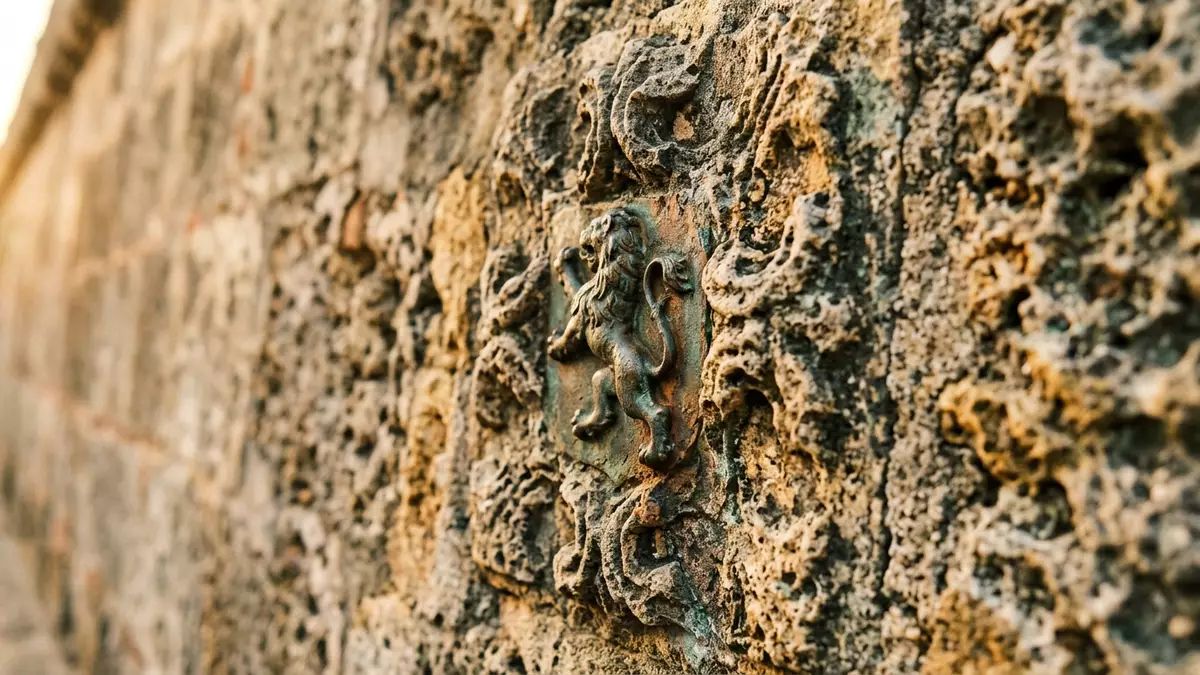
Ciudad Amurallada de Cartagena is the fortified historic centre of Cartagena in Colombia, a dense Caribbean port city framed by thick stone ramparts and bastions. Within these walls, Spanish colonial churches, convents and merchant houses line streets that stay narrow, shaded and close-packed, so every walk feels connected to the stone fabric around you.
Stone walls facing the Caribbean
The defining feature of Ciudad Amurallada de Cartagena is the continuous circuit of defensive walls that separates the old town from the water and the later districts beyond. These fortifications date from the period after the mid sixteenth century, when the Spanish Crown intensified work on harbour defences in the Caribbean to protect its shipping and coastal settlements from attack and piracy.
The walls are built predominantly of masonry, with massive outer faces and an interior walkway that runs along the top, giving long views over the sea on one side and tiled roofs on the other. At intervals the line of fortification swells into bastions set at angles to each other, creating a jagged outline that allows overlapping fields of fire along the waterfront and outward towards the bay. From inside the old town the ramparts often rise directly behind rows of houses and courtyards, so that residential lanes end in stone rather than in open ground.
Plazas, churches and convents inside the walls
Within Ciudad Amurallada de Cartagena the urban structure follows a Spanish colonial pattern laid out after the foundation of Cartagena in the sixteenth century, with plazas and religious buildings anchoring neighbourhoods. At the centre of civic life stands a main square dominated by the cathedral, a church whose present form reflects work carried out across the late sixteenth and seventeenth centuries. Its bell tower is a vertical counterpoint to the low streets around, visible from many points across the old town.
Several convents and monasteries occupy large city blocks, enclosed by thick walls and internal cloisters where arcades surround planted courtyards. Many houses along the streets date from the seventeenth and eighteenth centuries, with upper floors projecting over the pavements on wooden balconies and lower storeys built in stone to withstand the climate and the wear of traffic. Shuttered windows, carved doorways and ornamental metalwork on knockers and hinges give each facade its own character, while the narrowness of the streets keeps sightlines short so that plazas open suddenly from enclosed corners.
Harbour, fortresses and broader defensive system
Citizens and visitors in Ciudad Amurallada de Cartagena are rarely far from water, whether the inner harbour, the wider bay or the Caribbean Sea beyond. The walled city forms one part of a larger defensive system that also includes fortresses on nearby hills and structures on islands guarding the approaches to the port. Chief among these is the Castillo de San Felipe de Barajas, a powerful fortress on a rise of ground inland from the old town, whose construction began in the seventeenth century and continued with expansions in the eighteenth century.
The relationship between the harbour and the walled city is direct: quays, docks and customs buildings stand close to the fortifications, and routes through the walls connect the inner streets with the waterfront. From the seaward bastions, cannon emplacements and embrasures still mark the points where artillery once faced outward toward the channel, while powder magazines and vaulted rooms within the fortifications illustrate how the military infrastructure was organised. The entire system of walls, fortresses and harbour works together reflects Cartagena’s role across the Spanish colonial period as a key Caribbean port within the wider trade networks linking Europe, Africa and the Americas.
Visiting Ciudad Amurallada de Cartagena: what travellers from Western Europe should know
- Ciudad Amurallada de Cartagena lies in Cartagena on Colombia’s Caribbean coast and is reached by air via Cartagena’s international airport and by road from other parts of the country.
- Admission arrangements and opening hours are set by the site’s operator and change with the season; the official website is the only binding source.
- The Caribbean setting means warm temperatures for much of the year, with afternoons often bright and exposed on the seaward walls, so many visitors favour gentler light in the early morning or evening.
- The old town’s streets are paved and often uneven, with steps up to the ramparts and inclines leading towards the fortresses, so footwear suited to walking on stone is advisable and restrictions may apply on site.
- Spanish is the main language spoken in Cartagena, bank cards are widely accepted in established businesses, and ordinary urban customs apply, with visitors dressing modestly around religious buildings.
- Entry requirements depend on your nationality. UK travellers should check the FCDO travel advice at gov.uk/foreign-travel-advice; Irish travellers the Department of Foreign Affairs at ireland.ie; EU and EEA citizens their own national foreign ministry.
Searching for Ciudad Amurallada de Cartagena on social platforms
These links open searches for Ciudad Amurallada de Cartagena on each platform.
Frequently asked questions about Ciudad Amurallada de Cartagena
Where is Ciudad Amurallada de Cartagena?
Ciudad Amurallada de Cartagena is the historic walled centre of Cartagena, a port city on Colombia’s Caribbean coast in the north of South America.
What should visitors expect inside the walled city?
Visitors walk through narrow streets lined with Spanish colonial houses, churches and convents, with plazas opening between them and stone ramparts forming the outer edge.
What makes Ciudad Amurallada de Cartagena distinctive?
The combination of continuous harbour-facing walls, bastions, inner fortresses such as Castillo de San Felipe de Barajas and a dense colonial urban fabric gives the old town a strong, unified character.


