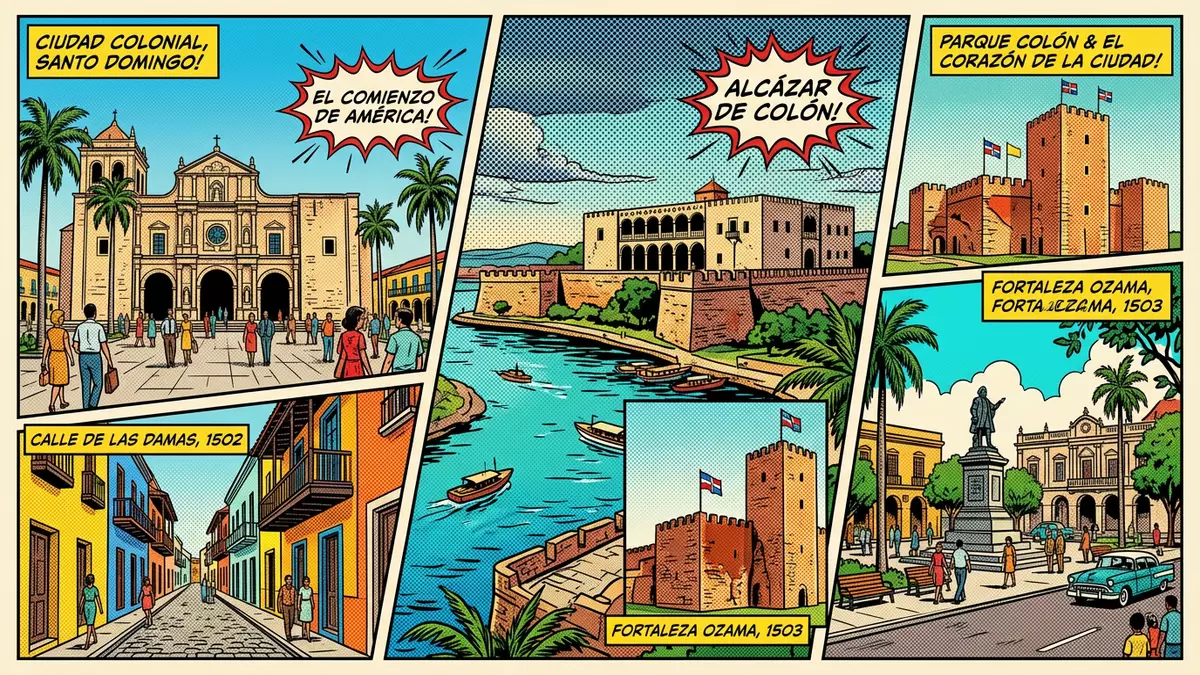
Ciudad Colonial’s stone streets and Spanish-era skyline
Published on 08/07/2026 at 15:10 | Editorial responsibility: Rafael Müller, Editor-in-Chief AD HOC NEWS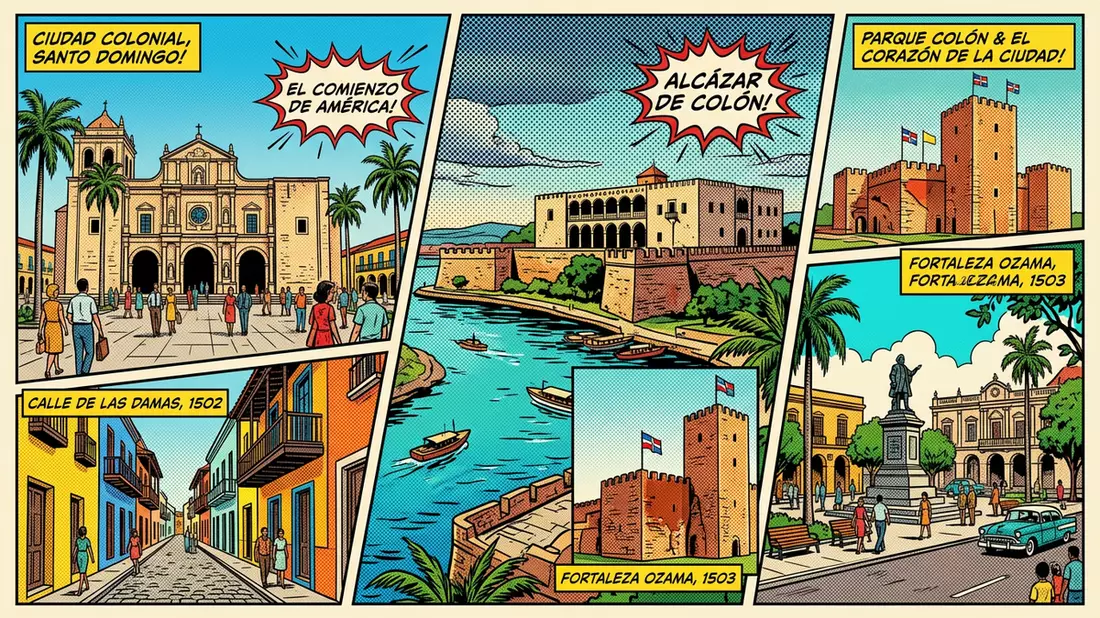
Ciudad Colonial in Santo Domingo is the compact historic core of the Dominican capital, defined by stone churches, civic buildings and streets laid out in the early Spanish colonial period. Its fabric carries the names of Christopher Columbus, Nicolás de Ovando and the early sixteenth century.
Stone streets and early Spanish foundations
The area preserves a dense urban pattern of narrow streets, shaded squares and masonry buildings from the colonial era. The Cathedral of Santa María la Menor, begun in the early sixteenth century, is one of the key anchors of the district.
Nearby stand Alcázar de Colón, linked to Diego Columbus, and fortified edges that recall the city’s position on the Caribbean coast. The district is a working historic quarter rather than an isolated monument.
Plazas, forts and the urban frame
Plaza de España opens beside the Alcázar, while other squares and lanes connect churches, museums and restored houses. The streets keep a human scale, with facades close to the pavement and little separation between civic, religious and domestic architecture.
Fort Ozama and the riverfront fortifications add a military layer to the district’s older religious and administrative buildings. The result is a compact ensemble that can be read through stone, masonry and changing street lines.
Colonial buildings in everyday use
Many buildings in Ciudad Colonial serve cultural, civic and hospitality functions alongside their historic identity. That mix includes museums, restaurants, galleries and offices inside structures that date back centuries.
The district’s appeal lies in the visible overlap of functions: cathedral, fortress, square and street all remain part of one urban quarter. The Spanish colonial plan survives in a place that still works as part of Santo Domingo.
Visiting Ciudad Colonial: what travellers from Western Europe should know
- Ciudad Colonial lies in Santo Domingo and is reached by road from the rest of the city, with the historic streets best explored on foot.
- Admission arrangements and opening hours are set by the site's operator and change with the season; the official website is the only binding source.
- Late afternoon and the evening suit walks through the squares and streets, when the district feels active around cafés and churches.
- Expect uneven paving, some narrow sidewalks and stretches of walking between major sights.
- Spanish is the main language, and Dominican pesos are the usual currency for small purchases.
- Entry requirements depend on your nationality. UK travellers should check the FCDO travel advice at gov.uk/foreign-travel-advice; Irish travellers the Department of Foreign Affairs at ireland.ie; EU and EEA citizens their own national foreign ministry.
Searching for Ciudad Colonial on social platforms
These links open searches for Ciudad Colonial on each platform.
Frequently asked questions about Ciudad Colonial
Where is Ciudad Colonial?
Ciudad Colonial is the historic centre of Santo Domingo in the Dominican Republic. It sits near the river mouth and the older grid of the colonial city.
What should visitors expect?
Expect churches, plazas, museums, fortifications and short walks through narrow streets. The district mixes historic monuments with cafés and everyday city life.
What makes it distinctive?
Its Spanish colonial street plan and early masonry buildings give it a strong architectural identity. The Cathedral, the Alcázar de Colón and Fort Ozama anchor that character.