
Colonial City of Santo Domingo sees works on 2 October
Published on 10/04/2026 at 00:15 | Editorial responsibility: Rafael Müller, Editor-in-Chief AD HOC NEWS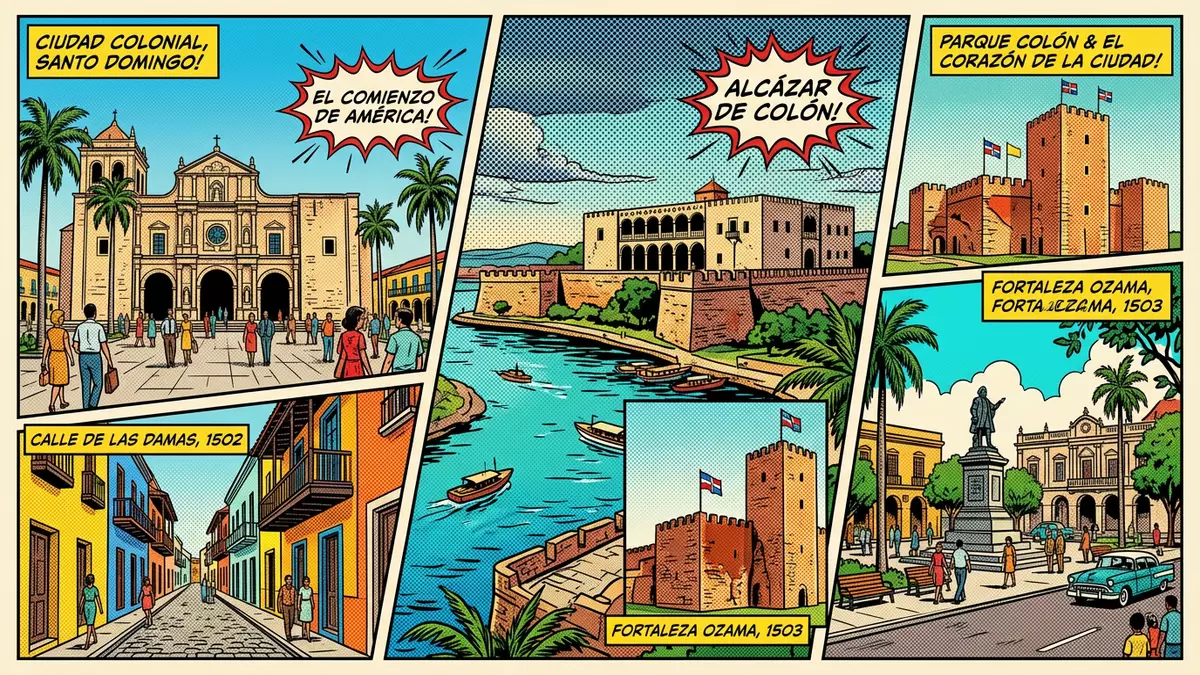
The Colonial City of Santo Domingo (the Spanish Zona Colonial) marked a new stage in its urban renewal on 2 October 2026, when the Ministry of Tourism delivered 254 improved homes and facades in the historic district. The work links the visitor setting in Santo Domingo with the living community that remains inside it.
Housing and facade works were delivered on 2 October
The handover covered 44 homes that received comprehensive rehabilitation, 60 historic facades and 150 further homes improved through the Pinta Tu Ciudad programme. The Ministry of Tourism presented the intervention as part of a wider effort to improve living conditions while preserving the historic character of the area.
The first 44 homes had urgent structural and household problems, including damaged roofs, leaks, bathrooms, kitchens and electrical and sanitary networks. The 60 facades include walls, cornices, plasterwork, carpentry and traditional metalwork, giving the project a visible effect on streets used by residents and visitors. Details of the delivered work were reported on the day of the handover.
Restoration connects daily life with historic streets
The programme is the first phase of the housing improvement component known as Promevi. The 44 completed homes are in traditional sectors including San Anton, San Lazaro, San Miguel, Santa Barbara and the southern part of the district. A further 140 homes are planned for comprehensive rehabilitation under the wider initiative.
The 2 October delivery therefore concerns more than the appearance of monuments: it also affects homes, shops and streets within a protected urban setting. The wider programme is being carried out by the Ministry of Tourism with the Ministry of Culture and the National District council, with financing from the Inter-American Development Bank and co-financing from the European Union. The urban recovery programme also includes public spaces and historic monuments.
UNESCO describes the site as the first permanent European establishment in the New World and records its foundation in 1498. Its protected area covers 106 hectares, with 32 streets crossing 116 blocks, while the grid plan and many monumental buildings remain substantially intact. UNESCO records the World Heritage site as inscribed in 1990.
Visiting Colonial City of Santo Domingo: what travellers from Western Europe should know
- The relevant news date is 2 October 2026, when the Ministry of Tourism delivered 254 improved homes and facades in the historic district.
- The announcement concerns homes and facades rather than a new visitor entrance or a declared closure of the district.
- The protected urban area covers 106 hectares and contains 32 streets crossing 116 blocks, so visits involve city streets, historic buildings and public spaces.
- The district lies in Santo Domingo at the mouth of the Ozama River, on the south coast of Hispaniola Island, according to UNESCO.
- The official language is Spanish and the national currency is the Dominican peso.
- Entry requirements depend on your nationality; UK travellers can check the FCDO travel advice at gov.uk/foreign-travel-advice, Irish travellers the Department of Foreign Affairs at ireland.ie.
Searching for Colonial City of Santo Domingo on social platforms
These links open searches for Colonial City of Santo Domingo on each platform.
Frequently asked questions about Colonial City of Santo Domingo
What changed at Colonial City of Santo Domingo?
On 2 October 2026, the Ministry of Tourism delivered 44 comprehensively rehabilitated homes, 60 restored historic facades and 150 further improved homes.
Where is Colonial City of Santo Domingo?
It is in Santo Domingo, at the mouth of the Ozama River on the south coast of Hispaniola Island.
What is Colonial City of Santo Domingo?
It is a UNESCO World Heritage urban site inscribed in 1990, founded in 1498 and laid out on a grid of historic streets and blocks.


