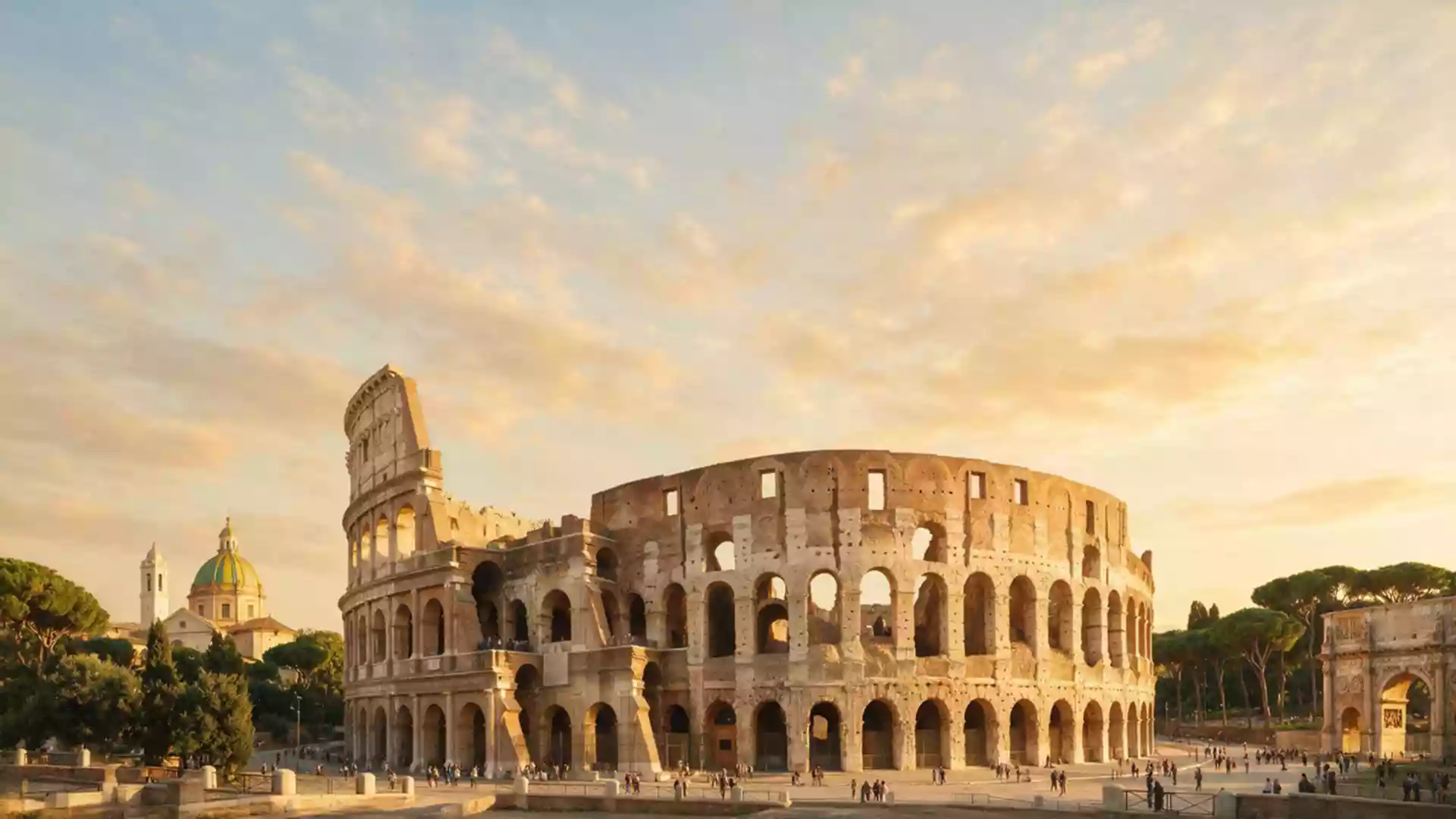
Colosseo in Rom and its ring of arches
Published on 08/17/2026 at 14:41 | Editorial responsibility: Rafael Müller, Editor-in-Chief AD HOC NEWS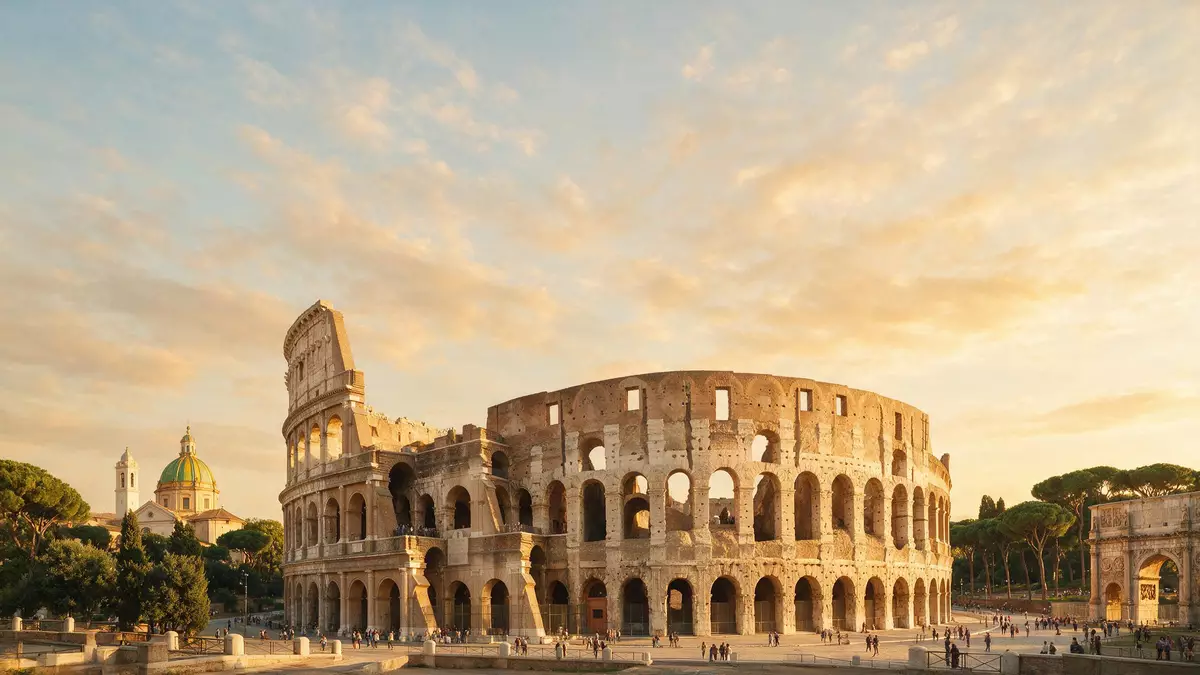
Colosseo in Rom is the Colosseum, the great amphitheatre of Flavian Rome. It began under Vespasian and was completed in AD 80, with its arcaded outer shell still defining the monument’s first impression. Its name remains tied to Rome’s imperial centre, where the building stands as a large stone and concrete ring.
Flavian Rome in stone and concrete
The Colosseum belongs to the Flavian emperors and keeps that political association in its very form. The amphitheatre was begun under Vespasian and completed under Titus, the emperor who dedicated it in 80 CE.
The building mixes travertine limestone, tuff and Roman concrete in a system of arches, vaults and corridors. That combination gives the exterior its regular arcades and the interior its layered structural rhythm, while the shell remains legible even in ruin.
A monument with a second life
As an amphitheatre, Colosseo was an urban machine for games and public display. Its surviving fabric still reads as a large arena surrounded by tiers, passageways and a dense outer envelope, all within the historic centre of Rome.
The monument belongs to the Historic Centre of Rome, listed as a World Heritage site in 1980. That status includes the Colosseum among a wider ensemble of monuments linked to antiquity and papal Rome.
What to notice at ground level
The outer wall is arranged in stacked arcades, and the surviving mass shows how the amphitheatre works as a hollow shell rather than a solid block. The building’s scale becomes clear from the repetition of arches and the thickness of the surviving masonry.
Inside, the open arena sits within the envelope of the great oval structure. The view across the interior exposes the relationship between the remains of the seating, the passage system and the monumental exterior.
Visiting Colosseo: what travellers from Western Europe should know
- Colosseo stands in central Rom, close to the Roman Forum and the city’s archaeological core. The Colosseo railway station is the nearest major stop for public transport.
- The monument is an amphitheatre with uneven ancient surfaces, heavy masonry and many steps. Any route through it follows broad stone passages and changes of level.
- The official language is Italian and the currency is the euro.
- Entry requirements depend on your nationality; UK travellers can check the FCDO travel advice at gov.uk/foreign-travel-advice, Irish travellers the Department of Foreign Affairs at ireland.ie.
Searching for Colosseo on social platforms
These links open searches for Colosseo on each platform.
Frequently asked questions about Colosseo
Where is Colosseo?
Colosseo stands in Rom, in the historic centre near the Roman Forum. It is the Colosseum, the Roman amphitheatre associated with the Flavian emperors.
What does a visit involve?
The place is a large ruin with arches, corridors, stone passages and changes of level. The setting is architectural rather than landscaped, with the arena and exterior shell as the main features.
What makes Colosseo distinctive?
Its identity comes from the surviving amphitheatre form, the arcaded outer wall and its association with Vespasian, Titus and the Flavian dynasty. The 1980 World Heritage listing places it within the Historic Centre of Rome.