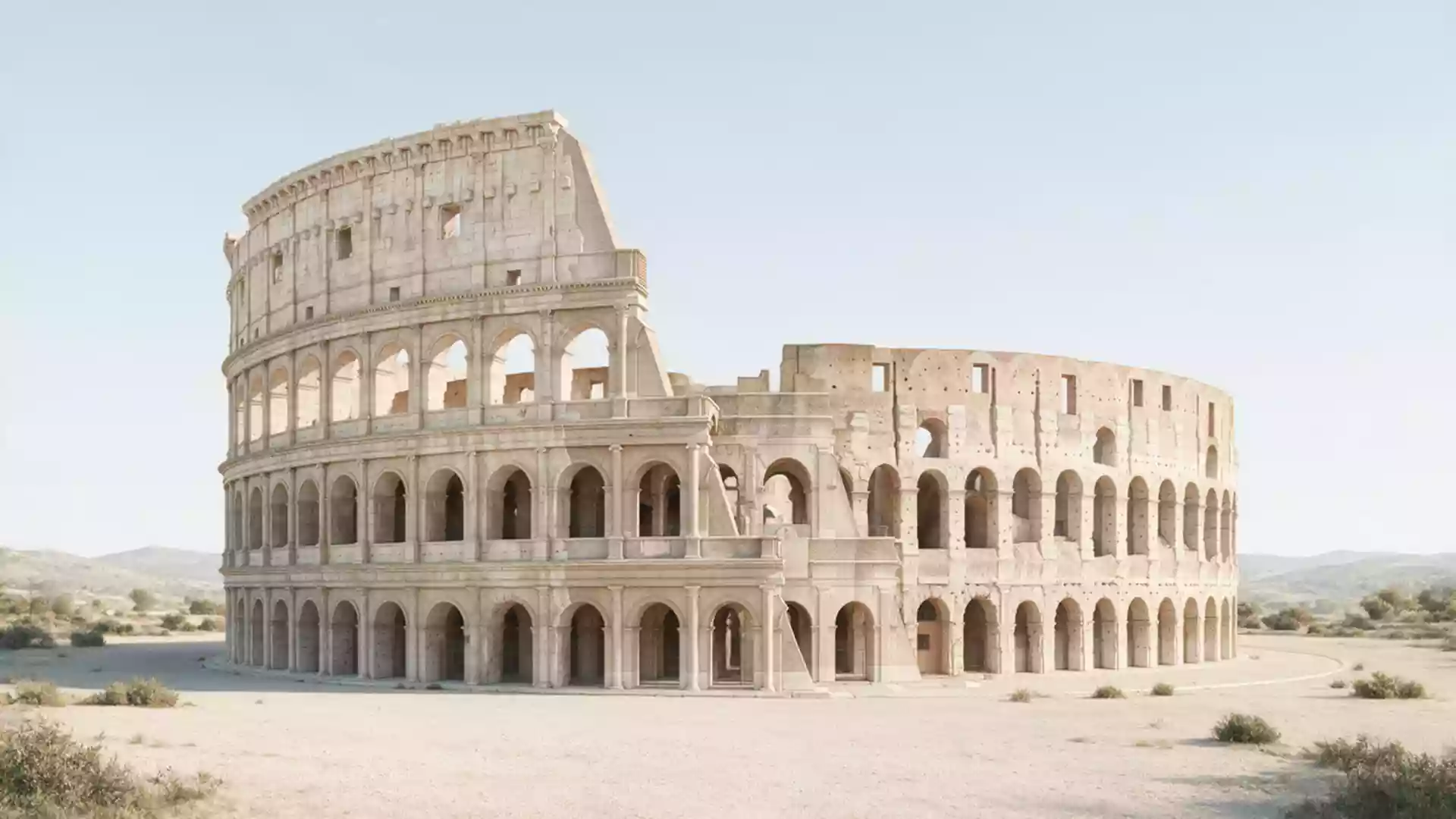
Colosseo in Rome and the power of an open arena
Published on 08/06/2026 at 22:28 | Editorial responsibility: Rafael Müller, Editor-in-Chief AD HOC NEWS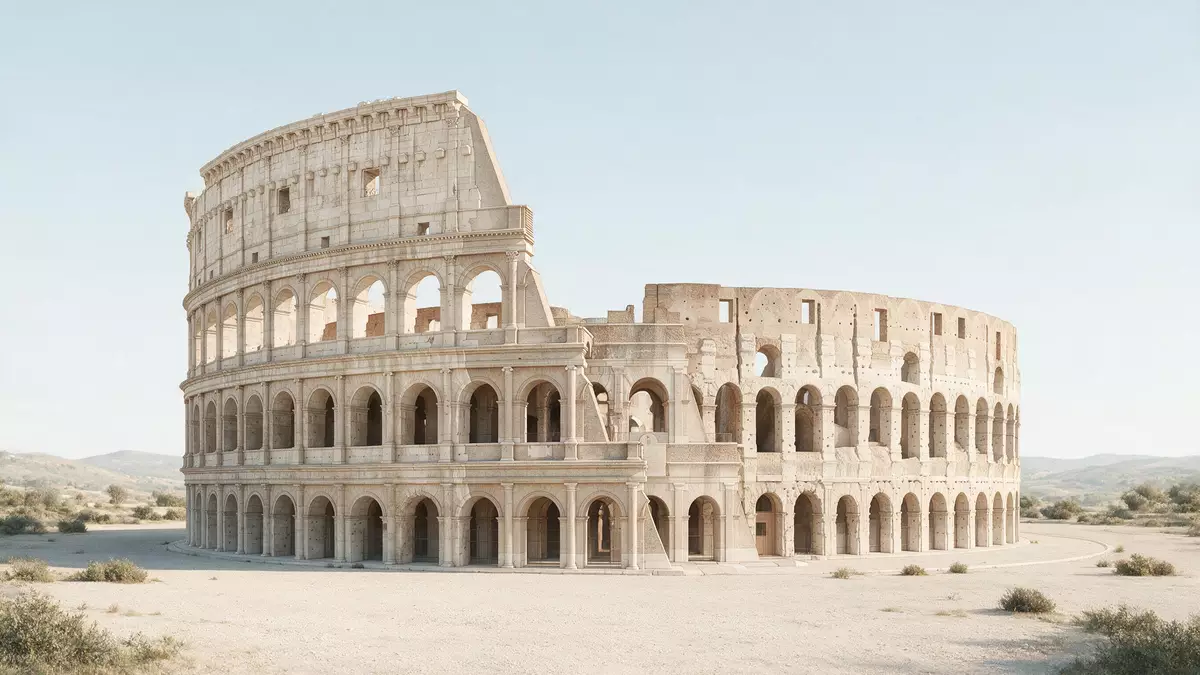
Step through the arches of the Colosseo in Rom and the broken outer walls give way to an immense open arena of stone tiers around a flat, exposed floor. Built under the emperors Vespasian and Titus in the 1st century AD, this Roman amphitheatre still shows how masonry, space and spectacle once came together in the centre of the imperial city.
An amphitheatre built in stone and spectacle
The Colosseo, often known in English as the Colosseum, was begun under Emperor Vespasian around AD 70 and formally inaugurated by his son Titus in AD 80. It is an oval Roman amphitheatre in masonry and concrete, rising in stacked storeys of arches that once formed continuous rings around the arena. Travellers standing outside see the surviving arcades in tiers, with engaged columns and entablatures marking each level in the language of Roman architecture.
Each storey of the outer wall carries a different classical order, with more robust details on the lower levels and lighter treatment higher up. The structure is built mainly of travertine and other local stone, tied together by an internal skeleton of concrete and brick. From the outside, the repetition of arches and pilasters gives a sense of rhythm and scale that contrasts with the later streets and houses of central Rome around it.
Inside the arena: tiers, tunnels and the exposed floor
Inside, the Colosseo opens into a high, encircling bowl of seating stepped up from the arena floor. In Roman times, these tiers were divided into sectors that reflected the social hierarchy of the city, with senators, equestrians and ordinary citizens seated in distinct zones. Stone and marble formed the seat blocks, with staircases and vomitoria leading spectators to their places through a network of internal corridors.
The arena itself was a flat wooden floor covered in sand, and beneath it lay a complex of chambers and passages now revealed to visitors. This underground system, known as the hypogeum, contains corridors, animal pens, lift shafts and working platforms arranged in a dense grid. Walking along the edges of the arena, visitors look down into this skeleton of walls and rooms, which turns what was once a smooth performance surface into a kind of open architectural model of the machinery below.
The Colosseo in the cityscape of Rome
The Colosseo stands near the eastern end of the Roman Forum, on the axis that runs towards the arch of Constantine and the Palatine Hill. Its outer arcades frame views of these neighbouring monuments, and from the upper levels visitors look across a landscape of ruins, domes and modern streets. This setting anchors the amphitheatre within the wider topography of ancient Rome, where forums, temples and palaces once clustered along the low hills and valleys by the Tiber.
Later periods adapted parts of the Colosseo for new uses, including chapels and fortified sections under medieval and Renaissance families. Stone from the structure was taken for building projects elsewhere in the city, leaving the jagged cross-section of the outer wall that visitors see on one side. Yet the overall form remains legible: a ring of masonry punctured by arches, encircling the central space where the arena and hypogeum lie open to the sky.
Visiting Colosseo: what travellers from Western Europe should know
- The Colosseo stands in central Rom, within walking distance of the Roman Forum and the Palatine, and is reached by urban public transport, taxis and city roads.
- Admission arrangements and opening hours are set by the site's operator and change with the season; the official website is the only binding source.
- Many travellers choose the cooler months or the early and late parts of the day, when the low sun brings out the colour and texture of the stone.
- A visit involves walking on uneven stone, negotiating steps and moving along corridors and stairways, so comfortable footwear is essential and some areas may feel demanding.
- Italian is the main language spoken on site, though English is widely understood in the tourist area, and card payments are common in Rom alongside cash.
- Entry requirements depend on your nationality. UK travellers should check the FCDO travel advice at gov.uk/foreign-travel-advice; Irish travellers the Department of Foreign Affairs at ireland.ie; EU and EEA citizens their own national foreign ministry.
Searching for Colosseo on social platforms
These links open searches for Colosseo on each platform.Frequently asked questions about Colosseo
Where is the Colosseo and how does it relate to central Rome?
The Colosseo stands in the historic centre of Rom, close to the Roman Forum and the Palatine Hill, in the area where ancient public life was concentrated.
What should visitors expect during a visit to the Colosseo?
Visitors can expect extensive walking on stone surfaces, views into the hypogeum beneath the arena floor and the chance to explore the surviving tiers of seating.
What makes the Colosseo distinctive among ancient Roman monuments?
The Colosseo is distinctive for its large open arena encircled by stone seating, its layered arcades in classical orders and the exposed network of underground chambers.