
Copan and the Maya city carved into stone
Published on 09/22/2026 at 17:29 | Editorial responsibility: Rafael Müller, Editor-in-Chief AD HOC NEWS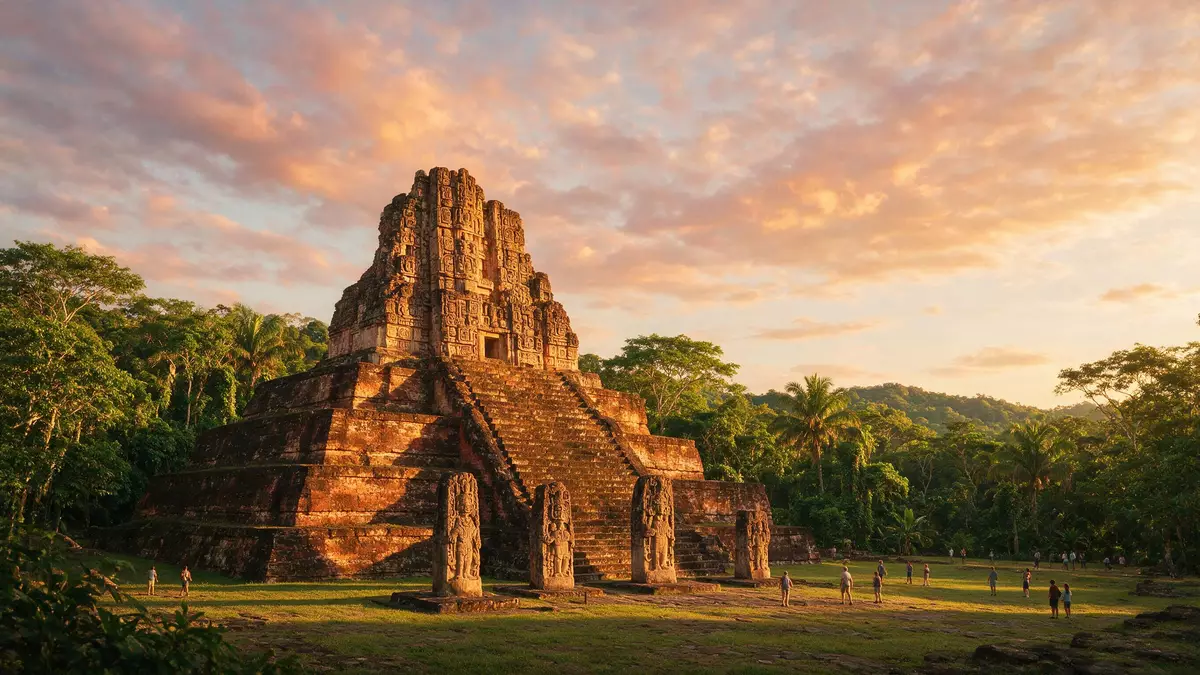
Copan is a Maya archaeological site in western Honduras, near the town of Copan Ruinas. Its central area brings together stone plazas, temples, terraces, sculpted monuments and an extraordinary inscribed stairway, creating a city whose history remains visible in carved surfaces.
Copan: a city of plazas and carved stone
Copan developed as a political, civil and religious centre in the Copan Valley during the Classic period of Maya civilisation. The surviving buildings are arranged across a ceremonial landscape of plazas, terraces and architectural groups, with the Acropolis forming a dense concentration of temples and platforms.
The site’s stonework combines large architectural masses with finely carved details. Stelae and altars carry images and inscriptions, while temple façades preserve the visual language of Maya rulership and ritual. The buildings are not isolated ruins; they form connected spaces in which open plazas sit between elevated platforms and monumental stairways.
The Hieroglyphic Stairway and Copan’s written history
The Hieroglyphic Stairway is Copan’s most distinctive written monument. Its steps carry the longest known Maya hieroglyphic inscription in the region, linking architecture with a record of dynastic history. the Hieroglyphic Stairway remains central to the site’s historical importance.
Copan’s sculptors also placed royal imagery across the city. The carved monuments show rulers, ritual figures and symbols associated with Maya political culture. A visit moves between broad paved spaces and concentrated details, from large platforms to small marks cut into stone.
From Classic Maya capital to World Heritage site
Copan flourished between the fifth and ninth centuries, within the Classic period. The city was abandoned in the early tenth century, while its monuments remained in the valley for centuries before the ruins were recorded by Diego García de Palacio in 1570.
Copan entered the UNESCO World Heritage List in 1980. The designation recognises its architectural and sculptural complex, including temples, plazas, terraces and the Hieroglyphic Stairway. Copan’s World Heritage inscription places the site within the cultural history of the Maya world.
The protected archaeological area lies in the Copan Valley, close to the modern settlement of Copan Ruinas. The town provides the geographical setting for a site where political history, monumental architecture and written records remain together in stone.
Visiting Copan: what travellers from Western Europe should know
- Copan lies in western Honduras, in Copan Department, beside the town of Copan Ruinas and near the Guatemalan border.
- The archaeological area includes plazas, temples, terraces, stairways, ball courts, altars and the Acropolis. Uneven ground and stone steps form part of the route through the ruins.
- The official language is Spanish and the currency is the Honduran lempira.
- Copan belongs to a warm valley landscape, while the monuments themselves are exposed stone structures surrounded by vegetation.
Searching for Copan on social platforms
These links open searches for Copan on each platform.
Frequently asked questions about Copan
Where is Copan?
Copan is in western Honduras, in Copan Department, near Copan Ruinas and the Guatemalan border.
What can visitors see at Copan?
The archaeological area contains temples, plazas, terraces, stairways, ball courts, altars, stelae and the Acropolis.
What makes Copan distinctive?
The Hieroglyphic Stairway carries the longest known Maya hieroglyphic inscription in the region, while the surrounding monuments preserve detailed stone sculpture.


