

Copan Ruinas and the Maya city of Copán in western Honduras
Published on 08/25/2026 at 19:49 | Editorial responsibility: Rafael Müller, Editor-in-Chief AD HOC NEWS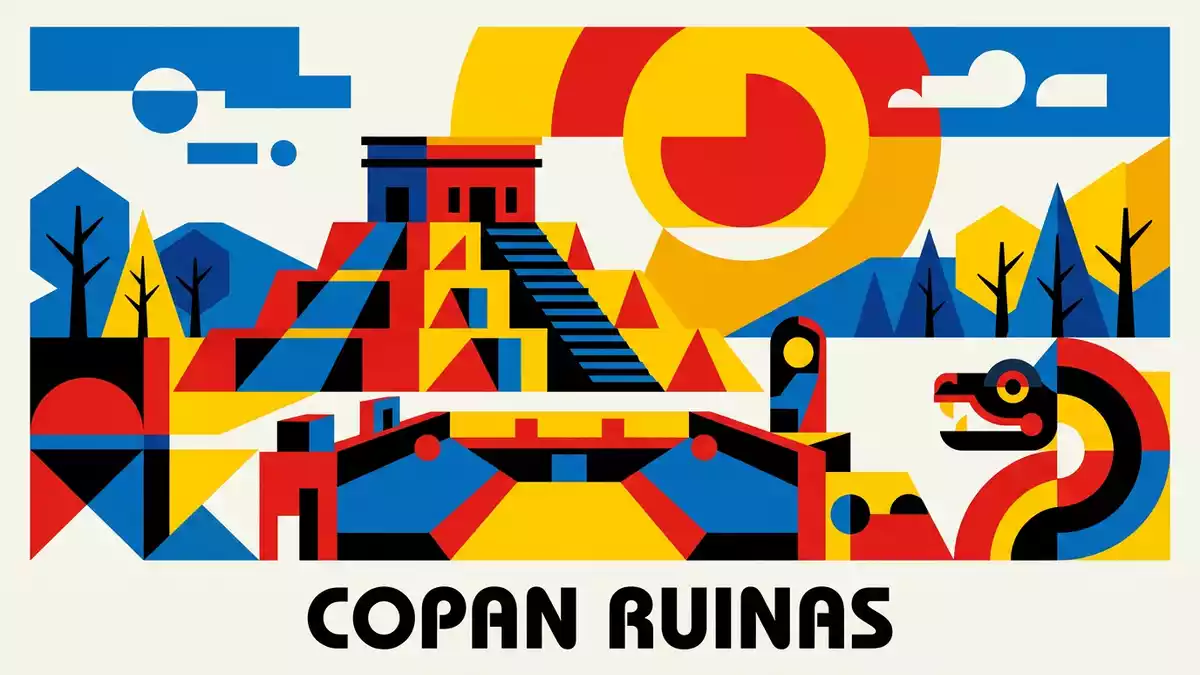
Copan Ruinas in western Honduras is both a rural mountain town and the gateway to the celebrated Maya archaeological site of Copán, where carved stone monuments preserve the story of a classic-era dynasty in stone. In the Copán River valley near the Guatemalan border, visitors encounter cobbled streets, tiled roofs and a compact ancient city whose sculpted stairways and plazas anchor Honduran heritage in the wider history of the Maya world.
Copán Ruinas: town at the edge of a Maya valley
Copán Ruinas is a municipality in the Honduran department of Copán, lying in the country’s western highlands close to the border with Guatemala.municipality in the Honduran department of Copán The town spreads across rolling hills in the Copán River valley, with low-rise houses, tiled roofs and balconies overlooking narrow, cobbled streets that converge on a central square. From here, the surrounding countryside opens into a patchwork of small farms and coffee plots, reflecting the mix of agriculture and tourism that underpins the local economy.rolling hills and fertile valley
The municipality of Copán Ruinas has been formally established since the nineteenth century, with documented dates marking its administrative history and later naming.municipality has an official foundation date Spanish colonial influence is visible in the street grid and the modest church architecture, yet daily life remains notably local, with small shops, family-run cafés and rural communities spread across numerous villages in the wider municipality.numerous villages in the wider municipality The town’s position just a short distance from the archaeological park ties its identity closely to the ancient ruins, and the main streets reflect this connection through handicraft stalls, simple guesthouses and references to Maya imagery in signs and murals.
The Maya city of Copán: carved history in stone
South of the modern town, on the valley floor, lies the archaeological site of Copán, a compact ancient city that served as the capital of a major Maya kingdom during the Classic period, from the fifth to the ninth centuries AD.capital of a major Maya kingdom Copán was occupied for more than two thousand years, with its earliest known stone architecture dating back to the first millennium BC, and its peak as a regional centre coming between about 250 and 900 AD.important Maya city during the Classic Period The core archaeological zone, enclosed within a defined area as a protected park, contains plazas, pyramidal temple platforms, sculpted stairways and freestanding stelae, all set within the gentle bowl of the valley.
A key feature of Copán is the Hieroglyphic Stairway, commissioned in the eighth century and composed of thousands of carved glyph blocks that narrate the city’s dynastic history.Hieroglyphic Stairway with glyphs Among the site’s most studied monuments is Altar Q, a rectangular stone block created in 776 under the rule of Yax Pasaj Chan Yoaat, also known as Yax Pac.Altar Q created in 776 Around its sides, seated figures record a lineage of sixteen kings beginning with K’inich Yax K’uk’ Mo’ in the year 426, providing a rare visual sequence of rulers over roughly three and a half centuries.lineage from K’inich Yax K’uk’ Mo’ These monuments, together with the city’s sculpted façades, have made Copán central to the study of Maya hieroglyphic writing and royal iconography.
World Heritage valley: Copán and Copan Ruinas together
The Maya site of Copán forms part of a World Heritage inscription that recognises its cultural significance, with the ruins formally added to the UNESCO World Heritage List in 1980.inscribed on the World Heritage List in 1980 The designation highlights Copán’s richly carved stone sculpture, the density of hieroglyphic texts and the clarity with which the monuments document the city’s political history.valued for richness of hieroglyphics It also reflects the way the ancient architecture sits within the valley’s wider landscape, where modern Copan Ruinas, rural communities and agricultural plots share the same basin as the old ceremonial core.
Historically, the valley’s human story stretches back several millennia, from early agricultural settlements through the rise of the dynastic city and its eventual abandonment in the early tenth century.abandonment in the early tenth century Spanish accounts, beginning with Diego García de Palacio in the sixteenth century, later documented the ruins, and nineteenth-century expeditions brought Copán to wider scholarly attention.early descriptions and excavations In the contemporary valley, scarlet macaws associated with ancient iconography can be seen near the ruins, while the town’s markets and quiet streets provide an everyday counterpart to the carved stone kings and plazas a short walk away. Together, Copan Ruinas and the Maya site of Copán offer a compact encounter with Honduran highland life and the material record of Classic Maya civilisation.
Visiting Copan Ruinas: what travellers from Western Europe should know
- Copan Ruinas lies in western Honduras in the department of Copán, close to the border with Guatemala; it is reached overland from larger Honduran cities and neighbouring countries.
- The terrain around the town and archaeological park is hilly, with cobbled streets in the centre and unpaved paths near the ruins, so walking involves gradients and uneven surfaces.
- The archaeological park of Copán sits on the valley floor south of the town, and reaching the main plazas from the entrance involves walking on grass and earth paths with some low steps.
- The official language is Spanish and the currency is the Honduran lempira.
- Entry requirements depend on your nationality; UK travellers can check the FCDO travel advice at gov.uk/foreign-travel-advice, Irish travellers the Department of Foreign Affairs at ireland.ie.
Searching for Copan Ruinas on social platforms
These links open searches for Copan Ruinas on each platform.
Frequently asked questions about Copan Ruinas
Where is Copan Ruinas?
Copan Ruinas is a town and municipality in western Honduras, in the department of Copán near the border with Guatemala, in the Copán River valley.
What can visitors expect on a visit to Copan Ruinas and Copán?
Visitors encounter a small highland town with cobbled streets and a nearby Maya archaeological park, where plazas, pyramidal platforms and carved monuments stand within the valley landscape.
What makes Copan Ruinas and Copán distinctive?
The combination of a compact rural town and a well-preserved Classic period Maya capital, inscribed as a World Heritage Site and noted for its hieroglyphic monuments, gives the valley an unusual historical depth.


