
Cristo Redentor above Rio de Janeiro’s mountains and sea
Published on 09/19/2026 at 20:30 | Editorial responsibility: Rafael Müller, Editor-in-Chief AD HOC NEWS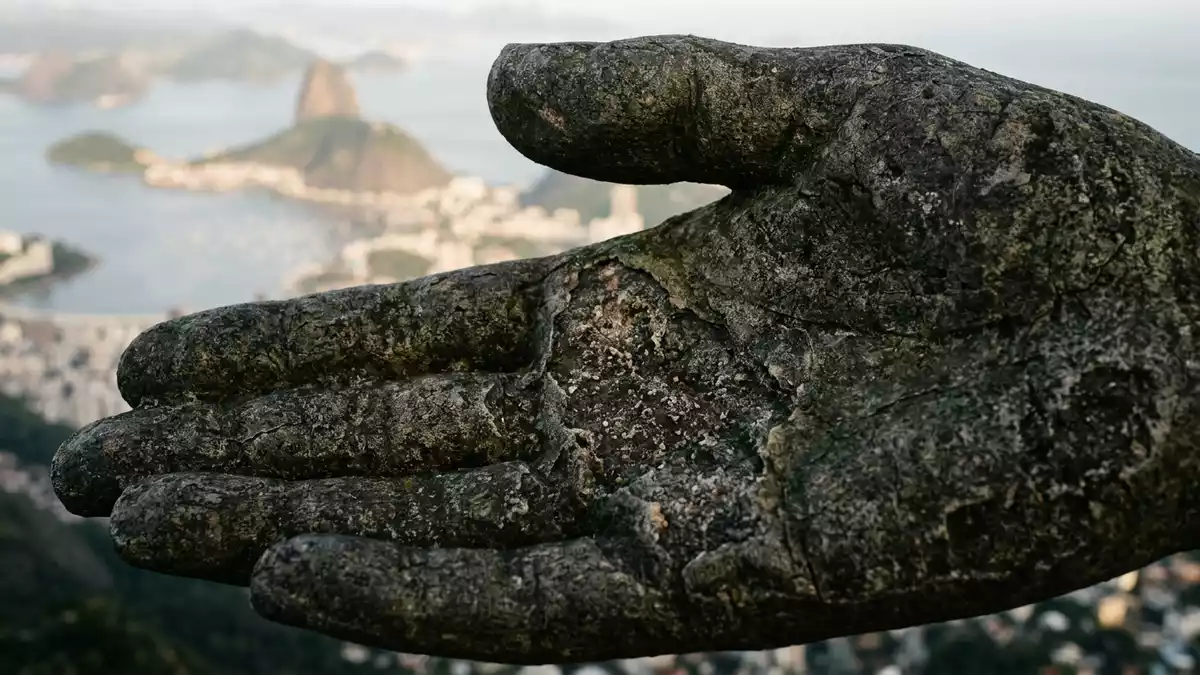
Cristo Redentor, known in English as Christ the Redeemer, stands high above Rio de Janeiro on Corcovado mountain, its outstretched arms forming a clear silhouette against the Atlantic sky. The Art Deco statue of Jesus Christ was constructed between 1922 and 1931, giving Brazil a monumental figure at the start of the twentieth century.Constructed between 1922 and 1931 Set inside Tijuca National Park, it overlooks the dense urban fabric of Rio and the inlets of Guanabara Bay.
Art Deco Christ above Corcovado
Cristo Redentor is an Art Deco statue designed and built through an international collaboration that linked European sculptors with Brazilian engineers. French-Polish sculptor Paul Landowski created the figure, while Brazilian engineer Heitor da Silva Costa oversaw its structural design.Paul Landowski and Heitor da Silva Costa The work also involved French engineer Albert Caquot and Romanian sculptor Gheorghe Leonida, who shaped the face, making the statue a product of several hands and traditions.
The statue itself rises about 30 m (98 ft) above an 8 m (26 ft) pedestal, creating a total height of roughly 38 m (124 ft) from the base of the plinth to the top of the head.Total height including pedestal Its arms reach out horizontally for around 28 m (92 ft), forming a cross-like plan that is instantly recognisable.Outstretched arms spanning 28 metres The statue is made of reinforced concrete, clad in a mosaic of thousands of small soapstone tiles that give the surface a pale, slightly textured finish.
A national symbol in the Carioca landscape
Cristo Redentor stands on the summit of Corcovado, a peak rising around 700 m (2,300 ft) above sea level within Tijuca National Park.Peak of Corcovado mountain From the terraces around the base, the city stretches beneath in a panorama that takes in beaches, bays, and densely built neighbourhoods. The statue faces east, looking over Rio and towards the shoreline, and from many vantage points in the city its pale figure appears against the dark green forest of the park.
The location forms part of the wider “Carioca Landscapes between the Mountain and the Sea”, a cultural ensemble inscribed on the World Heritage List, where mountains, urban districts and coastline are framed together.Carioca Landscapes between the Mountain and the Sea Tijuca National Park itself is a large urban forest with steep slopes and tropical vegetation, so Cristo Redentor stands both as a religious monument and as a marker within this reconstructed landscape above Rio.
Building and visiting the mountain statue
The idea of a monumental Christ on Corcovado was discussed from the late nineteenth century, but work gained momentum in the early 1920s, coinciding with the centenary of Brazil’s independence in 1922.Stone base laid in 1922 Construction began on the mountain after a foundation ceremony, and the statue was officially inaugurated on 12 October 1931 in a ceremony attended by high-ranking church and state figures.Inaugurated on 12 October 1931 The monument has since become a visual shorthand for Brazil in films, photographs and travel imagery.
The statue’s reinforced concrete frame supports the soapstone cladding, a material chosen for its durability and light colour.Concrete statue clad in soapstone tiles Maintenance includes periodic replacement of tiles and structural inspection, a long-term effort necessary on a mountain summit exposed to wind and rain. Inside the base there is a small chapel, and stairways and platforms allow visitors to move around the pedestal and view the statue from below, as well as to look out across Rio de Janeiro.
Visiting Cristo Redentor: what travellers from Western Europe should know
- Cristo Redentor stands on Corcovado mountain inside Tijuca National Park, in the southern part of Rio de Janeiro. The Corcovado rack railway climbs from the Cosme Velho district towards the summit, and road access also reaches the visitor area.
- The final approaches near the statue involve steps and level changes on paved terraces around the base, with railings and platforms overlooking the surrounding valleys and city.
- Rio de Janeiro has a humid subtropical climate, and the summit of Corcovado is often covered by cloud or mist, which can affect long-range views from the terraces.
- Nearby, travellers can see the outlines of Guanabara Bay, the beaches of the city’s coastal districts and other peaks of the Serra do Mar range.
- The official language is Portuguese and the currency is the Brazilian real. Entry requirements depend on your nationality; UK travellers can check the FCDO travel advice at gov.uk/foreign-travel-advice, Irish travellers the Department of Foreign Affairs at ireland.ie.
Searching for Cristo Redentor on social platforms
These links open searches for Cristo Redentor on each platform.
Frequently asked questions about Cristo Redentor
Where is Cristo Redentor located in Rio de Janeiro?
Cristo Redentor stands on the summit of Corcovado mountain inside Tijuca National Park, overlooking the city of Rio de Janeiro and Guanabara Bay.
What should visitors expect on a trip to Cristo Redentor?
Visitors encounter mountain terrain with terraces, steps and platforms around a tall Art Deco statue, together with wide views of Rio’s coastline and urban districts when the weather is clear.
What makes Cristo Redentor distinctive among monuments?
The combination of its Art Deco Christ figure, soapstone cladding, twentieth-century construction and placement above a large tropical city makes Cristo Redentor a distinctive landmark.


