Cristo Redentor: an open?armed landmark above Rio de Janeiro
Published on 09/05/2026 at 18:47 | Editorial responsibility: Rafael Müller, Editor-in-Chief AD HOC NEWS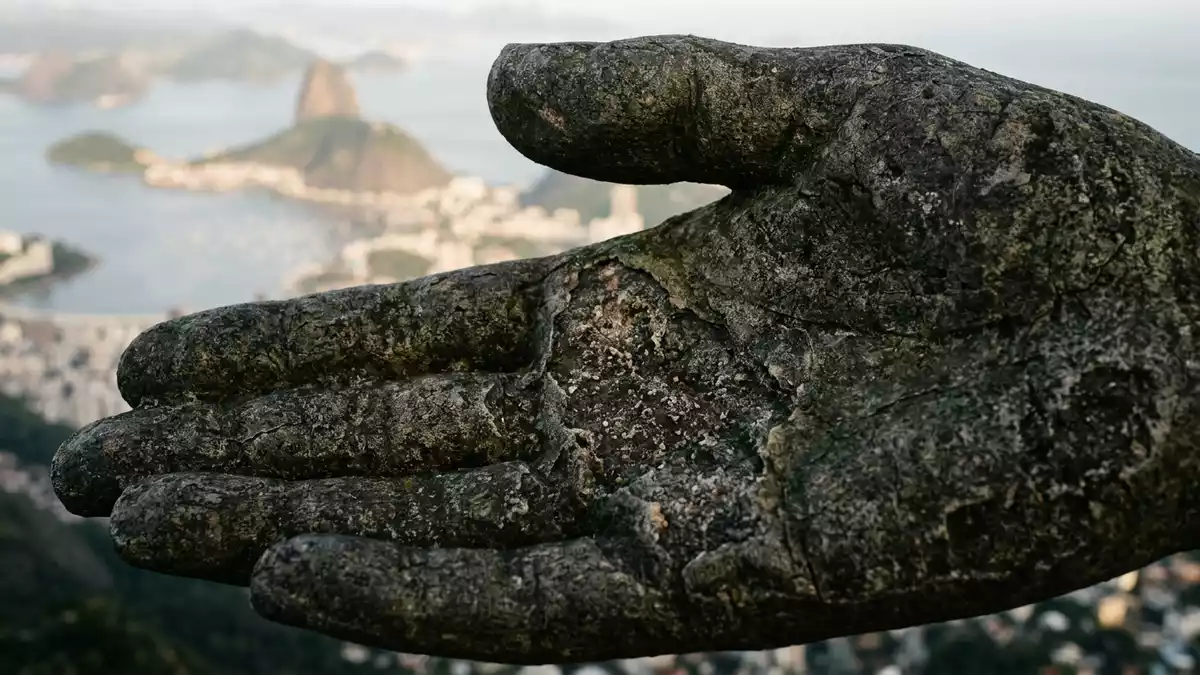
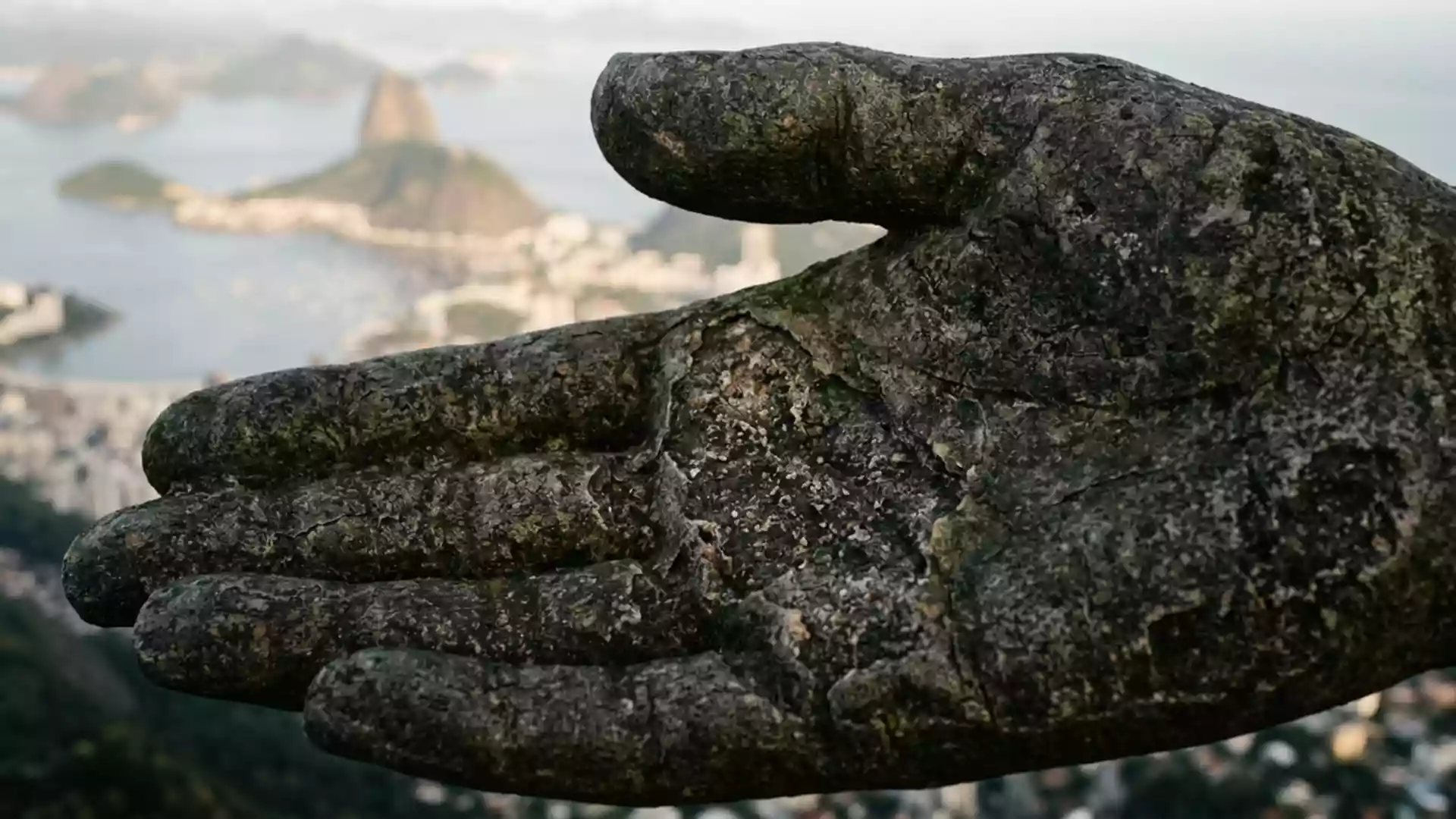
Cristo Redentor, known in English as Christ the Redeemer, stands with open arms above Rio de Janeiro on the summit of Corcovado, an Art Deco statue completed in 1931 and made a symbol of Brazil’s largest coastal city.
An Art Deco Christ above the Atlantic forest
The statue of Cristo Redentor is an Art Deco depiction of Jesus Christ with arms spread horizontally, set on the rocky height of Corcovado overlooking central Rio de Janeiro and Guanabara Bay. Rising 30 m (98 ft) above its pedestal, with a total monument height of about 38 m (125 ft), the figure is visible from many districts and from the waters off the city’s curved coastline.The statue of Christ the Redeemer was completed in 1931 and stands 98 feet (30 metres) tall The horizontally outstretched arms span about 28 m (92 ft), forming a straight line against the sky when viewed from below on the viewing terraces.the statue is 30 metres (98 ft) high, excluding its 8-metre (26 ft) pedestal, and faces east
Cristo Redentor stands within the forested hills of Tijuca National Park, a protected remnant of Atlantic Forest inside the urban area of Rio de Janeiro. The monument crowns the 710 m (2,329 ft) high Corcovado mountain, placing the figure high above the dense canopy and the city neighbourhoods that stretch between the sea and the inland ridges.Établie au cœur du parc national de la forêt de Tijuca, à une altitude de 710 mètres, la statue mesure 38 mètres de haut From the terraces below the statue, visitors look out towards landmarks such as Sugarloaf Mountain, the curve of Copacabana and Ipanema beaches, and the lagoon of Rodrigo de Freitas framed by apartment blocks and smaller hills.
From early twentieth?century project to national emblem
The idea of a monumental Christ figure above Rio de Janeiro took form in the early twentieth century, and construction of Cristo Redentor is traditionally dated to the period between 1922 and 1931. The foundation stone was laid in 1922, marking the centenary of Brazil’s independence, and the statue was dedicated on 12 October 1931 after several years of work on the mountain.The foundation stone for the Christ the Redeemer statue was laid on April 4, 1922… the sculpture was officially dedicated on October 12, 1931 The project belongs to the broader era in which Rio de Janeiro, then the capital of Brazil, was reshaped with grand avenues, civic buildings and public monuments.
The design and construction of Cristo Redentor brought together engineers and sculptors from Brazil and Europe. Brazilian engineer Heitor da Silva Costa is credited with the overall engineering concept, while French sculptor Paul Landowski worked on the figure’s form, including the head and hands.The French sculptor Paul Landowski, who collaborated with Silva Costa on the final design, has been credited as the primary designer of the figure’s head and hands Romanian sculptor Gheorghe Leonida contributed to the shaping of the face, and French engineer Albert Caquot was involved with structural aspects of the project.Feito de concreto armado e pedra-sabão… sendo a mais alta estátua do mundo no estilo Art Déco Together they produced a reinforced concrete framework clad in soapstone, whose pale surface forms the smooth planes and folds of the figure’s robe.
Cristo Redentor, Corcovado and the forested approach
The hill of Corcovado rises steeply from the urban fabric of Rio de Janeiro, and the journey to Cristo Redentor is part of the experience of the place. The Corcovado Train, a rack railway inaugurated in 1884 under Emperor Pedro II, climbs from the lower city through the forested slopes of Tijuca before reaching the upper station near the monument.Inaugurated in 1884 by Emperor Pedro II, the Corcovado Train has taken popes, kings, princes, presidents, artists, and scientists on its cars The line was among the earliest electrified railways in Brazil, and its historic coaches have carried a wide range of visitors over generations.
At the summit, the statue stands on a broad base with terraces around it, edged by railings and steps, where visitors walk, pause and look out over the city and the surrounding mountains. From this platform the Atlantic Forest of Tijuca can be seen as a green mass surrounding Corcovado, contrasting with the street grids, high?rise blocks and beaches of Rio de Janeiro below. The monument’s placement within a national park links the religious and cultural landmark to the wider story of conservation and reforestation in the hills above the city, where native vegetation was replanted from the nineteenth century to restore watersheds and forest cover.Tijuca National Park… earned UNESCO World Heritage status in 2012 and currently hosts 1,619 species of plants and 328 species of animals
Visiting Cristo Redentor: what travellers from Western Europe should know
- Cristo Redentor stands on Corcovado, a 710 m (2,329 ft) peak inside Tijuca National Park in the urban area of Rio de Janeiro, reached by roads and the historic Corcovado Train.
- The summit terraces sit on a steep mountaintop; reaching the main viewing areas involves stairways and ramps between levels on exposed ground high above the surrounding city.
- Tijuca National Park is a protected area of Atlantic Forest, so the surroundings of Cristo Redentor consist of dense woodland on steep slopes rather than an urban square.
- The official language is Portuguese and the currency is the Brazilian real.
- Entry requirements depend on your nationality; UK travellers can check the FCDO travel advice at gov.uk/foreign-travel-advice, Irish travellers the Department of Foreign Affairs at ireland.ie.
Searching for Cristo Redentor on social platforms
These links open searches for Cristo Redentor on each platform.
Frequently asked questions about Cristo Redentor
Where is Cristo Redentor located?
Cristo Redentor stands on the summit of Corcovado within Tijuca National Park in Rio de Janeiro, Brazil, rising above the city and Guanabara Bay.
What should visitors expect at the monument?
Visitors find a large Art Deco statue on a mountaintop terrace, with stairs and ramps between levels and wide views over the city, beaches and surrounding forest.
What makes Cristo Redentor distinctive among landmarks?
The combination of its open?armed Art Deco figure, its height on Corcovado and its setting in Atlantic Forest above a major coastal city gives Cristo Redentor its distinctive character.