
Daibutsu in Kamakura: a bronze Buddha beneath the open sky
Published on 09/22/2026 at 11:39 | Editorial responsibility: Rafael Müller, Editor-in-Chief AD HOC NEWS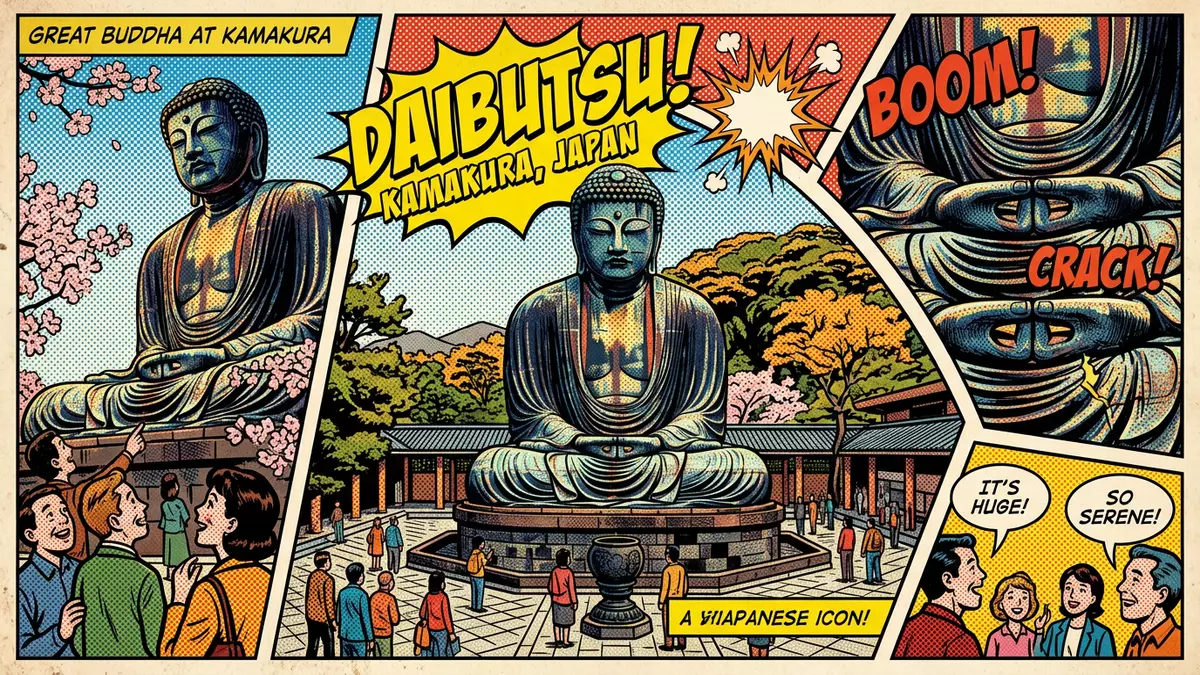
Daibutsu is the bronze Amida Buddha at K?toku-in in Kamakura, Japan. Cast during the Kamakura period, its seated figure stands beneath the open sky, an arrangement that gives the monument its defining visual character.
A bronze figure beneath the open sky
The statue is made of copper alloy and measures about 11.3 metres (37 ft) in height. Its mass is estimated at roughly 121 tonnes, giving the seated image a substantial presence within the temple grounds. The Great Buddha at K?toku-in is the temple’s principal image.
Daibutsu depicts Amida, the Buddha associated with the Pure Land tradition. The hands form a meditation gesture, while the calm face, elongated ears and tightly arranged hair provide the recognisable features of the image. Its copper surface carries the colour and texture of an old metal sculpture exposed to the elements.
1252 and the Kamakura period
Construction began in 1252, during the Kamakura period, when Kamakura served as the seat of Japan’s warrior government. The sculptor’s name is unknown, while the date is preserved in medieval written records. Construction began in 1252.
Daibutsu was first housed inside a large temple hall. Typhoons damaged the hall in the fourteenth century, and an earthquake destroyed it in 1498. After the hall disappeared, the statue remained outdoors. The open setting is therefore part of the monument’s history as well as its appearance.
Amida, bronze and the Pure Land tradition
K?toku-in belongs to the J?do tradition of Japanese Buddhism, whose central practice is the nenbutsu. This practice centres on reciting Amida’s name, expressed in the phrase “Namu Amida Butsu”. The statue provides a monumental image for that religious setting.
Daibutsu also records changing patterns of preservation. Repairs took place during the Edo period, from 1603 to 1868, after exposure had affected the bronze surface. The figure retains its original form and is designated a National Treasure of Japan. Kamakura’s bronze Daibutsu remains connected with the city’s medieval identity.
Visiting Daibutsu: what travellers from Western Europe should know
- K?toku-in is in Hase, Kamakura. The Enoden railway serves Hase Station, and Daibutsu is reached from the station through the temple district.
- The statue stands on temple grounds at low elevation. The approach includes paved paths and temple steps, with the seated figure visible across the grounds.
- Kamakura lies south of Tokyo on Sagami Bay. Hase, the Great Buddha and Hase-dera form a close group of cultural sites.
- The official language is Japanese and the currency is the Japanese yen.
- Entry requirements depend on your nationality; UK travellers can check the FCDO travel advice at gov.uk/foreign-travel-advice, Irish travellers the Department of Foreign Affairs at ireland.ie.
Searching for Daibutsu on social platforms
These links open searches for Daibutsu on each platform.Frequently asked questions about Daibutsu
Where is Daibutsu?
Daibutsu is at K?toku-in in Hase, Kamakura, a coastal city south of Tokyo on Sagami Bay.
What does a visit reveal?
The visit centres on a seated bronze Amida Buddha beneath the open sky, surrounded by the temple grounds and associated Buddhist buildings.
What makes Daibutsu distinctive?
Its bronze construction, 1252 origin and open-air setting combine a medieval Buddhist image with a visible history of preservation.


