Daibutsu in Kamakura and its bronze presence
Published on 08/10/2026 at 15:10 | Editorial responsibility: Rafael Müller, Editor-in-Chief AD HOC NEWS
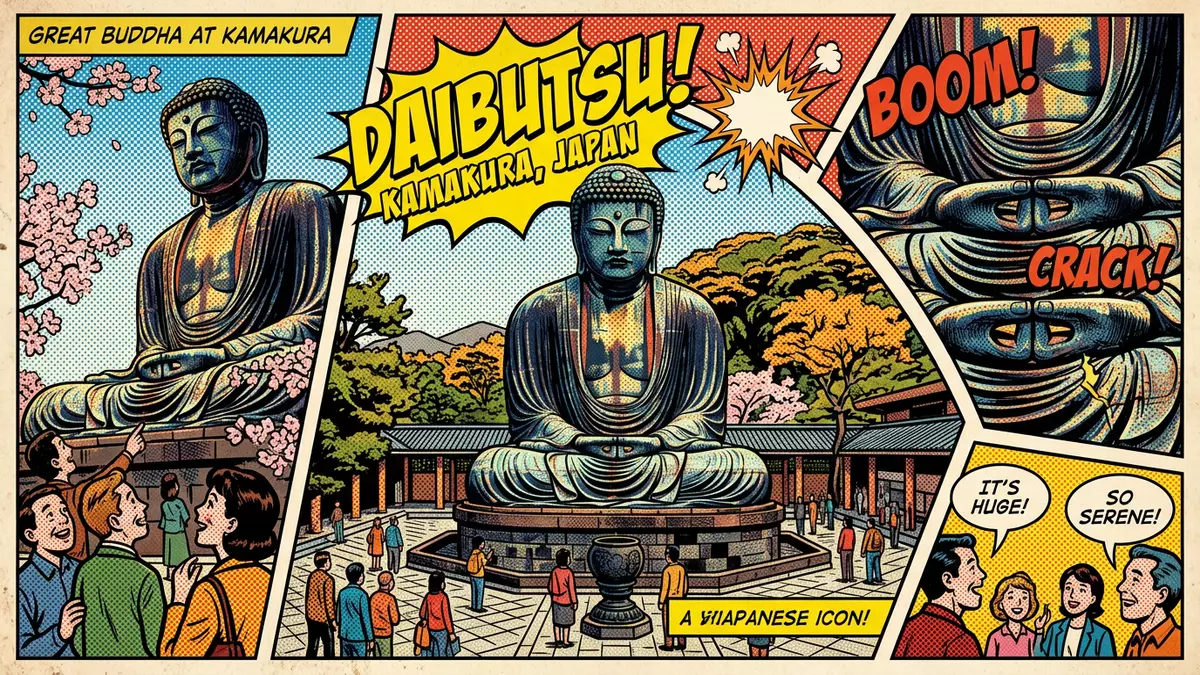
Daibutsu in Kamakura is the great bronze Buddha associated with K?toku-in, one of Japan’s best-known religious monuments. Cast in the Kamakura period, it presents a calm seated image whose scale dominates the temple grounds without resorting to ornament.
The bronze Buddha at K?toku-in
The figure represents Amit?bha Buddha and sits in the open air, with the bronze surface exposed to wind, rain and changing light. Its broad shoulders, folded legs and steady gaze create a form that is simple at a distance and intricate up close.
K?toku-in places Daibutsu within a temple setting that remains compact and direct. Visitors see the statue from several angles, and the surrounding space leaves the bronze figure as the clear centre of attention.
Kamakura and the Kamakura period
Kamakura was the political centre of Japan under the Kamakura shogunate, and the city’s historic identity still shapes how many travellers approach it. Daibutsu belongs to that medieval world, when Buddhist sculpture, temple patronage and warrior rule intersected in the region.
The statue’s material and scale matter as much as its age. Bronze gives the surface a dark, sober colour, while the seated posture links it to a long tradition of large devotional images in East Asia.
What the statue shows at close range
From nearby, Daibutsu reveals seams, folds and the weathered texture of metal formed into a monumental body. The head carries a dense arrangement of curls, and the face keeps its expression controlled rather than dramatic.
The surrounding ground is open and uncluttered, so the statue reads almost as a freestanding mass within the temple precinct. That directness makes the monument easy to grasp, even for a brief visit.
Visiting Daibutsu: what travellers from Western Europe should know
- Daibutsu is in Kamakura, south of Tokyo, and is reached by rail and local bus connections within the city.
- Admission arrangements and opening hours are set by the site's operator and change with the season; the official website is the only binding source.
- Spring and autumn bring milder weather for an outdoor temple visit, while bright light makes the bronze surface easy to read.
- The approach is level, with short walks on paved ground inside the temple area.
- Japanese is the local language, and cash or card use can vary from one counter to another; restrictions may apply on site.
- Entry requirements depend on your nationality. UK travellers should check the FCDO travel advice at gov.uk/foreign-travel-advice; Irish travellers the Department of Foreign Affairs at ireland.ie; EU and EEA citizens their own national foreign ministry.
Searching for Daibutsu on social platforms
These links open searches for Daibutsu on each platform.
Frequently asked questions about Daibutsu
Where is Daibutsu?
Daibutsu stands at K?toku-in in Kamakura, Japan, a city on the coast south of Tokyo. The statue is the focus of the temple grounds.
What should a visit feel like?
Expect an outdoor temple setting with a large seated bronze Buddha and enough space to view it from several sides. The ground is straightforward to move across, and the monument is legible quickly.
What makes Daibutsu distinctive?
Its identity rests on the combination of bronze, scale and open-air presentation. The statue links Kamakura to the Kamakura period in a single, highly recognisable form.