
Daibutsu in Kamakura: Japan’s great bronze Buddha in the open air
Published on 08/14/2026 at 14:53 | Editorial responsibility: Rafael Müller, Editor-in-Chief AD HOC NEWS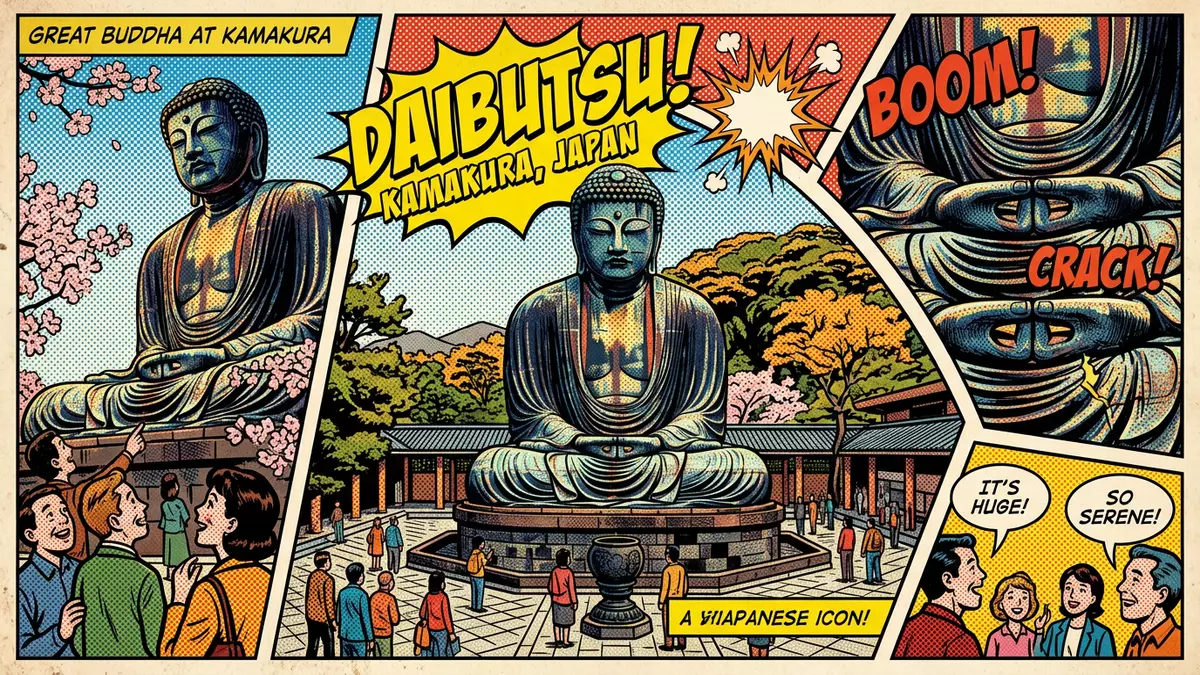
Daibutsu in Kamakura is a monumental bronze statue of Amida Buddha seated beneath the open sky at Kotoku?in, a J?do sect temple in the coastal city south of Tokyo. It has stood in its present form since the thirteenth century and is recognised as a National Treasure of Japan, giving this serene figure a central place in the country’s religious and artistic heritage.
A bronze Buddha shaped for the outdoors
The Daibutsu depicts Amida Buddha seated in meditation, hands resting in his lap and eyes lowered in a calm gaze that visitors see as they enter the Kotoku?in temple grounds.A colossal copper image of Amida-butsu anchors the space in front of it, with the statue rising over 11 m (around 36 ft) from its lotus pedestal and weighing well over 100 tonnes, figures that place it among the largest historic bronze Buddha statues in Japan.The statue is 11.3 metres tall and weighs 121 tons
Unlike many great Buddha images enclosed in timber halls, the Kamakura Daibutsu sits outside with no permanent roof above it, so the bronze surface catches daylight directly and changes appearance with the weather. The statue is cast in sections joined together, and subtle seams and panels are visible on the surface, giving clues to the medieval metalworking techniques used to create such a large figure.The Kamakura Daibutsu is cast in bronze Visitors can see the heavy folds of the robe flowing over the pedestal and the detailed curls of the Buddha’s hair, all rendered in metal but still carrying a sense of softness.
Thirteenth-century craftsmanship and a shifting landscape
The Kamakura Daibutsu was created during the Kamakura period, when the shogunate ruled Japan from this region and new Buddhist movements spread among warriors and townspeople. Historical records date the bronze statue to the mid?thirteenth century, with work beginning in 1252, and it has remained on the Kotoku?in site since then despite changes in the temple buildings around it.Construction of the current bronze statue began in 1252 The statue’s survival across earthquakes and storms has helped turn it into a symbol of continuity for Kamakura.
In earlier centuries the Daibutsu stood inside a large hall, traces of whose foundations remain in the temple grounds, but that wooden structure was eventually lost, leaving the Buddha exposed to the elements as visitors see it now.Remnants of the former Great Buddha Hall foundation can be seen The statue itself is designated a National Treasure, the highest formal status for historic art and architecture in Japan, underscoring its importance both to religious practice and to the study of Kamakura?period bronze casting.The Kamakura Daibutsu is a National Treasure
Kotoku?in temple and the coastal setting
Kotoku?in is a J?do sect Buddhist temple in the Hase district of Kamakura, surrounded by residential streets and low hills that separate the city from the Pacific coast.The Great Buddha stands on the grounds of Kotokuin Temple The temple’s main approach leads visitors through a gate and along a paved path towards the Daibutsu, which dominates the courtyard yet leaves space for worshippers and travellers to gather at its base. Smaller shrine structures, trees and stone lanterns frame views of the statue, creating a setting where religious activity and sightseeing take place side by side.
Kamakura itself lies in Kanagawa Prefecture, south of Tokyo, and combines wooded hills with beaches along Sagami Bay, so visits to Kotoku?in are often part of a wider exploration of this former political centre. From the grounds, the top of the statue rises above nearby trees and rooftops, and the combination of bronze, greenery and coastal light forms part of its character as an outdoor Buddha. Other temples and shrines in Hase and central Kamakura sit within walking distance, making the Daibutsu one focal point among many historic sites in the city.
Visiting Daibutsu: what travellers from Western Europe should know
- Daibutsu stands on the grounds of Kotoku?in temple at 4?2?28 Hase in Kamakura, in Kanagawa Prefecture, south of Tokyo; trains from Tokyo reach Kamakura and Hase stations on established railway lines.
- The statue is approached along level paved paths, but the temple precinct includes steps and uneven stone surfaces, so footwear suited to walking on stone and gravel is advisable.
- Kamakura lies by the sea and is backed by low wooded hills, so weather at Daibutsu can include strong sun and coastal winds; seasonal conditions vary between humid summers and cooler winters.
- The official language is Japanese and the currency is the yen.
Searching for Daibutsu on social platforms
These links open searches for Daibutsu on each platform.
Frequently asked questions about Daibutsu
Where is Daibutsu in Kamakura located?
Daibutsu stands within the grounds of Kotoku?in temple in the Hase district of Kamakura, in Kanagawa Prefecture on Japan’s Pacific coast south of Tokyo.
What should visitors expect when they see Daibutsu?
Visitors encounter a large bronze Buddha seated in an open courtyard, with temple structures, trees and stone lanterns around it, forming a calm but accessible space for worship and sightseeing.
What makes Daibutsu distinctive among Buddha statues in Japan?
Daibutsu is a thirteenth?century bronze Buddha that sits outdoors, is designated a National Treasure and rises over 11 m above its pedestal, giving it a rare combination of age, size and open?air setting.


