
Dazu Shike: stone scriptures on Chongqing’s sandstone cliffs
Published on 09/17/2026 at 21:20 | Editorial responsibility: Rafael Müller, Editor-in-Chief AD HOC NEWS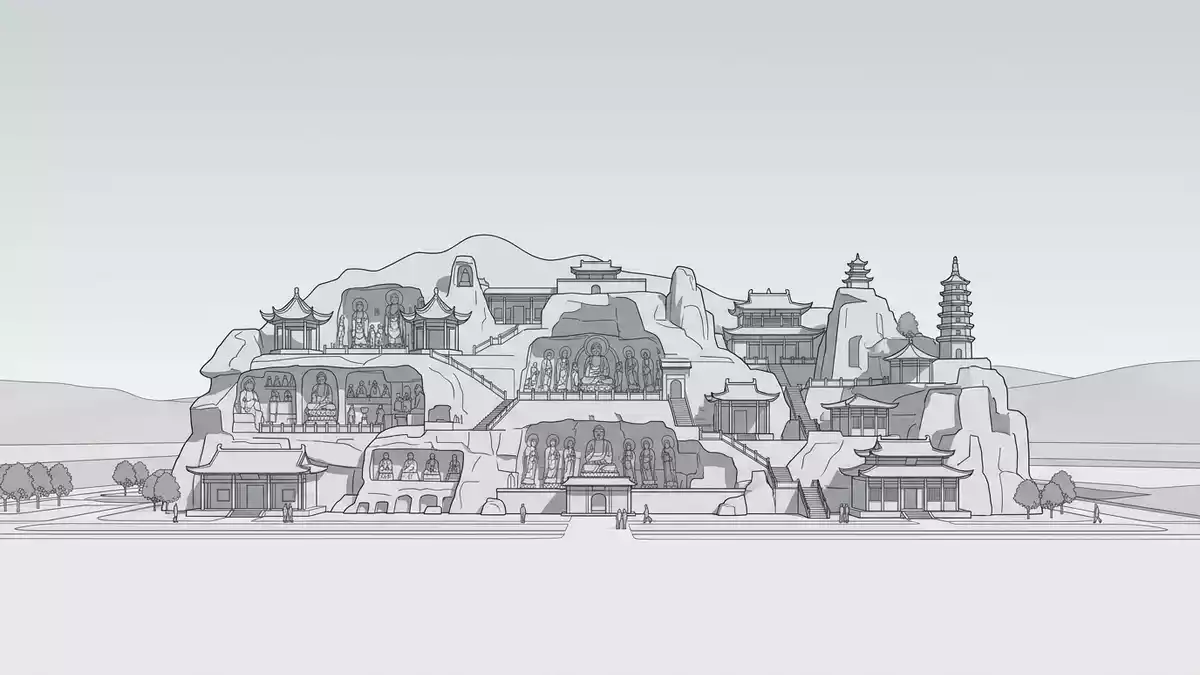
Dazu Shike in Chongqing is a vast landscape of carved sandstone cliffs where religious images and texts turn bare rock into what reads as stone scripture from medieval China. Set in the steep hillsides of Dazu District in south?west China, the carvings are widely dated to between the ninth and thirteenth centuries and hold formal recognition as a UNESCO World Heritage Site from 1999.
Sandstone cliffs turned into carved scripture
Dazu Shike refers to the ensemble known in English as the Dazu Rock Carvings, a series of religious sculptures and reliefs cut directly into sandstone hills in Dazu District west of central Chongqing. Across the district the carvings occupy cliff faces, grottoes and ledges, forming an extensive cultural landscape of grotto art on the slopes around the town of Dazu.Dazu Rock Carvings The rock faces carry both sculpted figures and lines of carved Chinese text, so that the cliffs read as panels of iconography and inscription rather than natural outcrops.
Under the collective name Dazu Shike the cliff sites in the district are described as comprising around seventy?five protected locations that together hold a very large body of religious sculpture.seventy?five protected sites Many accounts place the number of statues at over 50,000, accompanied by more than 100,000 carved characters of inscription and epigraphs recording prayers, dedications and doctrinal passages.over 50,000 statues and extensive inscriptions Walking along the cliffs therefore brings long sequences of images and text into view, with figures emerging from the sandstone in full sculpture, half?relief and flatter relief forms.
A medieval religious landscape in stone
The carvings at Dazu Shike span several centuries of religious art and are commonly associated with the period between the ninth and thirteenth centuries, when cliffside grotto sculpture flourished in this part of China.dated to the seventh to thirteenth centuries The sites preserve scenes and figures from Buddhism, Daoism and Confucianism side by side, reflecting how these traditions were practised in the region during the later medieval period. On many panels Buddhist bodhisattvas and seated Buddhas share the cliff with Daoist deities and Confucian images of filial piety, turning individual rock faces into layered statements of belief.
The five locations most closely associated with the World Heritage inscription are Beishan, Baodingshan, Nanshan, Shizhuanshan and Shimenshan, each with its own arrangement of cliff panels and grotto spaces.five principal clusters in Dazu District At Baodingshan, for example, large reclining Buddhas appear alongside crowded narrative reliefs, while Beishan presents a sequence of more compact niches and panels cut into the hillside. In total the protected sites form a network of sculpted cliffs, with paths and terraces giving access to different levels of carving.
UNESCO recognition and artistic detail
Dazu Shike holds formal World Heritage status as the Dazu Rock Carvings, inscribed on the UNESCO list in December 1999 as an “exceptional series of rock carvings” that document both religious and secular life over several centuries.World Heritage inscription in 1999 The UNESCO description highlights the diversity of subject matter and the quality of craftsmanship, noting how everyday scenes, doctrinal tableaux and monumental figures share the same steep hillsides around Dazu. The sandstone itself becomes the medium for a sustained visual record of belief and social life in this part of China.
The scale and detail of the carvings distinguish Dazu Shike within the wider tradition of Chinese cave?temple art.extensive grotto ensemble Many figures retain fine features in drapery, facial expression and ornament despite their exposure on outdoor cliffs, and the relief panels often combine architectural framing with densely populated scenes. Inscriptions carved beside the images identify deities, donors or moral themes, so that the stone can be read both as sculpture and text. For travellers, the combination of large?scale cliff faces and close?set detail gives the sites an unusual combination of monumentality and intimacy.
Visiting Dazu Shike: what travellers from Western Europe should know
- Dazu Shike lies in Dazu District west of the main urban area of Chongqing in south?west China, with the cliff sites spread around the town of Dazu.
- The core cliff carvings stand on sandstone hillsides, and visiting them involves walking along paths, terraces and stairways beside and below the carved faces.
- Several named clusters form part of the ensemble, including Baodingshan and Beishan, so a visit commonly involves travelling between different carved hillsides within the district.
- The official language is Chinese and the currency is the renminbi (yuan), used throughout Chongqing and the wider region.
- Entry requirements depend on your nationality; UK travellers can check the FCDO travel advice at gov.uk/foreign-travel-advice, Irish travellers the Department of Foreign Affairs at ireland.ie.
Searching for Dazu Shike on social platforms
These links open searches for Dazu Shike on each platform.Frequently asked questions about Dazu Shike
Where is Dazu Shike located?
Dazu Shike is located in Dazu District within Chongqing Municipality in south?west China, on steep sandstone hillsides around the town of Dazu.
What can visitors expect to see at Dazu Shike?
Visitors encounter tens of thousands of religious sculptures and reliefs carved into cliff faces, accompanied by extensive Chinese inscriptions across several named cliffside sites.
What makes Dazu Shike distinctive among grotto sites?
Dazu Shike is distinctive for its combination of Buddhist, Daoist and Confucian imagery on outdoor sandstone cliffs, its large number of statues and its recognised World Heritage status.


