
Deadvlei’s white clay pan and black trees in Namib-Naukluft
Published on 09/05/2026 at 21:58 | Editorial responsibility: Rafael Müller, Editor-in-Chief AD HOC NEWS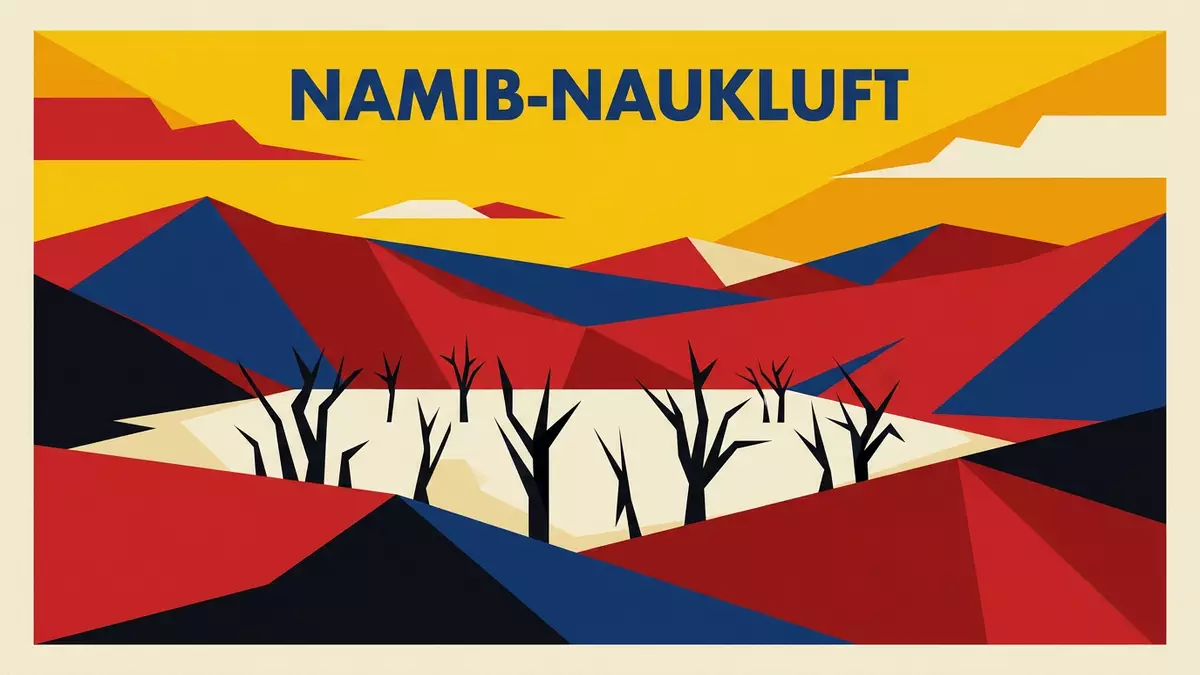
In the southern Namib Desert, Deadvlei is a white clay pan enclosed by high red-orange dunes where blackened camel thorn trees stand rooted in the cracked ground, a stark landscape shaped by water that vanished centuries ago.Deadvlei is described as a white clay pan in Namib-Naukluft National Park
Deadvlei within Namib-Naukluft and Sossusvlei
Deadvlei lies inside Namib-Naukluft National Park in Namibia, within the Namib Desert, near the better-known salt-and-clay basin of Sossusvlei where the Tsauchab River reaches the dunes.Sossusvlei is described as the terminal salt-and-clay pan of the Tsauchab River inside Namib-Naukluft National Park The pan lies in a shallow basin formed between dunes, close to the point where the river’s inland course comes to an end.Descriptions place Deadvlei in a hollow near Sossusvlei at the end of the Tsauchab River’s course into the dunes
The name combines English “dead” with the Afrikaans word “vlei”, a term for a shallow lake or pan, giving a literal sense of a marsh that has dried and hardened.Explanations of the name state that “vlei” in Afrikaans refers to a shallow lake or pan The basin’s surface is pale clay, broken into irregular polygonal plates that contrast strongly with the adjacent dune slopes of deep orange sand rising around the pan.Accounts describe Deadvlei as a white clay pan surrounded by red sand dunes
Clay, dunes and the ghost forest of camel thorn trees
Deadvlei was once an oasis where pools formed as floodwater from the Tsauchab River spread into the basin and allowed camel thorn trees to grow; the pan later dried when the river’s path no longer reached it.Descriptions of Deadvlei explain that floodwater from the Tsauchab once formed pools that supported camel thorn trees before the river changed course What remains is a flat expanse of light clay punctuated by dark, leafless trunks and branches that have lost their bark, standing motionless over soil that no longer receives regular surface water.The Deadvlei pan is described as bearing dead camel thorn trees on a salt-enriched floor with surrounding dunes
These camel thorn skeletons are dated to around 900 years of age, preserved rather than petrified by the extreme aridity that inhibits decay.Guides describe Deadvlei’s trees as about 900 years old, preserved by the dry desert air Their black appearance results from prolonged exposure to sun and dry air rather than burning, and the trunks stand directly on the clay surface without fallen branches forming fresh organic material.Descriptions of the pan emphasise the blackened camel thorn skeletons preserved on the clay floor Around the basin, dunes known locally by names such as Big Daddy rise to several hundred metres, forming steep sandy slopes above the pan that frame the clay and trees in all directions.Deadvlei is described as ringed by dunes reaching heights of 300 to 400 m around the clay pan
Approaching the pan and experiencing the desert terrain
Access to Deadvlei is through the Namib-Naukluft National Park entrance at Sesriem, from where a road leads towards Sossusvlei along the Tsauchab River’s dry valley and into the dune field.Travel guides describe access to Sossusvlei and Deadvlei via the Sesriem gate along a park road The final stretch near the basin crosses more mobile sand and is commonly described as requiring vehicles equipped for soft desert surfaces or use of a shuttle service, with visitors continuing on foot to reach the clay pan itself.Descriptions mention a 4x4 track and a walk over soft sand from a parking area to the pan
The immediate terrain between the parking area and Deadvlei consists of soft desert sand and low dune ridges, with visitors typically crossing an undulating approach on foot before the view opens onto the flat clay basin and standing trees.Guides describe a short walk over a dune saddle from the Sossusvlei car park to reach the Deadvlei pan The clay surface itself is largely level, with its cracked plates creating gentle relief underfoot compared with the loose sand of the dunes; the surrounding dune slopes rise steeply, offering viewpoints over the basin for those prepared for a sustained climb on shifting sand.
Visiting Deadvlei: what travellers from Western Europe should know
- Deadvlei lies in southern Namibia within Namib-Naukluft National Park, reached by road from Sesriem towards Sossusvlei, with the final stretch crossing soft desert sand on a park track.
- The approach from the nearest parking area involves walking over loose sand and low dune ridges, and movement on the clay pan itself takes place on a mostly level but cracked surface.
- The surrounding dunes rise to significant heights, and any ascent to viewpoints over Deadvlei involves a sustained climb on steep, shifting sand rather than on formed steps or solid rock.
- The official language is English and the currency is the Namibian dollar.
- Entry requirements depend on your nationality; UK travellers can check the FCDO travel advice at gov.uk/foreign-travel-advice, Irish travellers the Department of Foreign Affairs at ireland.ie.
Searching for Deadvlei on social platforms
These links open searches for Deadvlei on each platform.
Frequently asked questions about Deadvlei
Where is Deadvlei located?
Deadvlei is a white clay pan in the Namib Desert inside Namib-Naukluft National Park in southern Namibia, close to the Sossusvlei basin reached from Sesriem.
What should visitors expect on a visit to Deadvlei?
Visitors encounter a level clay basin enclosed by high red-orange dunes, with black camel thorn tree skeletons standing on the cracked white floor and a sandy approach path.
What makes Deadvlei distinctive compared with other desert landscapes?
The combination of a pale clay pan, the preserved 900-year-old camel thorn trunks and the surrounding high dunes creates a sharply contrasting desert scene that is closely associated with this part of Namib-Naukluft.


