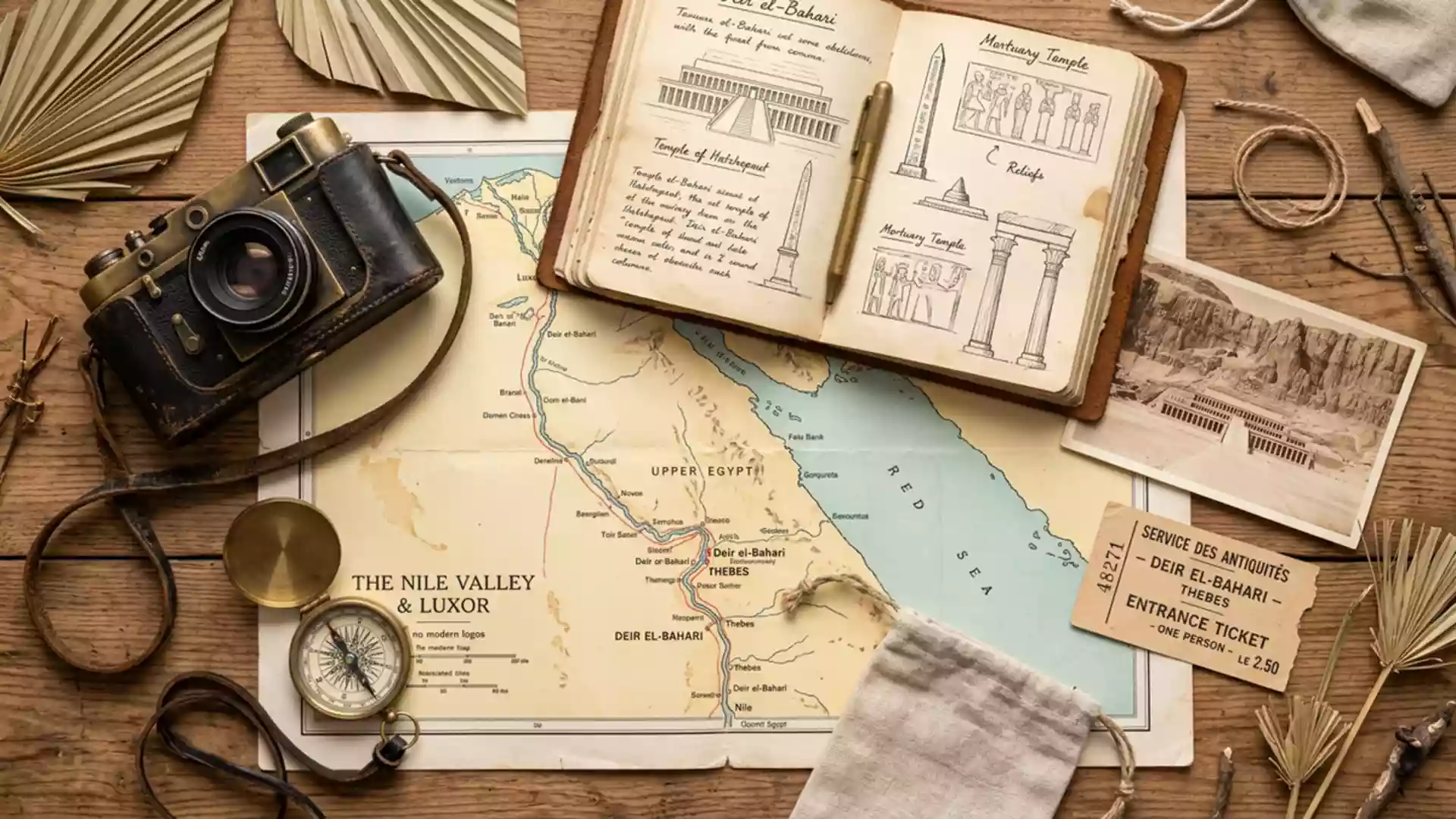
Deir el-Bahari and the terraced mortuary temples of Luxor
Published on 09/01/2026 at 08:44 | Editorial responsibility: Rafael Müller, Editor-in-Chief AD HOC NEWS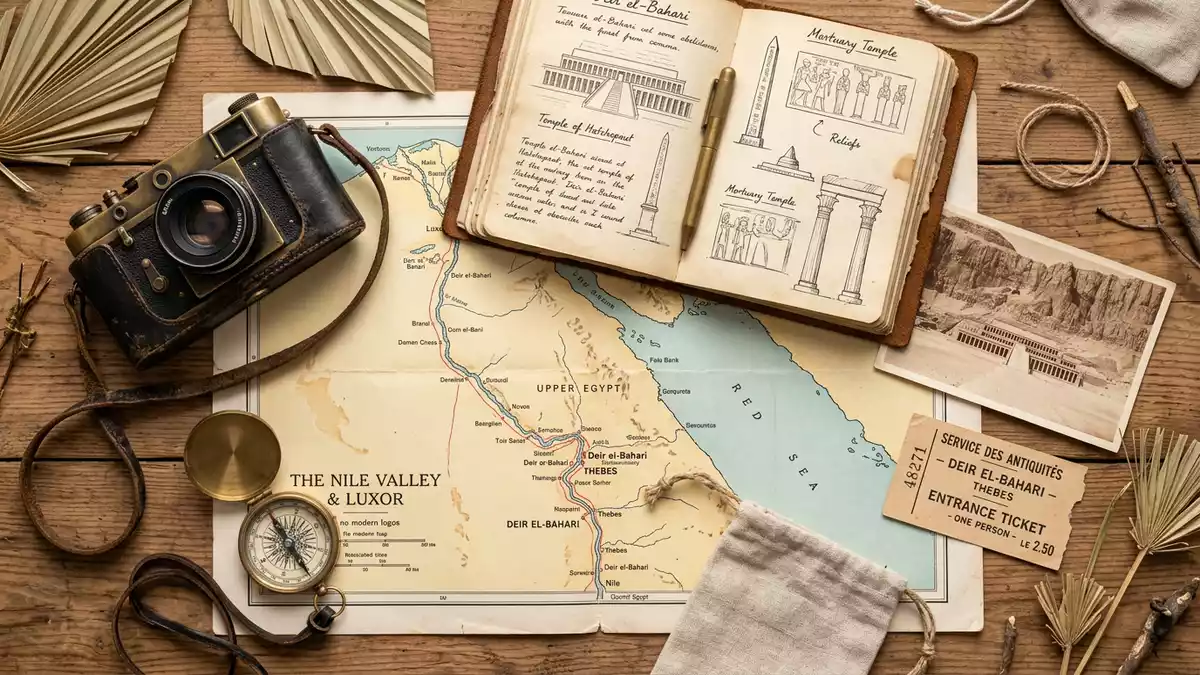
On the west bank of the Nile opposite Luxor, Deir el-Bahari forms a sweeping bay in the cliffs where terraces of stone rise towards the high desert. Here, ancient Egyptian mortuary temples from the Middle Kingdom and the New Kingdom share one amphitheatre-like hollow, with the celebrated temple of the pharaoh Hatshepsut set against the rock face as one of the best preserved monuments on the site.complex of mortuary temples and tombs
Cliffs, terraces and the setting of Deir el-Bahari
Deir el-Bahari lies within the Theban Necropolis, a vast funerary landscape on the west bank of the Nile facing the temple complexes of Karnak and Luxor on the opposite side of the river.west bank of the Nile The bay is framed by high cliffs and backed by the peak of el-Qurn, which separates the terraces from the Valley of the Kings beyond.peak of el-Qurn
The name Deir el-Bahari, meaning “Northern Monastery”, dates to the late antique and medieval period, when a Coptic monastery occupied part of the site, but the bay had already been used for royal mortuary temples for centuries.Egyptian archaeological site in the necropolis of Thebes From the floor of the bay, stone platforms step upwards towards the cliff, creating a sequence of terraces linked to the desert paths that lead over the ridge towards royal tombs hidden deeper in the mountains.
Mentuhotep II and the Middle Kingdom terrace
The oldest major monument at Deir el-Bahari belongs to Nebhepetre Mentuhotep II, the Eleventh Dynasty king who reunited Egypt and ruled in the early Middle Kingdom.Nebhepetre Montuhotep II His mortuary temple takes the form of a terraced complex built against the cliff, conceived in imitation of the primeval hill of creation that figures in Egyptian religious thought.terraced temple in imitation of the primeval hill
Much of Mentuhotep II’s superstructure has been lost, yet the remains still show a series of platforms and colonnades leading towards the cliff face.funerary temple of King Mentuhotep II Around this nucleus, later rulers added further chapels and tombs, so that the Middle Kingdom terrace forms one layer in a stacked sequence of sacred spaces that tie the bay to the broader funerary landscape of Thebes.
Hatshepsut, Thutmose III and the New Kingdom terraces
The most striking monument in Deir el-Bahari is the mortuary temple of Hatshepsut, the Eighteenth Dynasty queen who became pharaoh in the fifteenth century BC.temple of Hatshepsut Built into the bay under the Theban cliffs, her temple rises in three broad terraces fronted by colonnades, creating a stepped façade that echoes the stratified rock behind it.consists of three floors
Hatshepsut’s temple, known in ancient Egyptian as Djeser-Djeseru, meaning “the Holy of Holies”, was dedicated to the god Amun-Re and also housed chapels for Hathor, Anubis and members of the royal family.cult of Amun as well as Hathor and Anubis Its construction falls within the span of Hatshepsut’s reign in the eighteenth dynasty, in the fifteenth century BC, and later New Kingdom rulers such as Thutmose III added their own structures within the bay, including a temple of Amun.main temples include mortuary temples Mentuhotep II and Hatshepsut, and the temple of Amun by Thutmose III
Visiting Deir el-Bahari: what travellers from Western Europe should know
- Deir el-Bahari lies on the west bank of the Nile opposite the modern city of Luxor, within the Theban Necropolis, with approaches from the river and the desert roads leading towards the Valley of the Kings.
- The bay is enclosed by high cliffs and the temple terraces rise in stages from the valley floor, so a visit involves walking over stone paving and ramps with some stairways to reach the upper levels.
- The surrounding landscape is arid desert, and the exposed terraces offer little natural shade, making head coverings and protection against the sun important for extended time among the temples.
- Nearby, other major sites of ancient Thebes line the west bank, and across the river the temple complexes of Karnak and Luxor form the eastern counterpart to the mortuary monuments.
- The official language is Arabic and the currency is the Egyptian pound. Entry requirements depend on your nationality; UK travellers can check the FCDO travel advice at gov.uk/foreign-travel-advice, Irish travellers the Department of Foreign Affairs at ireland.ie.
Searching for Deir el-Bahari on social platforms
These links open searches for Deir el-Bahari on each platform.
Frequently asked questions about Deir el-Bahari
Where is Deir el-Bahari in relation to Luxor?
Deir el-Bahari lies on the west bank of the Nile at Thebes, opposite modern Luxor on the east bank and close to the Valley of the Kings.
What can visitors expect when exploring the site?
Visitors encounter stone terraces and colonnades built against high cliffs, forming a sequence of mortuary temples from different dynasties within a single desert bay.
What makes Deir el-Bahari distinctive among Egyptian sites?
Its distinctive character comes from the way multiple royal mortuary temples, including Hatshepsut’s Djeser-Djeseru, share one cliff bay within the wider funerary landscape of Thebes.