
Dioklecijanova palaca and the Roman core of Split
Published on 08/20/2026 at 08:37 | Editorial responsibility: Rafael Müller, Editor-in-Chief AD HOC NEWS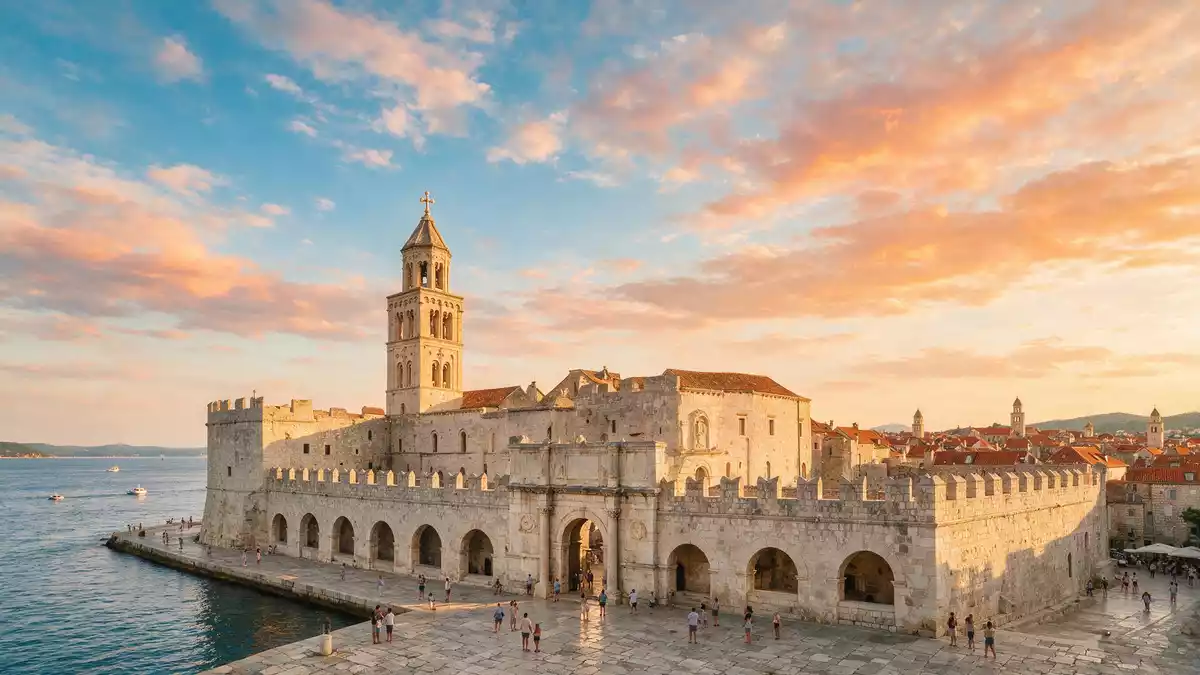
Dioklecijanova palaca in Split is a Roman palace complex that still forms part of the city’s core. Built for Emperor Diocletian in the late third and early fourth centuries, it remains closely tied to Split’s oldest streets and later urban layers.
Diocletian’s palace and Split’s Roman frame
The palace is linked with Split’s historic complex, the UNESCO World Heritage site that includes the palace and the old town around it. The name Dioklecijanova palaca belongs to a place that is both monument and urban quarter.
Diocletian, the Roman emperor who ruled in the late third and early fourth centuries, is the figure most closely associated with the site. The palace belongs to the imperial world of Roman palace architecture, yet its setting is now part of Split’s living centre.
Stone, walls and the surviving layout
The complex is known for its massive stone fabric, fortified enclosure and dense plan. It combines residential, ceremonial and defensive elements within a single walled compound.
The palace’s form is still legible in its gates, courtyards and streets, which preserve the outlines of the Roman layout. Its fabric includes later additions, yet the imperial framework remains visible in the structure of the quarter.
From imperial residence to urban quarter
Dioklecijanova palaca began as an imperial residence for Diocletian, and its later life is part of its identity. Over the centuries, houses, churches and shops were added within the old walls, turning the monument into a lived-in part of Split.
The site is therefore read as architecture and city at once. It offers Roman masonry, medieval adaptation and the continuing presence of a historic urban fabric within the old town of Split.
Visiting Dioklecijanova palaca: what travellers from Western Europe should know
- The palace stands in central Split, close to the waterfront and the historic core. It is reached on foot through the city streets and by local bus connections in the urban area.
- The site is a dense stone quarter with uneven paving, enclosed passages and several gateways. Parts of the complex are open to the sky, while others are narrower and more enclosed.
- The palace lies inside a busy city centre, so visits combine Roman remains with ordinary urban life. Churches, cafés and homes sit within the same historic frame.
- The official language is Croatian and the currency is the euro.
Searching for Dioklecijanova palaca on social platforms
These links open searches for Dioklecijanova palaca on each platform.
Frequently asked questions about Dioklecijanova palaca
Where is Dioklecijanova palaca?
It is in Split, on Croatia’s Adriatic coast, within the historic centre of the city. The palace forms part of the urban fabric rather than standing apart from it.
What should be expected on a visit?
Expect a stone complex with streets, gates, courtyards and later buildings inside the Roman frame. The place reads as both an archaeological monument and a lived city district.
What makes it distinctive?
Its strength lies in the combination of imperial Roman architecture and later urban occupation. The palace is preserved as part of a city quarter, not as an isolated ruin.


