
Djoudj National Bird Sanctuary and its delta of lakes
Published on 09/23/2026 at 17:45 | Editorial responsibility: Rafael Müller, Editor-in-Chief AD HOC NEWS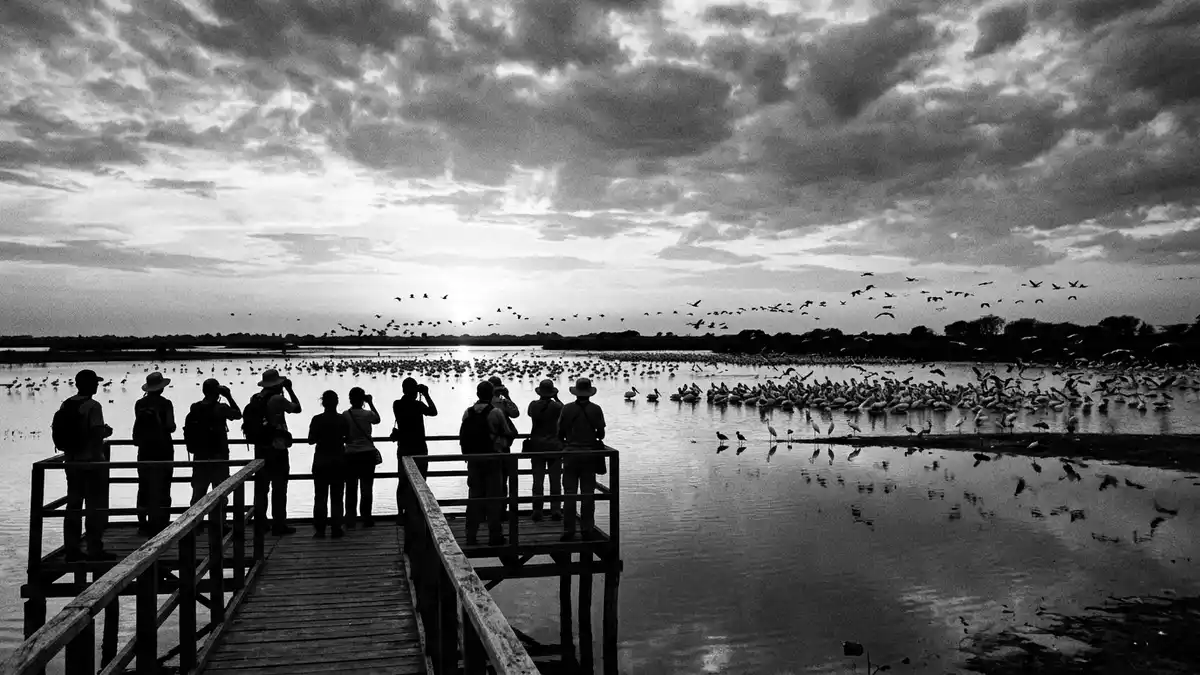
Djoudj National Bird Sanctuary is a wetland landscape in Senegal’s Senegal River delta, near Saint-Louis. Its visible character comes from water spread across a broad low-lying plain: lakes, ponds, channels, streams and backwaters form a shifting pattern around a large central lake.
The sanctuary covers 16,000 hectares and supports more than 1.5 million birds. White pelicans, African spoonbills, purple herons, great egrets and cormorants are among its recognisable species, giving the landscape a strong connection with both African and European migration routes.
Djoudj National Bird Sanctuary as a landscape of water
The sanctuary occupies an inland delta within the floodplain of the Senegal River. The Ramsar description records seasonally inundated brackish lakes and pools linked by channels, with reed beds in wet areas and Sahelian vegetation across drier ground. This combination creates a landscape that is neither a single lake nor a simple riverbank.
In the sanctuary, water appears in several forms. A large lake is surrounded by streams, ponds and backwaters, while sandbanks, fords and shallow channels form part of the wider wetland setting. The result is a mosaic of open water, reeds, grasses and low vegetation across the Saint-Louis region.
The site lies near the northern edge of Senegal, close to the Mauritanian border. The Senegal River delta continues across an international landscape, with the river and its wetlands connecting habitats on both sides of the frontier.
The birds of the Senegal River delta
Djoudj National Bird Sanctuary has recorded 365 bird species, including more than 120 Palaearctic migrants. These birds arrive from Europe and northern Asia after crossing the Sahara, while Afrotropical species use the same wetland for breeding and feeding.
White pelicans are among the sanctuary’s best-known birds, but the birdlife extends across several families and habitats. African spoonbills probe wet ground, purple herons occupy reed-filled areas, and great egrets and cormorants use the open-water margins.
The sanctuary also supports pink flamingos, night herons and other waterbirds. Its importance lies in the combination of breeding, staging and wintering habitat within one connected delta environment.
Ramsar designation followed on 11 July 1977, recognising the wetland’s international importance. The designation places Djoudj within a wider network of wetlands that support waterbirds across national boundaries and migration routes.
From national sanctuary to World Heritage site
Djoudj National Bird Sanctuary was established as a national bird sanctuary in 1971. The protected area was enlarged in 1975, bringing its recorded extent to 16,000 hectares.
The site entered the Ramsar network in 1977 and became a UNESCO World Heritage site in 1981. Its World Heritage identity rests on both the wetland’s natural landscape and its importance for bird species, including migratory birds crossing the Sahara.
The sanctuary has also carried the formal designation of a UNESCO Biosphere Reserve. These overlapping designations reflect different aspects of the same place: protected habitat, international wetland value and a landscape important within global conservation work.
Djoudj is a fragile wetland. Water levels, channels, invasive aquatic plants and surrounding land use all belong to the ecological setting recorded for the delta. Crocodiles and manatees also occur in the sanctuary, adding reptiles and mammals to a landscape commonly associated with birds.
The relationship between water and wildlife remains visible in the physical arrangement of the reserve. Lakes and pools provide open surfaces, reed beds occupy inundated ground, and drier areas carry Sahelian grasses and Tamarix vegetation. Each part belongs to the same delta system.
Visiting Djoudj National Bird Sanctuary: what travellers from Western Europe should know
- Djoudj National Bird Sanctuary lies in northern Senegal, north-east of Saint-Louis, within the Senegal River delta. Saint-Louis is the principal urban reference point for the sanctuary.
- The landscape is made of lakes, channels, ponds, reed beds and seasonally inundated ground. Visits take place in a wetland setting rather than along a single paved attraction.
- Boat excursions are associated with viewing the sanctuary’s waterways and birdlife. The protected landscape is also encountered through roads and paths across the delta.
- The official language is French and the currency is the West African CFA franc.
- Entry requirements depend on your nationality; UK travellers can check the FCDO travel advice at gov.uk/foreign-travel-advice, Irish travellers the Department of Foreign Affairs at ireland.ie.
Searching for Djoudj National Bird Sanctuary on social platforms
These links open searches for Djoudj National Bird Sanctuary on each platform.Frequently asked questions about Djoudj National Bird Sanctuary
Where is Djoudj National Bird Sanctuary?
It is in northern Senegal, within the Senegal River delta and north-east of Saint-Louis. The sanctuary lies near the Mauritanian border.
What can visitors expect at the sanctuary?
Visitors encounter a wetland of lakes, channels, ponds, reed beds and open delta ground. Birdwatching focuses on waterbirds, including pelicans, spoonbills, herons, egrets and cormorants.
What makes Djoudj distinctive?
Its 16,000-hectare wetland combines breeding, staging and wintering habitat for more than 1.5 million birds. The sanctuary became a UNESCO World Heritage site in 1981.


