
Djoudj National Bird Sanctuary and its delta of water
Published on 09/24/2026 at 06:41 | Editorial responsibility: Rafael Müller, Editor-in-Chief AD HOC NEWS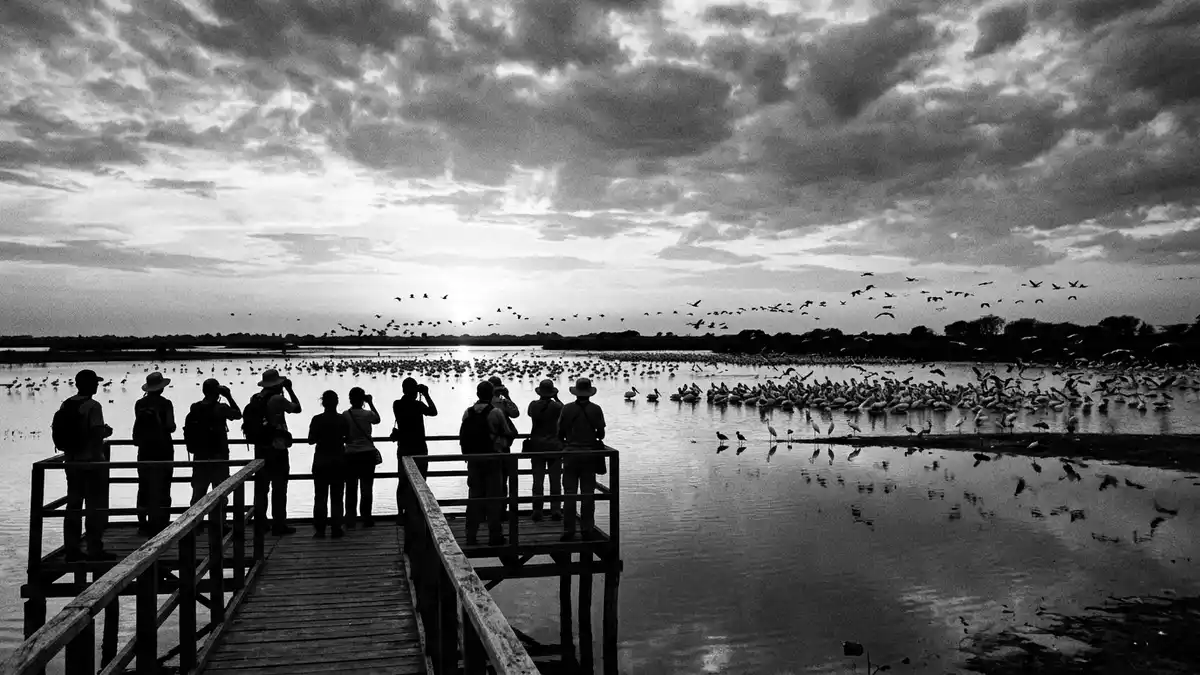
Djoudj National Bird Sanctuary is a broad wetland in Senegal’s Senegal River delta, where open water, reed beds and backwaters form a landscape shaped by seasonal flooding. The sanctuary’s central feature is not a monument but a living arrangement of lake, channels, ponds and low floodplain, with birds occupying every layer.
Covering 16,000 hectares, Djoudj National Bird Sanctuary lies north-east of Saint-Louis near the Mauritanian border. It became a national bird sanctuary in 1971 and entered the UNESCO World Heritage List in 1981.
Djoudj National Bird Sanctuary: a lake within the Senegal River delta
The sanctuary occupies part of the lower Senegal River valley, where the river divides into shallow waters and wetland habitats. A large lake is surrounded by streams, ponds and backwaters, producing a patchwork of open water, mudbanks, marsh and reed-filled edges. the 16,000-hectare wetland gives the site its defining scale.
The terrain is low and open, with the flat delta plain extending towards the border with Mauritania. Tamarisk, grasses and reeds appear across the drier and wetter parts of the floodplain, while narrow channels connect pools and larger expanses of water.
Pelicans, herons and migrants across the marsh
Djoudj is a habitat for more than 1.5 million migratory birds and 365 recorded species. White pelicans, purple herons, African spoonbills, great egrets and cormorants are among the birds associated with the sanctuary. the Ramsar wetland record identifies the site as an inland delta in the Senegal River floodplain.
The sanctuary lies on a major route for Palaearctic migrants travelling between Europe, North Africa and West Africa. Birds use the wetland for breeding, staging and wintering, while African species share the same shallow waters and marsh vegetation.
White pelicans are among the most conspicuous inhabitants. Their pale bodies gather in large groups around the wetland, alongside ducks, waders, herons and spoonbills. The result is a landscape where birdlife is inseparable from the water channels and exposed mudbanks.
From national sanctuary to World Heritage wetland
Senegal established Djoudj National Bird Sanctuary by presidential decree in 1971. The protected area was enlarged in 1975, and its wetland importance received international recognition through Ramsar designation in 1977.
UNESCO added the sanctuary to the World Heritage List in 1981 under natural criteria. The designation reflects both the delta’s ecological value and its role as habitat for large populations of migratory and nesting birds. the sanctuary’s protected history includes its national, Ramsar and World Heritage milestones.
The wetland is fragile because its plant communities and bird habitats depend on water conditions across the delta. Open water, flooded ground and channels remain central to the character of Djoudj, while reeds and aquatic plants occupy other sections of the marsh.
Visiting Djoudj National Bird Sanctuary: what travellers from Western Europe should know
- Djoudj National Bird Sanctuary lies in the Saint-Louis Region of northern Senegal, in the Senegal River delta north-east of Saint-Louis and near Mauritania.
- The sanctuary is a flat wetland of lakes, ponds, backwaters, channels, mudbanks and reed beds. Visits take place across open delta terrain rather than on paved urban ground.
- Boats are used on parts of the wetland, while land routes cross the floodplain between water bodies and observation areas.
- The official language is French and the currency is the West African CFA franc.
- Entry requirements depend on your nationality; UK travellers can check the FCDO travel advice at gov.uk/foreign-travel-advice, Irish travellers the Department of Foreign Affairs at ireland.ie.
Searching for Djoudj National Bird Sanctuary on social platforms
These links open searches for Djoudj National Bird Sanctuary on each platform.
Frequently asked questions about Djoudj National Bird Sanctuary
Where is Djoudj National Bird Sanctuary?
Djoudj National Bird Sanctuary is in northern Senegal’s Saint-Louis Region, within the Senegal River delta near the Mauritanian border.
What can visitors expect at Djoudj?
The sanctuary contains lakes, channels, ponds, reed beds and low floodplain habitats. Boat routes and land tracks provide access to different parts of the wetland.
What makes Djoudj distinctive?
Its 16,000-hectare delta wetland supports more than 1.5 million migratory birds, including white pelicans, purple herons, African spoonbills, great egrets and cormorants.


