
Dotonbori and the canal-side theatre of Osaka
Published on 09/24/2026 at 03:15 | Editorial responsibility: Rafael Müller, Editor-in-Chief AD HOC NEWS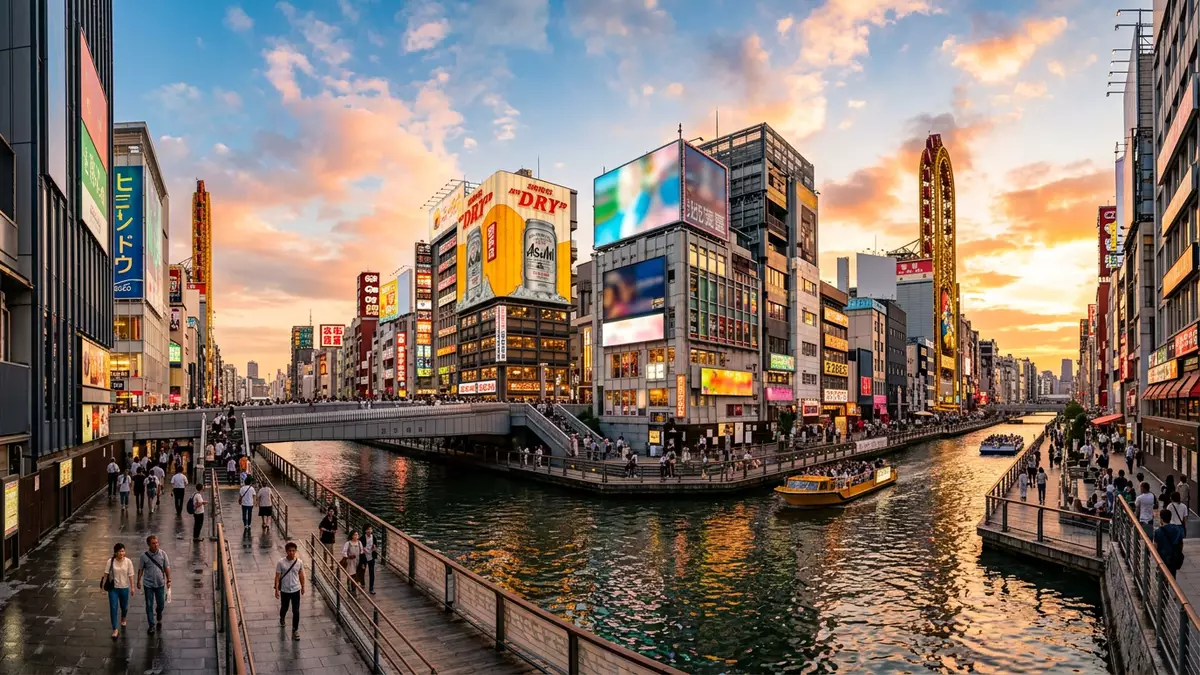
Dotonbori is a canal-side district in Osaka where a seventeenth-century waterway meets theatre, restaurants and illuminated commercial signs. The district’s most recognisable view gathers around Ebisu Bridge, with the Glico running man above the canal and the Shochikuza Theatre nearby.
Dotonbori begins with a canal
The history of Dotonbori reaches back to 1612, when Yasui Doton began work on a canal in the Minami area of Osaka. The waterway was completed in 1615 and took the name Dotonbori, combining Doton’s name with a word for a canal.
The canal forms the district’s central line. Streets, bridges, restaurants and theatres gather along its banks, while the name Dotonbori refers both to the waterway and to the surrounding entertainment quarter. The district sits near Namba, in Chuo Ward, south of the central Osaka business area.
Ebisu Bridge has crossed the canal since the early history of the waterway. The first bridge dates from 1615, and the bridge remains the district’s principal visual meeting point. Ebisu Bridge history connects the canal’s early development with its present urban setting.
From Edo theatre town to food district
In 1621, the Tokugawa shogunate designated Dotonbori as an entertainment district. Playhouses, teahouses and restaurants developed along the south bank, establishing a relationship between performance and dining that remains visible in the district’s streets.
Kabuki and bunraku formed part of Dotonbori’s theatrical identity during the Edo period. The area also became associated with gidayu narration and other forms of Japanese performance. Restaurants grew alongside the theatres, serving audiences before and after performances.
Osaka Shochikuza opened in 1923 as a Western-style theatre in Dotonbori. Its Neo-Renaissance entrance arch remains a prominent architectural feature, while the theatre presents stage productions including kabuki. Shochikuza opened in 1923, linking the district’s twentieth-century theatre history with its Edo-period origins.
The surrounding dining streets present Osaka specialities such as takoyaki and okonomiyaki, alongside seafood, noodles, sweets and casual restaurant food. Large three-dimensional signs extend above façades, including the crab associated with Kani Doraku and other restaurant displays.
The running man, Hozenji and the canal view
The Glico running man first appeared beside the canal in 1935. The figure shows an athlete with raised arms above a blue track, and the sign occupies the south bank near Ebisu Bridge. Its enduring pose has become part of Dotonbori’s visual vocabulary.
The sign has passed through several versions, with the present display using LED technology. Its subject remains a confectionery advertisement, but the image also functions as a fixed landmark within views across the canal. The running man sign has remained in the same position since its first installation.
Hozenji is a Buddhist temple in the lanes near Dotonbori. Its Fudo Myoo statue is known as Mizukake Fudo, and visitors traditionally pour water over the stone figure. Moss covers much of the statue, creating a dark green surface within the small temple precinct.
Hozenji offers a different architectural scale from the canal-front signs and theatres. Narrow lanes, stone surfaces and the moss-covered statue create a compact religious setting among the district’s commercial streets. The contrast belongs to Dotonbori itself, where performance, food and devotion occupy neighbouring spaces.
Visiting Dotonbori: what travellers from Western Europe should know
- Dotonbori lies in Osaka’s Minami area, beside the Dotonbori Canal. Namba Station is served by Osaka Metro, Nankai and Kintetsu railways.
- Ebisu Bridge links the Shinsaibashi-suji and Ebisubashi-suji shopping streets. The canal-side district is explored on foot through busy pavements, bridges and narrow lanes.
- The official language is Japanese and the currency is the Japanese yen.
- Dotonbori’s permanent landmarks include Ebisu Bridge, the Glico running man, Osaka Shochikuza and Hozenji.
Searching for Dotonbori on social platforms
These links open searches for Dotonbori on each platform.Frequently asked questions about Dotonbori
Where is Dotonbori?
Dotonbori is in Osaka’s Minami area, beside the Dotonbori Canal and near Namba Station. Ebisu Bridge sits at the centre of the canal-side district.
What can visitors expect in Dotonbori?
The district combines restaurants, food signs, theatres, bridges, shopping streets and narrow lanes. The canal, Glico running man and Shochikuza Theatre provide its main visual landmarks.
What makes Dotonbori distinctive?
Dotonbori brings a canal completed in 1615 together with an entertainment tradition dating from the Edo period. Its streets also contain the 1935 Glico sign and the moss-covered Mizukake Fudo at Hozenji.


