
Drottningholms slott and its Baroque royal domain
Published on 09/21/2026 at 10:16 | Editorial responsibility: Rafael Müller, Editor-in-Chief AD HOC NEWS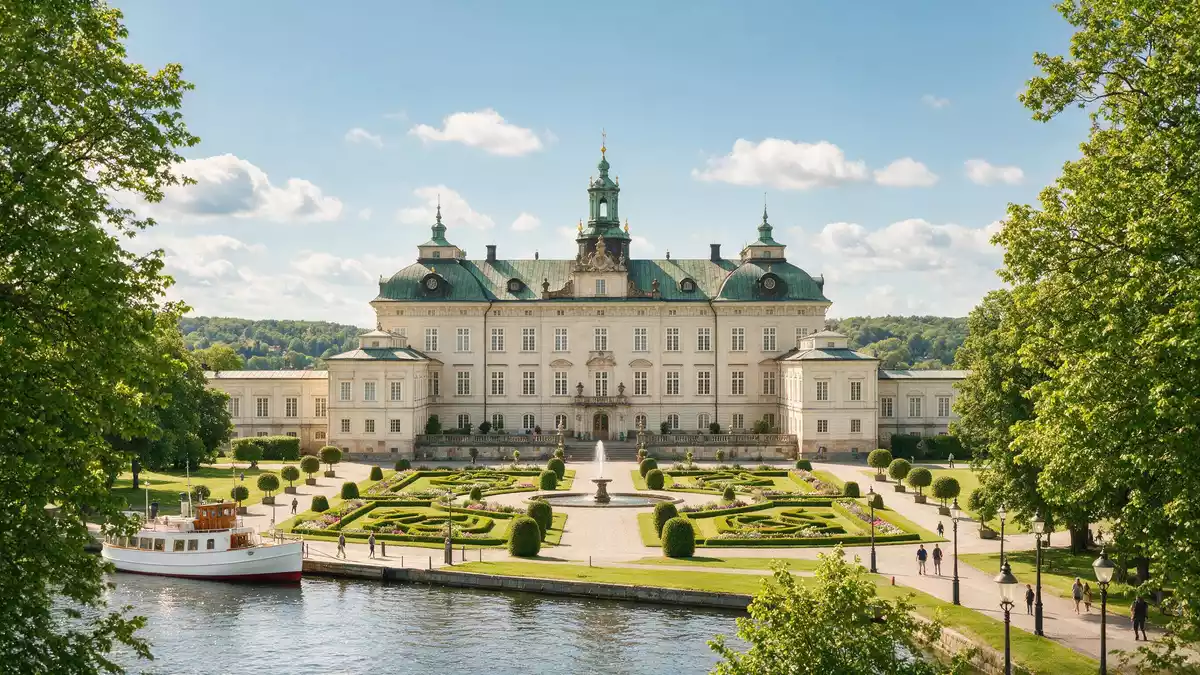
Drottningholms slott in Stockholm is a Baroque palace on Lovön, set within the Royal Domain of Drottningholm and recognised as a UNESCO World Heritage site since 1991. Its scale lies in the ensemble as much as in the palace itself: gardens, theatre and pavilions sit around a royal residence tied to Hedvig Eleonora and Nicodemus Tessin the Elder.
Drottningholms slott and its Baroque setting
The palace began after the earlier building on the site was destroyed by fire in 1661, and work on the present residence started in 1662. Tessin the Elder shaped the new palace for Queen Dowager Hedvig Eleonora, and the result became one of Sweden’s major Baroque royal buildings.1662 work began
The architecture carries French Baroque influence, while the palace grounds include formal gardens that preserve parts of the original layout. The wider domain also contains the Palace Theatre and the Chinese Pavilion, both part of the historic ensemble that gives Drottningholm its character.Royal Domain of Drottningholm
Interiors, theatre and gardens at Drottningholms slott
Inside the palace, early Baroque interiors survive alongside later rooms from the eighteenth century. The staircase and ceremonial apartments belong to the best-known surviving spaces, and the rooms reflect the long royal use of the palace by Hedvig Eleonora, Lovisa Ulrika and Gustav III.early Baroque interiors
The nearby Palace Theatre adds another layer to the site. UNESCO describes it as a perfectly preserved eighteenth-century theatre, and the wider domain remains a rare group of palace, stage building, pavilion and gardens arranged within one royal landscape.perfectly preserved theatre
The royal domain west of Stockholm
Drottningholms slott stands on an island in Lake Mälaren, close to Stockholm, in the municipality of Ekerö. The setting combines water, parkland and formal architecture, with the palace at the centre and related buildings spread through the domain.island in Lake Mälar
The site is also linked to the reigns of Johan III, Hedvig Eleonora and Karl XI, which gives the palace a clear place in Swedish royal history. Its protected status reflects both the palace fabric and the surrounding gardens, which remain part of the historic whole.UNESCO's World Heritage list
Visiting Drottningholms slott: what travellers from Western Europe should know
- The palace is on Lovön, west of Stockholm. The island setting is part of the Royal Domain of Drottningholm and places the palace within a broader royal landscape.
- The domain brings together the palace, theatre, Chinese Pavilion and gardens. Each part is a separate historic element, yet they read as one setting.
- The grounds are extensive and varied, with formal gardens and parkland around the built core. The ensemble rewards slow movement between the main buildings and the planted areas.
- English is not an official language in Sweden, so the official language is Swedish and the currency is the Swedish krona.
Searching for Drottningholms slott on social platforms
These links open searches for Drottningholms slott on each platform.
Frequently asked questions about Drottningholms slott
Where is Drottningholms slott?
It lies on Lovön in Lake Mälaren, west of Stockholm, within the Royal Domain of Drottningholm. The palace sits among gardens, parkland and associated royal buildings.
What does a visit to Drottningholms slott involve?
The site combines the palace, the theatre, the Chinese Pavilion and the gardens. The setting is best understood as a connected royal landscape rather than a single building.
What makes Drottningholms slott distinctive?
Its strength lies in the survival of a complete royal ensemble with Baroque palace, theatre and gardens. The association with Hedvig Eleonora, Nicodemus Tessin the Elder and the UNESCO-listed domain gives it clear historical depth.


