
Efes, the Roman city in the hills above Selcuk
Published on 09/18/2026 at 10:42 | Editorial responsibility: Rafael Müller, Editor-in-Chief AD HOC NEWS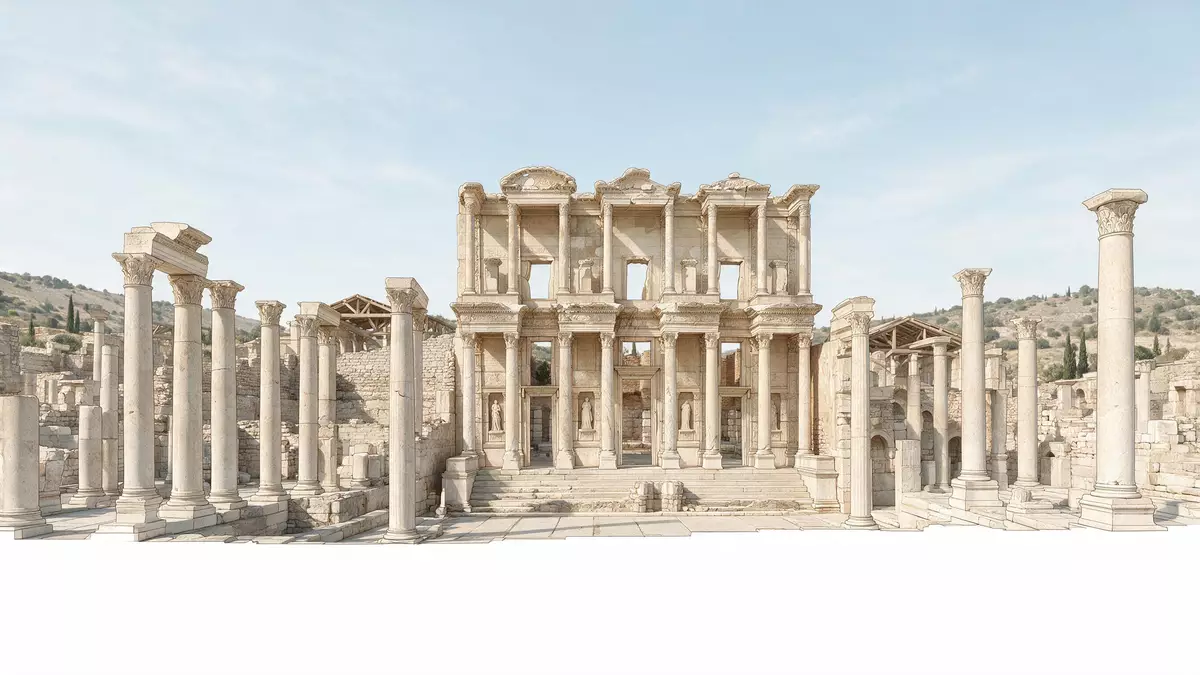
Efes, near Selcuk in western Turkey, is the archaeological site of the ancient city known in English as Ephesus, once a major centre of the Greek and Roman worlds.ancient city known in English as Ephesus It lies inland from the Aegean Sea in the lower valley of the Küçük Menderes River, on ground that was once at the edge of a harbour.
From Ionian foundation to Roman provincial capital
Efes began as a Greek city in Ionia and later became the administrative centre of the Roman province of Asia, a role that secured its place among the principal cities of the eastern Mediterranean.administrative centre of the Roman province of Asia The settlement history in the wider area reaches back to the seventh millennium BCE at Çukurici Mound, while the city itself is traditionally dated to the tenth century BC.settlement history in the wider areatenth century BC
Over centuries, Efes shifted location as the coastline of the Kaystros river estuary moved westward and as political powers changed, from archaic Greek times through the Hellenistic kingdoms to the Roman Empire.coastline of the Kaystros river estuary moved westward In the Roman period it grew into a fortified port city, with walls enclosing a large urban area and monumental buildings aligned along major streets.fortified port city
Streets, theatres and temples in stone
Walking through Efes today, the scale of the classical city is clear in its long paved avenues, flanked by colonnades and lined with remains of houses, shops and public buildings.large and best excavated cities of the ancient world The ruins include extensive structures from the first to the fourth century AD, giving a detailed picture of an urban centre at the height of Roman power.structures from the first to the fourth century AD
Efes also preserves the memory of earlier sanctuaries, notably the Temple of Artemis, whose great dipteral temple of the mid-sixth century BC was counted among the Seven Wonders of the Ancient World.Temple of Artemis Although the temple itself stands apart from the main street grid, its remains form part of the wider archaeological landscape around Selcuk, linking the city to the religious traditions of Ionia.
Ayasuluk Hill, Selcuk and the UNESCO designation
In Byzantine times, settlement focus in the area moved towards Ayasuluk Hill, where a later town grew that corresponds to the modern town of Selcuk just north-east of the main ruins.settlement focus in the area moved towards Ayasuluk Hill Selcuk developed further under the Seljuk and Ottoman empires and was renamed Selcuk in 1914, linking the modern settlement directly to the dynasty whose mosque marks the skyline.renamed Selcuk in 1914
The ancient city of Efes and its surroundings are recognised on the UNESCO World Heritage List as the “Ancient City of Ephesus”, inscribed in 2015.Ancient City of Ephesus The designation covers successive Hellenistic and Roman settlements located within the former estuary of the Kaystros, highlighting Efes as an outstanding example of a Roman port city with a harbour basin and sea channel now lying inland.outstanding example of a Roman port city
Visiting Efes: what travellers from Western Europe should know
- Efes lies a short distance west of Selcuk in ?zmir Province, inland from the Aegean coast; Selcuk is reached by rail on the ?zmir–Denizli line.
- The archaeological site covers a broad hillside and valley floor, with long stone-paved approaches and stairways between terraces and monumental buildings.
- The surrounding area includes Ayasuluk Hill with later Byzantine and Ottoman remains and the town of Selcuk, where the Ephesus Archaeological Museum displays finds from the site.
- The official language is Turkish and the currency is the Turkish lira.
- Entry requirements depend on your nationality; UK travellers can check the FCDO travel advice at gov.uk/foreign-travel-advice, Irish travellers the Department of Foreign Affairs at ireland.ie.
Searching for Efes on social platforms
These links open searches for Efes on each platform.
Frequently asked questions about Efes
Where is Efes located?
Efes is in western Turkey near the town of Selcuk in ?zmir Province, inland from the Aegean coast in the lower valley of the Küçük Menderes River.
What can visitors expect at Efes?
Visitors encounter an extensive archaeological site with paved streets, theatres, temples, public buildings and houses from the classical Greek and Roman periods.
What makes Efes distinctive among ancient cities?
Efes combines a long settlement history, a role as Roman provincial capital, the remains of the Temple of Artemis and a recognised UNESCO World Heritage port-city landscape.


