
Elephantine: an island layered with ancient Egypt
Published on 09/23/2026 at 21:38 | Editorial responsibility: Rafael Müller, Editor-in-Chief AD HOC NEWS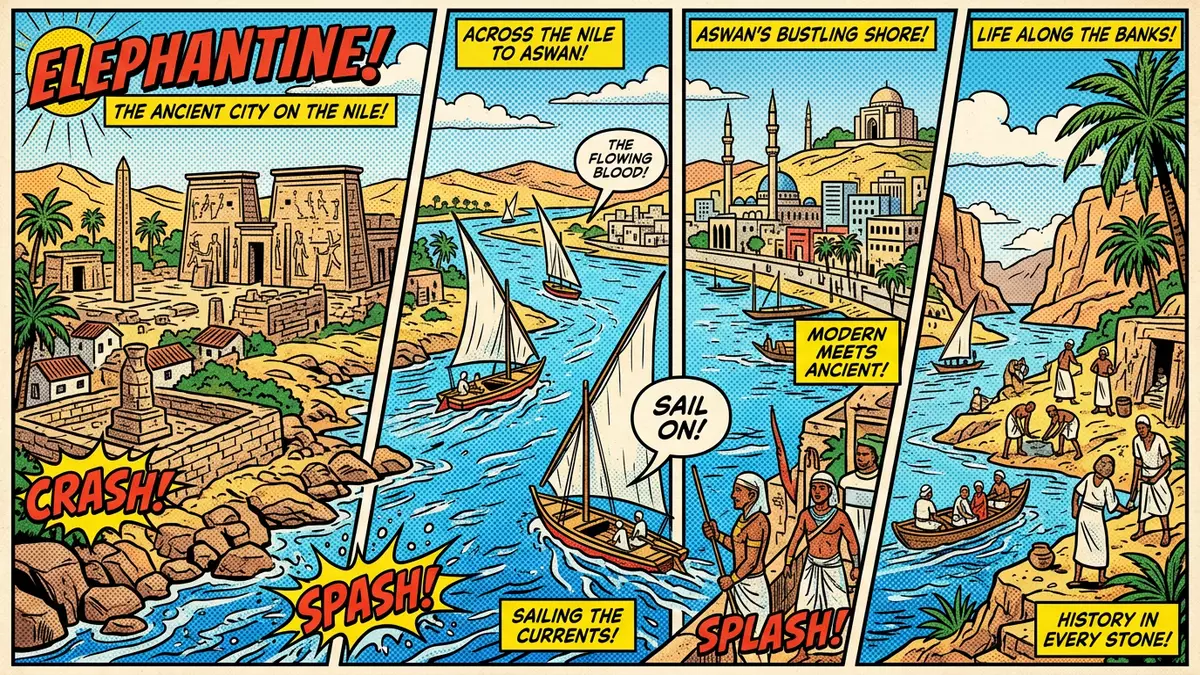
Elephantine is an island in the Nile at Assuan, with archaeological remains and living Nubian villages sharing the same ground. Temples, ancient houses, a museum and a river nilometer form a visible sequence of Egyptian history.
Elephantine between the Nile and Nubia
Elephantine lies opposite Assuan’s riverfront, near the First Cataract and the southern frontier of ancient Egypt. The island formed a gateway for traders entering from Nubia, while its position connected river traffic with routes leading into the African interior.
Its ancient names included Abu and Yebu. Elephantine refers to ivory, a material associated with trade across the southern frontier. Granite from the Aswan region also entered the island’s history, linking Elephantine with the stone landscapes and monuments of Upper Egypt.
Temples, houses and the island’s sacred landscape
The archaeological area contains remains of houses, religious buildings and administrative spaces. The Elephantine archaeological island entered the UNESCO World Heritage List in 1979.
Khnum, the ram-headed creator god associated with the Nile flood, had a temple on Elephantine. Satet, a goddess linked with the river and Egypt’s southern frontier, was also worshipped on the island. Their sanctuaries connect the surviving stones with the religious geography of the cataract.
The remains span several periods of Egyptian history. A small shrine associated with Hekayib belongs to the Old Kingdom, while fragments of an Elephantine calendar date to the reign of Thutmose III in the eighteenth dynasty. Ptolemaic and Roman structures add further layers to the site.
The nilometer and the Aswan Museum
Near the river stands a nilometer, a stone stairway descending towards the water. Markings on its walls recorded changing river levels, turning the annual rise and fall of the Nile into a measured scale.
The instrument belongs to a long tradition of river measurement in Egypt. Its presence gives Elephantine a practical archaeological feature beside the temples and houses, with the Nile itself remaining part of the setting.
The Aswan Museum occupies the southern part of the island. Its displays include objects recovered from Elephantine and the surrounding region, including material connected with Nubia and the island’s ancient sanctuaries.
Archaeological work on Elephantine has revealed inscriptions, domestic remains and religious objects. The island’s archaeological remains include evidence from predynastic times, dynastic Egypt, the Roman period and the centuries that followed.
Visiting Elephantine: what travellers from Western Europe should know
- Elephantine lies in the Nile opposite Assuan’s corniche. Public ferries, feluccas and motorboats connect the island with the city’s riverfront.
- The archaeological area combines exposed stone remains with uneven ground and riverbank steps. The nilometer includes a stairway descending towards the Nile.
- The island is part of Assuan and includes Nubian villages, the Aswan Museum and archaeological areas within the same riverside setting.
- The official language is Arabic and the national currency is the Egyptian pound.
- Entry requirements depend on your nationality; UK travellers can check the FCDO travel advice at gov.uk/foreign-travel-advice, Irish travellers the Department of Foreign Affairs at ireland.ie.
Searching for Elephantine on social platforms
These links open searches for Elephantine on each platform.
Frequently asked questions about Elephantine
Where is Elephantine?
Elephantine is an island in the Nile at Assuan, opposite the city’s riverfront and near the First Cataract.
What can visitors see on Elephantine?
The island contains archaeological remains, the Khnum and Satet temple areas, a nilometer, the Aswan Museum and Nubian villages.
What makes Elephantine distinctive?
Elephantine brings together a river frontier, ancient religious buildings, measured Nile levels and living Nubian settlement within one island landscape.


