Enoshima's ring of shrines and sea views
Published on 08/09/2026 at 15:09 | Editorial responsibility: Rafael Müller, Editor-in-Chief AD HOC NEWS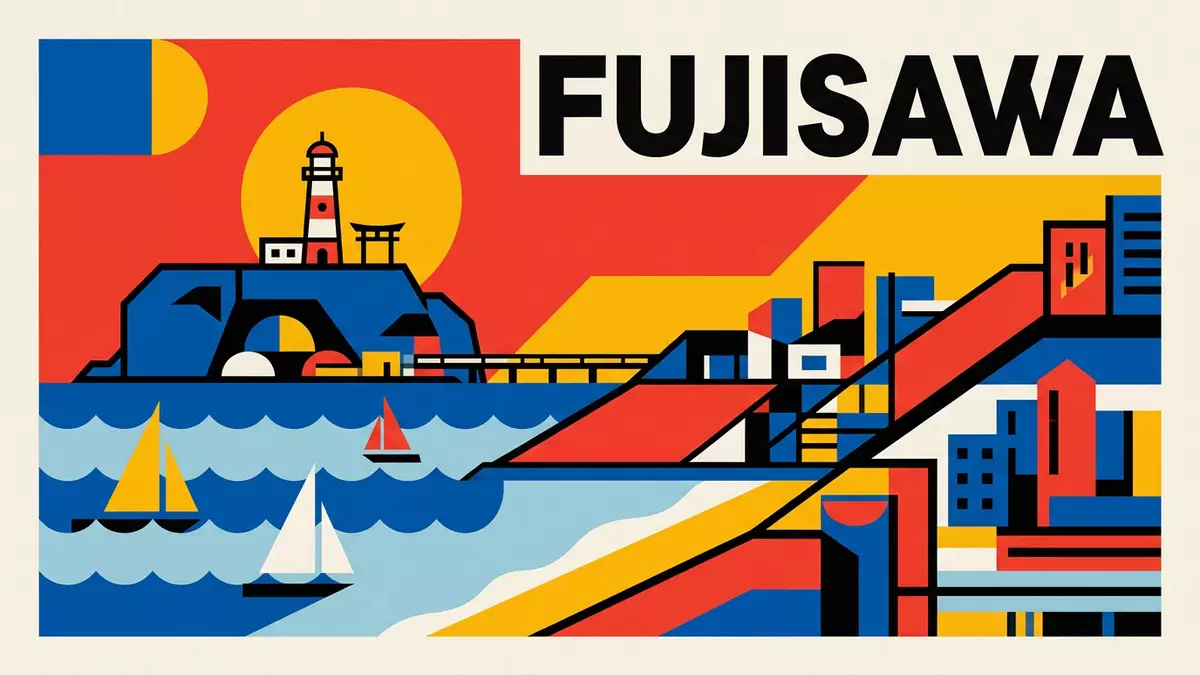
Enoshima is a small island off Fujisawa on Japan’s Sagami Bay, linked to the shore by a bridge and known for its compact network of shrines, paths and lookout points. The island’s character comes from that tight layering of stone steps, wooded slopes and coastal views, with Enoshima Shrine as its central historic name.
Enoshima’s shrine island landscape
The island has long been associated with Enoshima Shrine, a Shinto complex that includes several precincts spread across the slopes. The present buildings reflect later reconstructions and a long religious tradition tied to Benzaiten, the Buddhist and Shinto figure linked with music, wealth and water.
What visitors meet on foot is a sequence of stairways, small temple structures, lanterns and openings towards the sea. The setting is compact but varied, moving from sheltered woodland to exposed edges above the water.
Stone, steps and coastal views
Enoshima is shaped by its topography as much as by its buildings. The island rises from the bay in a steep profile, so movement through it is mostly upward, with paths that connect the lower approach to the higher shrine precincts.
That vertical layout gives the island a clear rhythm. A traveller passes from bridge to shopping streets, then to shrine courts, and finally to wider views over the coast and the Pacific side of the peninsula.
Historic associations and cultural layers
Enoshima appears in Japanese religious and artistic history as a place of pilgrimage and coastal retreat. It has also been linked with the cult of Benzaiten for centuries, and the shrine complex remains the strongest historic anchor on the island.
The island’s smaller structures, carved details and ritual spaces sit alongside natural rock and planted slopes. That mixture makes Enoshima feel less like a single monument and more like a compact cultural landscape.
Visiting Enoshima: what travellers from Western Europe should know
- Enoshima is reached from Fujisawa by rail, road and the pedestrian bridge to the island.
- Admission arrangements and opening hours are set by the site's operator and change with the season; the official website is the only binding source.
- Spring and autumn are comfortable for walking, while bright winter days often bring the clearest coastal views.
- The island has steep steps, uneven stone paths and a hilly approach, so sturdy footwear helps.
- Japanese is the main language on site, and cashless payment is common in many visitor areas, though some smaller places may prefer cash.
- Entry requirements depend on your nationality. UK travellers should check the FCDO travel advice at gov.uk/foreign-travel-advice; Irish travellers the Department of Foreign Affairs at ireland.ie; EU and EEA citizens their own national foreign ministry.
Searching for Enoshima on social platforms
These links open searches for Enoshima on each platform.
Frequently asked questions about Enoshima
Where is Enoshima?
Enoshima is an island in Sagami Bay, just off Fujisawa on Japan’s eastern coast. It sits close enough to the mainland to feel connected to the city, yet distinct in form and atmosphere.
What should a visitor expect?
Expect a walk through shrines, slopes and sea-facing paths rather than a single enclosed sight. The island rewards unhurried movement, with each level opening onto a different part of the coast.
What makes Enoshima distinctive?
Its mixture of sacred buildings, steep terrain and coastal outlook gives it a clear identity. Few places combine pilgrimage, island scenery and dense footpaths in such a compact space.