Fasil Ghebbi and Gondar's stone palaces
Published on 08/11/2026 at 15:11 | Editorial responsibility: Rafael Müller, Editor-in-Chief AD HOC NEWS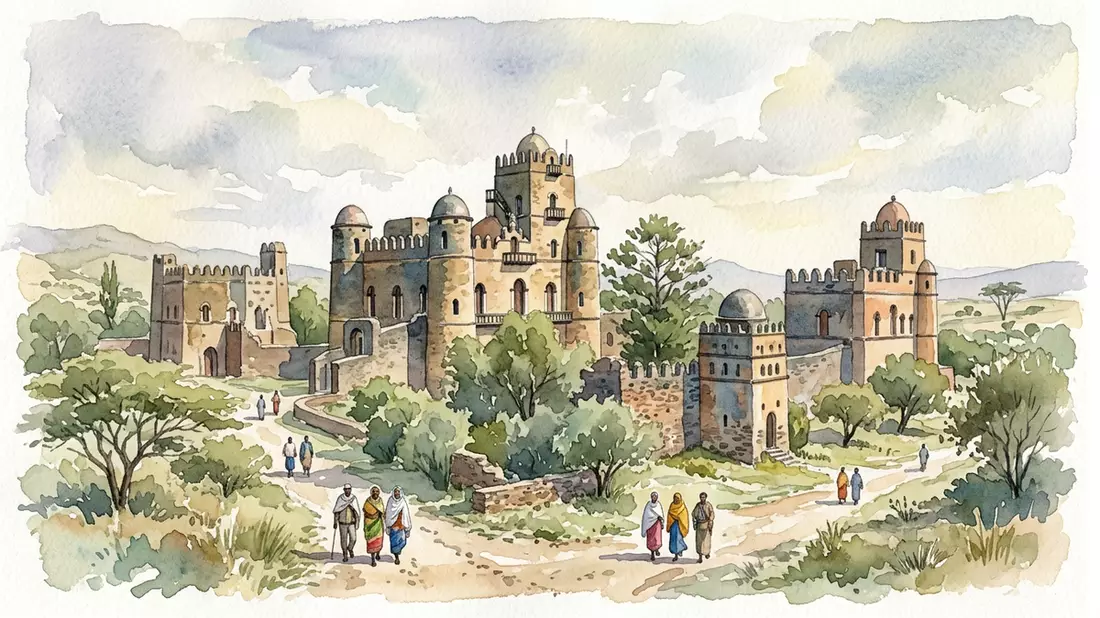
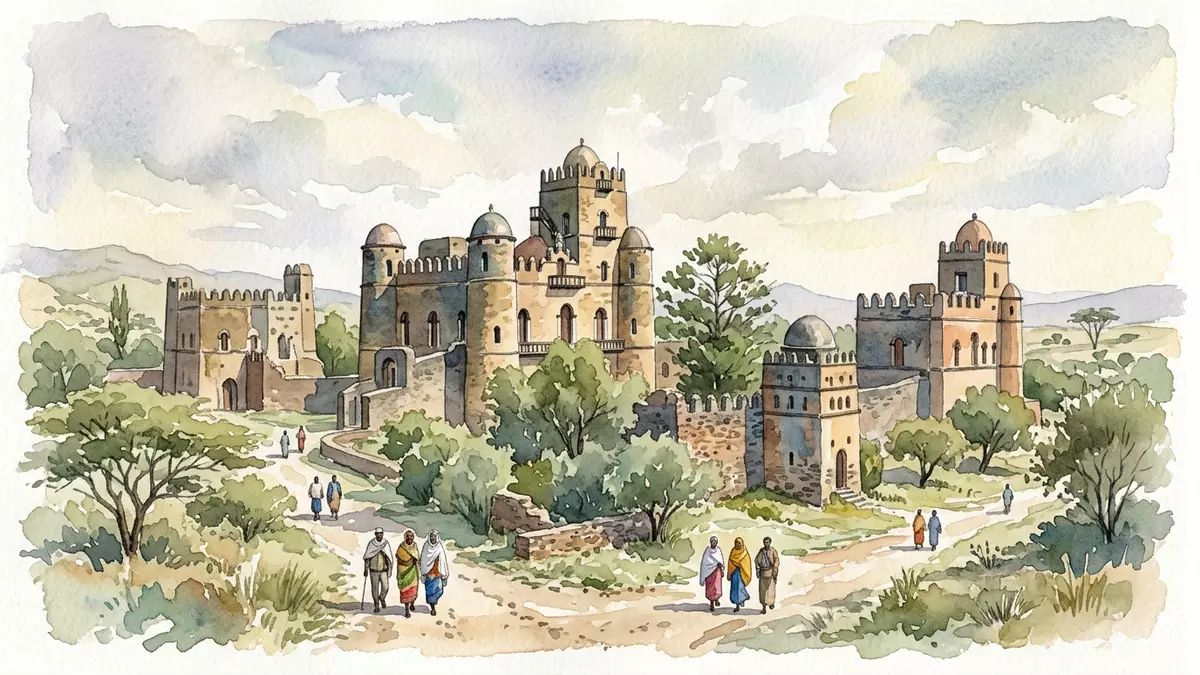
Fasil Ghebbi is the fortified imperial enclosure at Gondar in Ethiopia, associated with Emperor Fasilides and the seventeenth-century Gondarine capital. Its stone walls, castles and courtly compounds give the place a dense, enclosed character that is easy to read on foot.
Stone walls and imperial buildings in Gondar
The enclosure includes palaces, audience halls, churches and a bath complex within a walled precinct. The buildings belong to the Gondarine period, when the Ethiopian court developed a distinctive royal centre at Gondar.
The name Fasil Ghebbi links the site to Fasilides, the emperor whose reign began in 1632. The complex is one of the clearest surviving expressions of Ethiopia's imperial architecture from that era.
A courtly compound with many layers
Inside the walls, the buildings are arranged as a sequence of courts and standing structures rather than one single monument. The result is a place that reads as a small royal quarter, with separate elements close together.
Portuguese, local Ethiopian and broader regional influences shaped the architecture of Gondar. The masonry, towers and battlemented outlines give the group a restrained but distinctive profile against the open ground around it.
Fasilides' legacy at the heart of the site
Fasilides remains the central historical figure here, but the enclosure also reflects the rule of later emperors who added to the compound. That sequence makes the site more than a single palace: it is a royal landscape built across generations.
For visitors, the appeal lies in walking through a place where the imperial presence survives in walls, gateways and weathered stone. The setting in Gondar adds another layer, since the complex sits within a city long tied to Ethiopia's imperial past.
Visiting Fasil Ghebbi: what travellers from Western Europe should know
- The site is in Gondar, in northern Ethiopia, and is reached by road or by air via the city.
- Admission arrangements and opening hours are set by the site's operator and change with the season; the official website is the only binding source.
- The dry season offers the most reliable conditions for exploring the stone surfaces and open courts.
- The site includes uneven ground, steps and exposed masonry, so sturdy shoes are sensible.
- Payments may be handled locally in Ethiopian birr, and basic English is useful in tourist-facing settings.
- Entry requirements depend on your nationality. UK travellers should check the FCDO travel advice at gov.uk/foreign-travel-advice; Irish travellers the Department of Foreign Affairs at ireland.ie; EU and EEA citizens their own national foreign ministry.
Searching for Fasil Ghebbi on social platforms
These links open searches for Fasil Ghebbi on each platform.
Frequently asked questions about Fasil Ghebbi
Where is Fasil Ghebbi?
Fasil Ghebbi is in Gondar, in northern Ethiopia. It forms the historic imperial enclosure associated with the city’s royal past.
What should visitors expect?
Expect stone buildings, courtyards, walls and uneven walking surfaces. The place is best understood as a cluster of royal structures rather than a single palace.
What makes Fasil Ghebbi distinctive?
Its identity comes from the Gondarine imperial setting and the combination of castles, courts and religious buildings within one walled precinct. Emperor Fasilides remains the strongest historical anchor for the site.