
Fes el Bali, the walled heart of Fes
Published on 09/19/2026 at 06:32 | Editorial responsibility: Rafael Müller, Editor-in-Chief AD HOC NEWS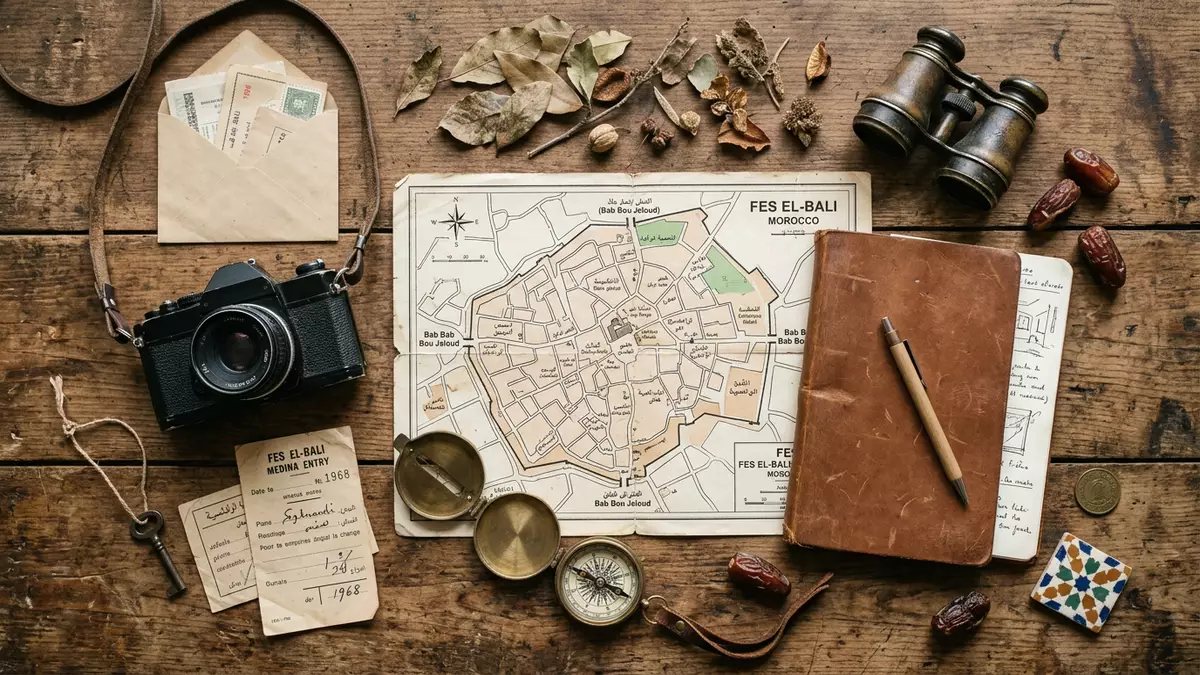
Fes el Bali is the oldest walled quarter of Fes in northern Morocco, a dense historic medina where streets, houses and religious buildings preserve an early medieval Islamic city in remarkable detail.oldest part of Fez Its network of lanes and covered passages forms a vast pedestrian maze that visitors experience entirely on foot.
A medieval city that grew into a spiritual capital
Fes el Bali developed from foundations laid under the Idrisid dynasty around the turn of the ninth century, when Fes emerged as a major urban centre.founded as capital of the Idrisid dynasty Later power shifts brought new rulers, but the city retained its status as an intellectual and religious hub for the wider Maghreb.
The wider historic city includes Fes el Bali and Fes Jdid, both enclosed quarters that together form the medina of Fes.two old medina quarters In 1981 the United Nations Educational, Scientific and Cultural Organization recognised this historic fabric as the “Medina of Fez” on the World Heritage List, citing the ensemble of streets, buildings and monuments as a cultural property of outstanding value.Medina of Fez inscription
Streets, houses and monuments in the walled maze
The urban fabric of Fes el Bali is defined by narrow streets, stairways and small squares, all enclosed by city walls that mark the limits of the old town.urban fabric and principal monuments Many routes run as covered passageways between houses, and the absence of motor traffic gives the quarter the character of a vast pedestrian zone.large urban pedestrian zone
Within this fabric stand different types of structures associated with Moorish architecture, including madrasas for religious study, fondouks serving historic trade, mosques, fountains, palaces and large houses built around internal courtyards.madrasas, fondouks, mosques and palaces Notable ninth-century religious complexes within Fes el Bali include the Qarawiyyin Mosque and the Mosque of the Andalusians, both established under early rulers and significantly expanded in later periods.Qarawiyyin and Mosque of the Andalusians
Layers of architecture and everyday life
The principal monuments and much of the surrounding housing fabric date from the period between the twelfth and fifteenth centuries, when successive dynasties shaped the city with madrasas, caravanserais and religious foundations.monuments dating from this period Many structures display decorative brickwork, carved plaster and painted wood that reflect the craftsmanship associated with Moroccan urban centres of the time.Moorish architecture
Trades and domestic life still occupy the same dense urban pattern, with workshops and houses arranged along alleys that twist between mosques, madrasas and neighbourhood fountains.numerous historic monuments Many roofs sit close together above the lanes, creating irregular light and shade that accentuate the enclosed character of the medina while glimpses of minarets and hill slopes recall the wider setting beyond the walls.partly preserved medieval structures
Visiting Fes el Bali: what travellers from Western Europe should know
- Fes el Bali occupies the oldest walled part of Fes in northern Morocco, reached from the ville nouvelle and other districts through historic gates in the city walls.
- The medina consists of steep, narrow streets and stairways, with long stretches accessible only on foot and many passages roofed over between closely spaced buildings.
- Within Fes el Bali, landmarks such as the Qarawiyyin Mosque and the Mosque of the Andalusians sit among residential quarters and trading streets, so routes to them pass through busy alleys and irregular junctions.
- The official language is Arabic and the currency is the Moroccan dirham.
- Entry requirements depend on your nationality; UK travellers can check the FCDO travel advice at gov.uk/foreign-travel-advice, Irish travellers the Department of Foreign Affairs at ireland.ie.
Searching for Fes el Bali on social platforms
These links open searches for Fes el Bali on each platform.Frequently asked questions about Fes el Bali
Where is Fes el Bali within Fes and Morocco?
Fes el Bali forms the oldest walled quarter of Fes in northern Morocco, lying within the urban area but distinct from Fes Jdid and the later ville nouvelle.
What should visitors expect when walking through Fes el Bali?
Visitors encounter steep, narrow lanes, covered passageways and stairways lined with houses, workshops, mosques and fountains, all within a large pedestrian urban area.
What makes Fes el Bali distinctive among historic city centres?
Fes el Bali combines a dense medieval street layout, major Islamic monuments such as the Qarawiyyin complex and Mosque of the Andalusians, and continuous pedestrian circulation within city walls.


