
Fuji-san above Fujinomiya: Japan’s near-symmetrical volcanic cone
Published on 09/19/2026 at 21:26 | Editorial responsibility: Rafael Müller, Editor-in-Chief AD HOC NEWS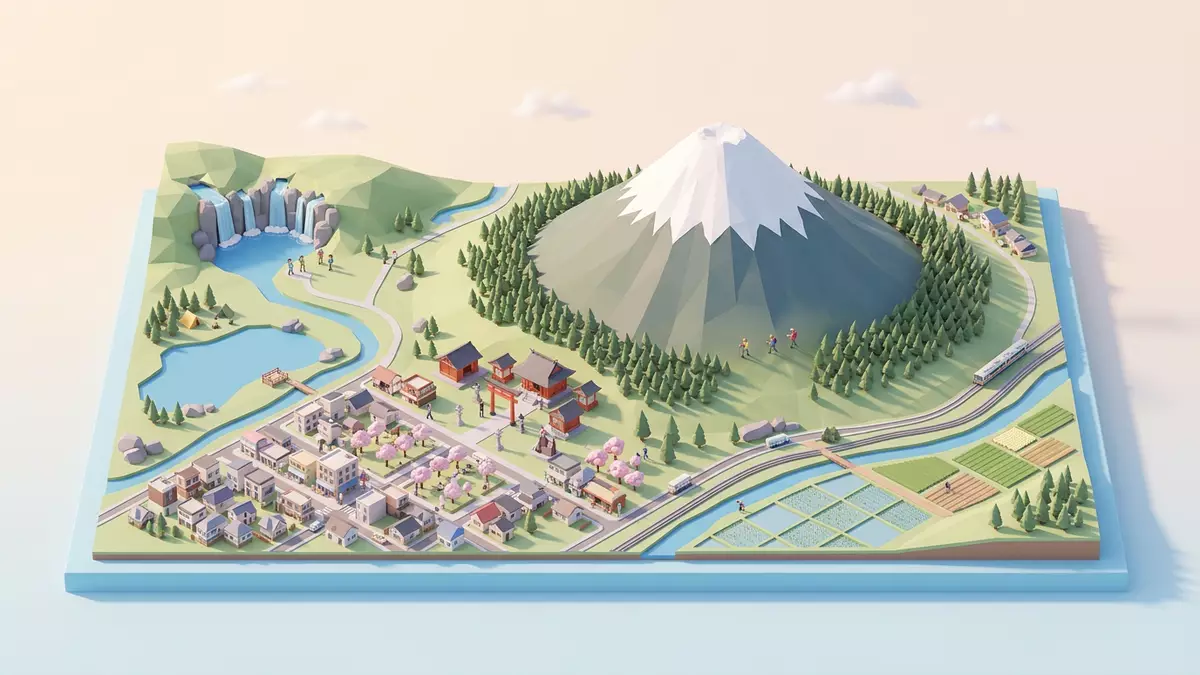
Fuji-san, known in English as Mount Fuji, rises above the city of Fujinomiya in central Japan as a near-symmetrical volcanic cone and the country’s highest mountain. Its summit reaches 3,776 m (12,389 ft), and the mountain stands on Honshu where Shizuoka and Yamanashi prefectures meet, with Fujinomiya spreading across its south-western foot.
The volcanic cone above Fujinomiya
Fuji-san is an active stratovolcano whose broad cone dominates the plains that run towards Suruga Bay on the Pacific coast, giving central Honshu a single, clearly recognisable summit on the skyline.active stratovolcano The volcano’s near-symmetrical form has developed over repeated eruptions that built up layers of lava, ash and other material, leaving a cone that rises steeply from settled lowlands into bare upper slopes.
The mountain’s height and position make it a defining landmark for Fujinomiya, a city that lies at Fuji-san’s western foot in Shizuoka Prefecture and forms one of the municipalities associated with the volcano.western foot of Mount Fuji Streets and neighbourhoods extend towards the lower slopes, and the volcanic cone is visible from many vantage points, rising above urban roofs and low hills in a single, broad mass.
Fuji-san in central Japan
Fuji-san stands on Honshu, the largest Japanese island, west of Tokyo and roughly aligned with the Pacific coast between the capital and Nagoya.located on the Japanese island of Honshu The mountain’s base touches several municipalities, including Fujinomiya to the south-west, Fujiyoshida to the north, Gotemba to the east and Fuji city to the south, reflecting how its broad lower slopes spread into different settled areas.
Fujinomiya itself lies in southern Shizuoka Prefecture in central Honshu, at the western foot of Fuji-san and within sight of the mountain from many parts of the city.city in southern Shizuoka prefecture From here the stratovolcano’s cone lifts above houses, industrial districts and farmland, and the steep transition from lowland plain to volcanic slope is clearly visible as the terrain rises towards the upper mountain.
The Fujinomiya side and trail
On the Fujinomiya side of Fuji-san, the southern slope carries the Fujinomiya Trail, a climbing route that leads towards the summit from a high station on the Shizuoka Prefecture side.Fujinomiya Trail departs from the Fujinomiya Trail 5th Station The trail begins at the Fujinomiya 5th Station, a trailhead on the southern slope at an altitude of around 2,380 m (7,808 ft), which makes this approach start higher than other main routes.
The Fujinomiya Trail is known for its shorter route to the summit compared with other trails on Fuji-san, with a path that climbs steeply over volcanic rock and ash before reaching the upper crater rim.guide to climbing Mt. Fuji—Fujinomiya Trail Mountain huts stand along the route, and on clear days the southern side offers wide views across Shizuoka Prefecture towards Suruga Bay and the plains at the foot of the stratovolcano.
Visiting Fuji-san: what travellers from Western Europe should know
- Fuji-san stands on Honshu in central Japan, west of Tokyo, with Fujinomiya lying at its western foot in Shizuoka Prefecture.
- Approaches from Fujinomiya reach higher ground on mountain roads that climb towards the Fujinomiya 5th Station on Fuji-san’s southern slope.
- The terrain on the Fujinomiya Trail consists of steep volcanic slopes with rocky sections and loose material, requiring care on foot and appropriate footwear.
- The official language is Japanese and the currency is the yen.
- Entry requirements depend on your nationality; UK travellers can check the FCDO travel advice at gov.uk/foreign-travel-advice, Irish travellers the Department of Foreign Affairs at ireland.ie.
Searching for Fuji-san on social platforms
These links open searches for Fuji-san on each platform.Frequently asked questions about Fuji-san
Where is Fuji-san in relation to Fujinomiya?
Fuji-san stands on Honshu in central Japan, and Fujinomiya lies at its western foot in Shizuoka Prefecture, beneath the mountain’s south-western slopes.
What should travellers expect when approaching Fuji-san from Fujinomiya?
Travellers encounter a rapid transition from lowland city streets to steep volcanic slopes, with roads and trails that climb towards high stations on the southern side.
What makes Fuji-san distinctive above Fujinomiya?
Fuji-san is Japan’s highest mountain, an active stratovolcano with a near-symmetrical cone that rises directly above Fujinomiya and dominates the surrounding landscape.


