
Fushimi Inari Taisha and its avenues of vermilion gates
Published on 09/19/2026 at 18:23 | Editorial responsibility: Rafael Müller, Editor-in-Chief AD HOC NEWS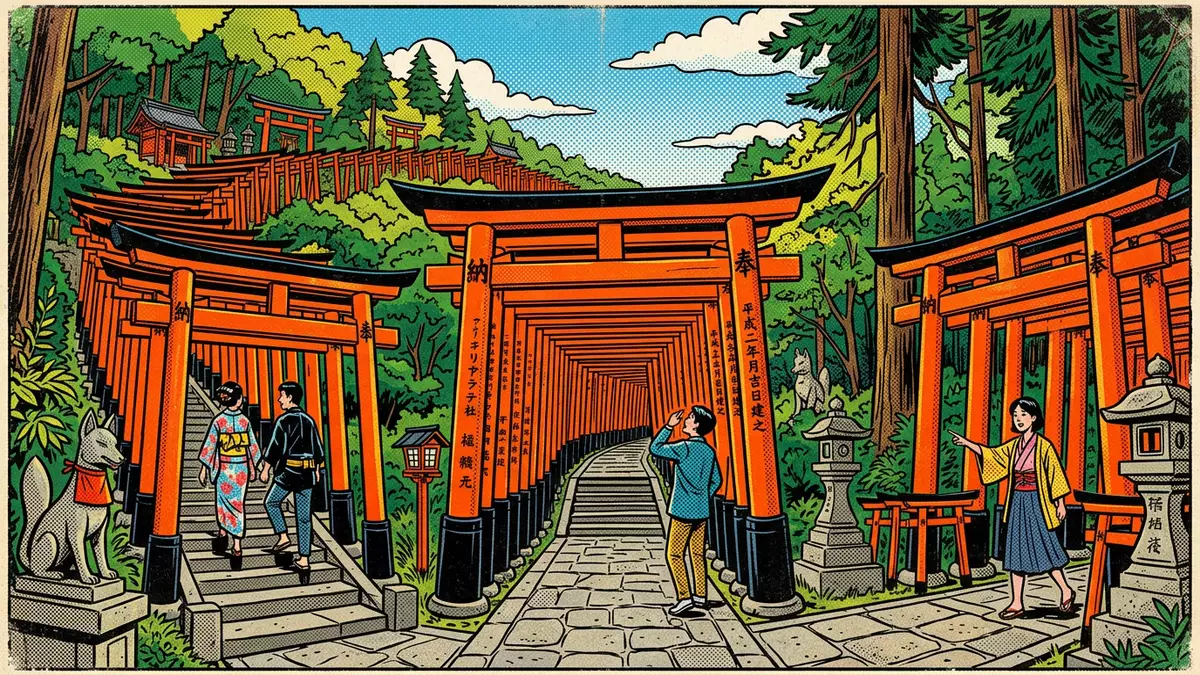
Fushimi Inari Taisha in Kyoto is a Shinto shrine that extends from an urban forecourt into the wooded slopes of Mount Inari, its paths marked by vermilion torii gates climbing the hill.
From city shrine to mountain sanctuary
Fushimi Inari Taisha stands in Fushimi Ward in southern Kyoto, at the western foot of Mount Inari, where the shrine complex begins at street level and gradually transitions into a hillside sanctuary.western foot of Mount Inari It is recognised as the head shrine of Inari worship in Japan, linked to a wide network of affiliated shrines across the country.head shrine with which all the others are affiliated
The shrine is dedicated to Inari Okami, associated with rice, harvest and prosperity, and its history reaches back to the Nara Period, with the deity enshrined in 711.enshrined on the first Day of the Horse of the second month of 711 Over time, Fushimi Inari Taisha developed from its early site on the hill into a larger complex at the base and on the slopes, integrating shrine buildings with paths that lead into the forested terrain.
Main shrine architecture and fox guardians
At the approach from the street, visitors encounter the broad R?mon gate and the main shrine structures, which include the Honden and a group of shrines designated as an Important Cultural Property.main shrine building contains five shrines together The main building brings together lower, middle and upper shrines, alongside Tanaka Shrine and Shino-Okami Shrine, forming a layered composition that reflects Inari worship at different levels.
Fox statues appear throughout the precinct, often holding symbolic objects in their mouths and flanking approaches, as Inari is strongly associated with foxes as messengers. Around the forecourt and main buildings, stone lanterns, smaller auxiliary shrines and offering spaces create a dense ritual landscape before the paths rise towards the hillside torii corridors.
Senbon Torii and the paths up Mount Inari
Beyond the main buildings, Fushimi Inari Taisha is known for its Senbon Torii, corridors of closely spaced torii gates forming continuous tunnels that climb Mount Inari.thousands of vermilion-orange torii gates The gates stand side by side along stone paths, curving and branching as they follow the contours of the hill, and are typically painted in a vivid vermilion colour that contrasts with the surrounding trees.
Many of the torii are donated by individuals or companies, with names and inscriptions on the uprights, and the sequence leads past smaller sub-shrines, viewpoints and resting spots. The route continues towards the higher reaches of Mount Inari, where the shrine presence becomes more dispersed among the trees, with stone markers and modest structures indicating sacred points on the mountain.
Visiting Fushimi Inari Taisha: what travellers from Western Europe should know
- Fushimi Inari Taisha lies in Fushimi Ward in southern Kyoto, at the base of Mount Inari, and is reached by local rail lines stopping at Inari Station and Fushimi Inari Station.located in southern Kyoto
- The shrine grounds extend from level streets into hillside paths; the climb along the torii-covered routes involves sustained walking on stone steps and sloping tracks through the forest.
- The official language is Japanese and the currency is the yen.
- Entry requirements depend on your nationality; UK travellers can check the FCDO travel advice at gov.uk/foreign-travel-advice, Irish travellers the Department of Foreign Affairs at ireland.ie.
Searching for Fushimi Inari Taisha on social platforms
These links open searches for Fushimi Inari Taisha on each platform.
Frequently asked questions about Fushimi Inari Taisha
Where is Fushimi Inari Taisha located?
Fushimi Inari Taisha is in Fushimi Ward in southern Kyoto, at the base of Mount Inari and close to local railway stations on the JR Nara and Keihan lines.important Shinto shrine in southern Kyoto
What should visitors expect on a visit?
A visit begins at the urban shrine forecourt with its main gate and buildings, then continues into hillside paths marked by long sequences of vermilion torii gates.
What makes Fushimi Inari Taisha distinctive among Kyoto shrines?
Its combination of a head shrine for Inari, an early foundation dated to 711 and extensive torii corridors leading up a sacred hill gives it a strong presence in both the cityscape and the surrounding landscape.


