
Fushimi Inari Taisha and Kyoto’s tunnel of vermilion gates
Published on 09/22/2026 at 19:08 | Editorial responsibility: Rafael Müller, Editor-in-Chief AD HOC NEWS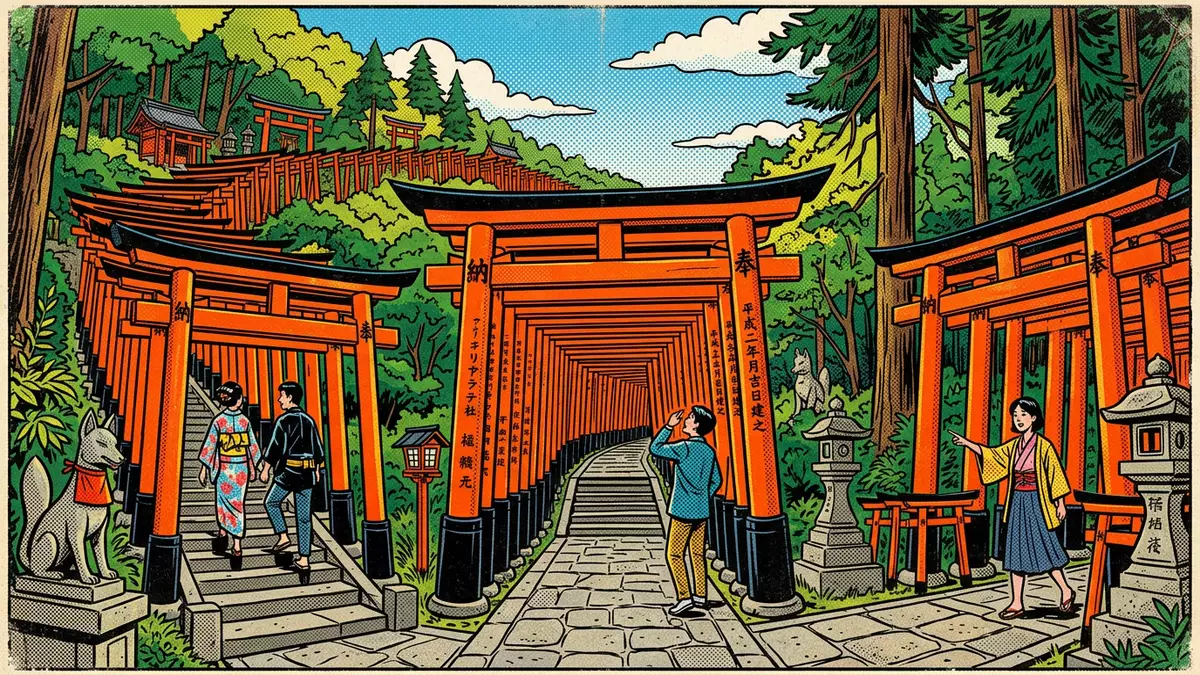
Fushimi Inari Taisha turns a wooded mountain into a long sequence of vermilion torii. In southern Kyoto, the Shinto shrine climbs Mount Inari through gates, stone steps, small sanctuaries and fox imagery. Its foundation is traditionally dated to 711, giving the route a history that reaches beyond Kyoto’s establishment as Japan’s capital.
Fushimi Inari Taisha begins with a mountain shrine
Fushimi Inari Taisha is dedicated to Inari ?kami, a Shinto deity associated with rice, agriculture and prosperity. The shrine belongs to a religious tradition expressed through thousands of Inari sanctuaries across Japan, while this site serves as the principal shrine associated with that worship.
The shrine’s origins are linked with the Hata clan, whose presence shaped early religious life in the Kyoto region. Fushimi Inari’s official history records its development through the imperial and state institutions that followed. The complex stands at the foot of Mount Inari, with sacred places extending up the wooded slopes.
Thousands of torii form a vermilion passage
The torii are the defining sight at Fushimi Inari Taisha. Donated gates stand closely together along the mountain paths, creating stretches of vermilion shade and repeated framing between the trees. Their inscriptions identify donors and preserve the connection between religious devotion and the shrine’s built landscape.
The best-known sequence is the Senbon Torii, whose name refers to a thousand gates. The route continues beyond this concentrated passage, passing stone lanterns, small shrines, fox statues and viewpoints over Kyoto. Foxes appear throughout the grounds as messengers of Inari, with some statues holding symbolic objects such as rice sheaves, keys or jewels.
From Heian religious centre to living Shinto complex
Fushimi Inari Taisha developed during the Heian period, after Kyoto became the imperial capital in 794. Its institutional history includes imperial recognition, changing shrine classifications and rebuilding after damage in the fifteenth century. The main shrine buildings visible within the lower complex reflect the architectural language of Japanese Shinto, with timber construction, curved roofs and vivid vermilion details.
The buildings and mountain route form a connected sacred landscape rather than a single isolated hall. The lower precinct contains the principal worship buildings, while the paths rise through torii-covered sections towards Mount Inari’s summit area. The shrine’s 711 foundation date places its story in the Wad? era, centuries before the city took its present name and form.
Visiting Fushimi Inari Taisha: what travellers from Western Europe should know
- Fushimi Inari Taisha is in southern Kyoto. JR Inari Station on the Nara Line stands beside the shrine approach, while Fushimi-inari Station on the Keihan Main Line is east of the complex.
- The route rises from the lower shrine through Mount Inari’s wooded slopes. It includes stone steps, inclined paths and long stretches beneath closely spaced torii.
- The official language is Japanese and the currency is the Japanese yen.
- Fox statues, stone lanterns, small sanctuaries and donor inscriptions appear along the mountain route.
Searching for Fushimi Inari Taisha on social platforms
These links open searches for Fushimi Inari Taisha on each platform.Frequently asked questions about Fushimi Inari Taisha
Where is Fushimi Inari Taisha?
Fushimi Inari Taisha is in southern Kyoto, at the foot and on the slopes of Mount Inari. JR Inari Station and Keihan Fushimi-inari Station provide named railway approaches.
What can visitors expect on the route?
The route combines worship buildings, vermilion torii, stone steps, wooded paths, fox statues and small mountain sanctuaries. Its character changes as the path rises from the lower precinct.
What makes Fushimi Inari Taisha distinctive?
The closely spaced torii create a continuous vermilion passage through Mount Inari. The shrine’s foundation is traditionally dated to 711, linking the gates with an ancient Inari tradition.


