
Fushimi Inari Taisha and Kyoto’s vermilion gate paths
Published on 08/16/2026 at 13:04 | Editorial responsibility: Rafael Müller, Editor-in-Chief AD HOC NEWS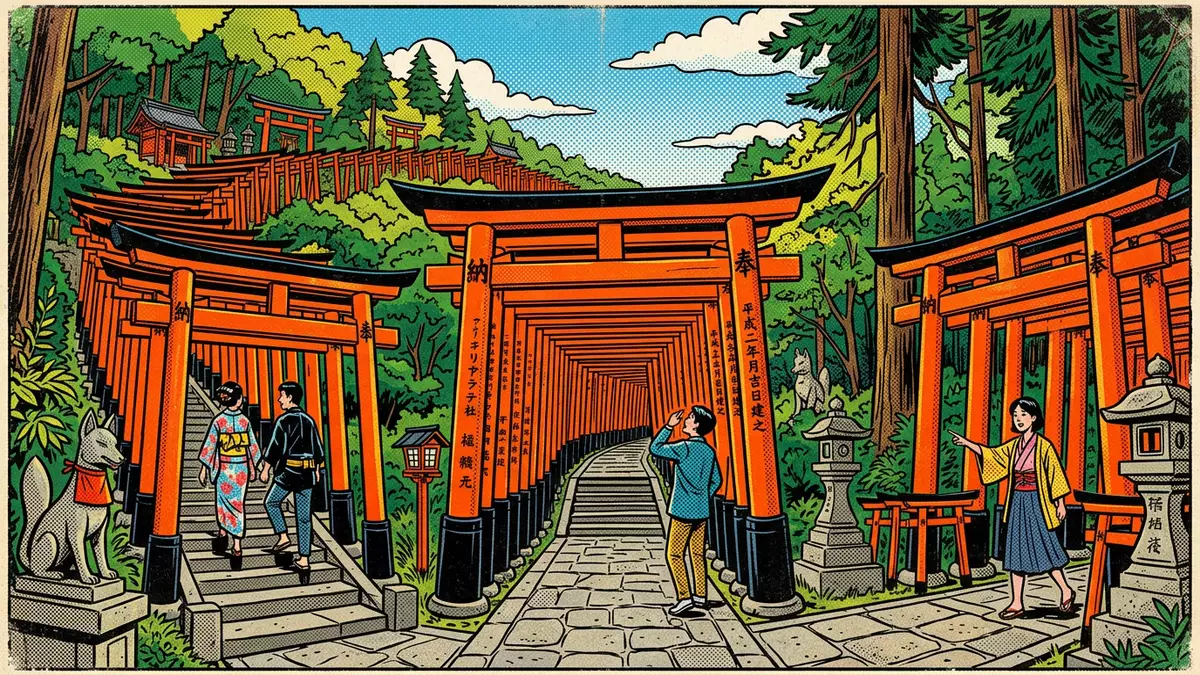
Fushimi Inari Taisha rises on the wooded slopes south of central Kyoto, where vermilion torii gates thread through a hillside shrine complex. Founded in 711 and associated with the Hata clan, it remains a defining Inari shrine in Japan.
Vermilion gates on an Inari hillside
The place is known for its dense sequence of gates and shrine buildings spread across the lower precinct and the mountain path above. The visual rhythm begins at the Romon gate, a large entrance structure linked with Toyotomi Hideyoshi, and continues into a network of smaller sanctuaries.
The shrine’s religious focus is Inari, the deity associated with rice, sake and household prosperity. That association places the complex within a long Shinto tradition, while the hillside setting gives the walk its most memorable spatial contrast. The shrine’s history is tied to Kyoto’s growth after the capital moved here in 794, and its early status is recorded in an early shrine record.
A shrine shaped by layers of patronage
Fushimi Inari Taisha developed over centuries through rebuilding, donation and imperial support. Its main shrine was rebuilt in 1499, and the present precinct preserves forms that belong to different historical phases rather than one single campaign.
The shrine also carried formal standing within the state system in the Meiji era, when it was designated a Kanpei Taisha in 1871. Its main hall is an Important Cultural Property, and the shrine’s long institutional role is reflected in the historical account on the official site and in the shrine’s broader record of preservation.
That history sits alongside one of the clearest associations in Kyoto religious life: the Hata clan and the eighth century foundation date. The official shrine history places the enshrinement of Inari Okami in 711, and a later restoration phase is documented in the same historical sequence at the shrine’s English site.
Walking the mountain precinct
The lower shrine precinct gives way to a mountain route with stone steps, narrower passages and more scattered sub-shrines as the path climbs. The shift from built forecourt to forested slope is one of the place’s strongest physical features.
The route also links different parts of the shrine rather than presenting a single enclosed monument. That sense of movement through layered precincts is part of the site’s identity and is reinforced by the sequence of gate-studded paths running uphill.
Among the shrine’s best-known elements are the Romon gate, the main hall and the gate-lined mountain trails. The main hall dates in its present form to the late fifteenth century, and the surviving ensemble reflects rebuilding after destruction during conflict recorded in the shrine’s history at Japan’s national travel portal.
Visiting Fushimi Inari Taisha: what travellers from Western Europe should know
- The shrine stands in Fushimi-ku, south of central Kyoto, and JR Inari Station sits beside the entrance. Kyoto’s urban rail network also reaches the area through nearby stations.
- The hill route includes stone steps, slopes and longer stretches of path through the mountain precinct. The upper paths become quieter in layout, with more scattered buildings and trees.
- Fushimi Inari Taisha is a Shinto shrine. The official language is Japanese and the currency is the Japanese yen.
- The complex includes both the lower shrine buildings and the climbing route into the wooded hill. The mountain setting is part of the place’s physical character, and the path extends beyond the main courtyard.
Searching for Fushimi Inari Taisha on social platforms
These links open searches for Fushimi Inari Taisha on each platform.
Frequently asked questions about Fushimi Inari Taisha
Where is Fushimi Inari Taisha?
It stands in Fushimi-ku, south of central Kyoto, at the base of a wooded hill. The shrine entrance is beside JR Inari Station.
What does a visit involve?
A visit combines the lower shrine precinct with a climb into the hill through stone steps and gate-lined paths. The layout stretches from formal buildings to quieter upper trails.
What makes it distinctive?
The shrine is defined by its vermilion torii gates, its hillside setting and its long historical association with Inari worship. The mix of gate corridors, shrine buildings and mountain paths gives it a strong physical identity.


