
George Town and the streets shaped by many cultures
Published on 09/24/2026 at 03:08 | Editorial responsibility: Rafael Müller, Editor-in-Chief AD HOC NEWS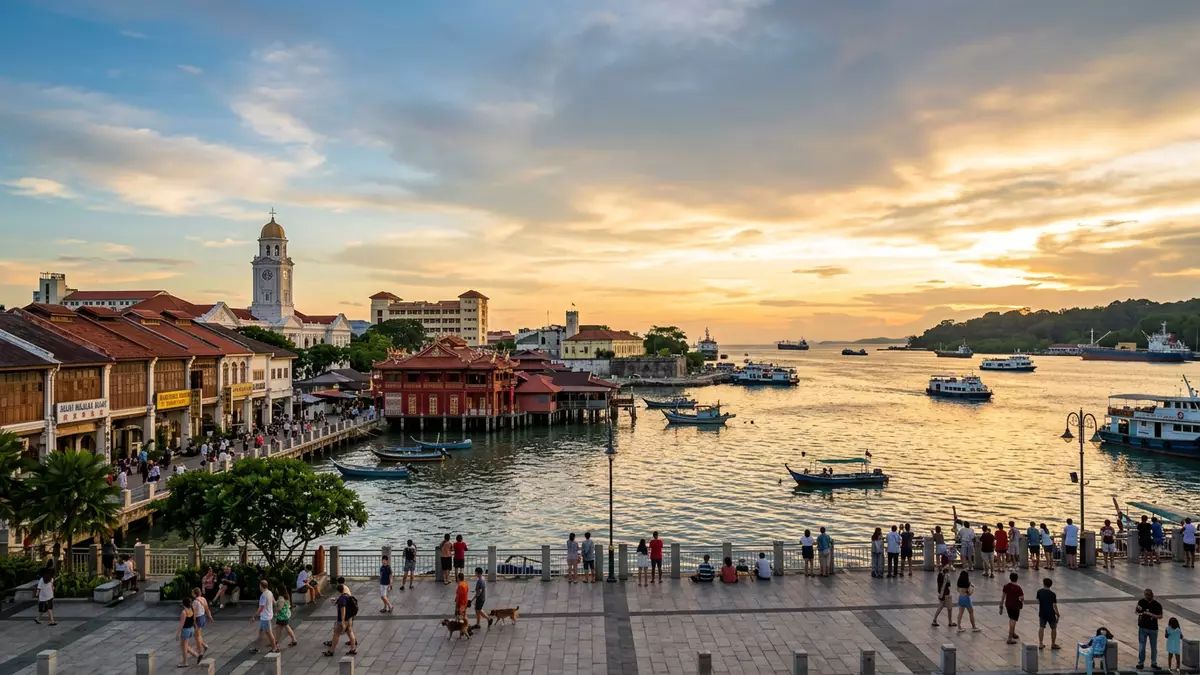
George Town is a city where streets, buildings and living traditions form a single historic landscape. Founded in 1786 by Captain Francis Light of the British East India Company, the Penang capital developed around a port and carries Malay, Chinese, Indian and European influences in its architecture and communities.
George Town’s historic city is larger than a monument
The centre is not organised around one isolated attraction. Residential buildings, commercial premises, religious sites and civic architecture occupy a connected urban area on the northeastern side of Penang Island. The streets preserve the character of a port city that grew through trade across the Straits of Malacca.
George Town forms part of the serial World Heritage property Melaka and George Town, inscribed in 2008. The designation covers cultural exchange, historic urban form and architecture associated with the British era from the end of the eighteenth century.
Its streets contain shophouses, clan houses, mosques, temples, churches and public buildings. Their proximity gives the historic centre a distinctly urban character, with ordinary movement through the city passing between different architectural and religious traditions.
From a British trading port to a multicultural city
Francis Light established George Town as a free port in 1786. The settlement attracted merchants from China, India, Arab countries and neighbouring parts of Southeast Asia, while British administration added another layer to the city’s built environment.
The port’s commercial role shaped the city’s historic identity. George Town became a centre for shipping on routes between India and China, and its population developed into a multi-ethnic society. Trade, worship, housing and business occupied adjoining streets rather than separate urban zones.
Colonial landmarks include Fort Cornwallis, St George’s Church and the Esplanade. St George’s Church dates from 1817, while Fort Cornwallis recalls the settlement’s British military and maritime history. The waterfront remains an important reference point for understanding George Town’s original relationship with the sea.
The city’s economic role changed after its free-port status ended in 1969. Port activity moved towards mainland Penang, while George Town developed a stronger service and cultural economy. Historic buildings continued to serve as homes, businesses, places of worship and public spaces.
Shophouses, clan houses and civic landmarks
George Town’s shophouses are among its most recognisable building types. They combine commercial space at street level with rooms behind or above, and many have covered walkways known as five-foot ways. Repeated façades create long, shaded streets without turning the centre into a uniform architectural district.
The city’s religious buildings add different scales and materials. Kapitan Keling Mosque, the Goddess of Mercy Temple and Hindu temples sit within the broader historic centre, while Chinese clan houses preserve the social history of surname associations and community organisations.
Khoo Kongsi is a major clanhouse complex associated with the Khoo family. Its carved decoration and ceremonial spaces express a form of Chinese community architecture that differs from the terraces of commercial shophouses nearby. The Cheong Fatt Tze Mansion adds another layer, combining Chinese domestic traditions with European architectural features.
Along the Esplanade, City Hall and Town Hall represent the civic architecture of British administration. Fort Cornwallis, St George’s Church and these public buildings give the city a sequence of formal landmarks, while smaller houses, workshops and temples supply the surrounding urban texture.
George Town’s cultural inheritance also includes traditional trades and craft practices. Family businesses have occupied historic premises across generations, keeping commercial activity within the same streets as conservation areas, residences and religious buildings.
Visiting George Town: what travellers from Western Europe should know
- George Town lies on Penang Island in north-western Malaysia. Penang International Airport serves the island, and ferries and road connections link George Town with Butterworth on the mainland.
- The historic centre is an urban district of pavements, covered walkways, streets and compact lanes. Visits involve walking between separate buildings rather than following one enclosed attraction.
- The official language is Malay and the currency is the Malaysian ringgit.
- George Town’s named landmarks include Fort Cornwallis, the Esplanade, St George’s Church, Kapitan Keling Mosque and Khoo Kongsi.
Searching for George Town on social platforms
These links open searches for George Town on each platform.
Frequently asked questions about George Town
Where is George Town?
George Town is the capital of Penang State on Penang Island in north-western Malaysia. Its historic centre faces the Straits of Malacca and connects by ferry and road with mainland Penang.
What can visitors expect in the historic centre?
The centre contains streets of shophouses, clan houses, mosques, temples, churches, civic buildings and waterfront landmarks. The experience is urban and open-air, with separate sites distributed through a compact historic district.
What makes George Town distinctive?
George Town combines a British-founded port city with Malay, Chinese, Indian and European architectural and cultural traditions. Its historic urban landscape became part of the Melaka and George Town World Heritage property in 2008.


