
Glaciar Perito Moreno and the wall of ice above Lago Argentino
Published on 09/22/2026 at 02:38 | Editorial responsibility: Rafael Müller, Editor-in-Chief AD HOC NEWS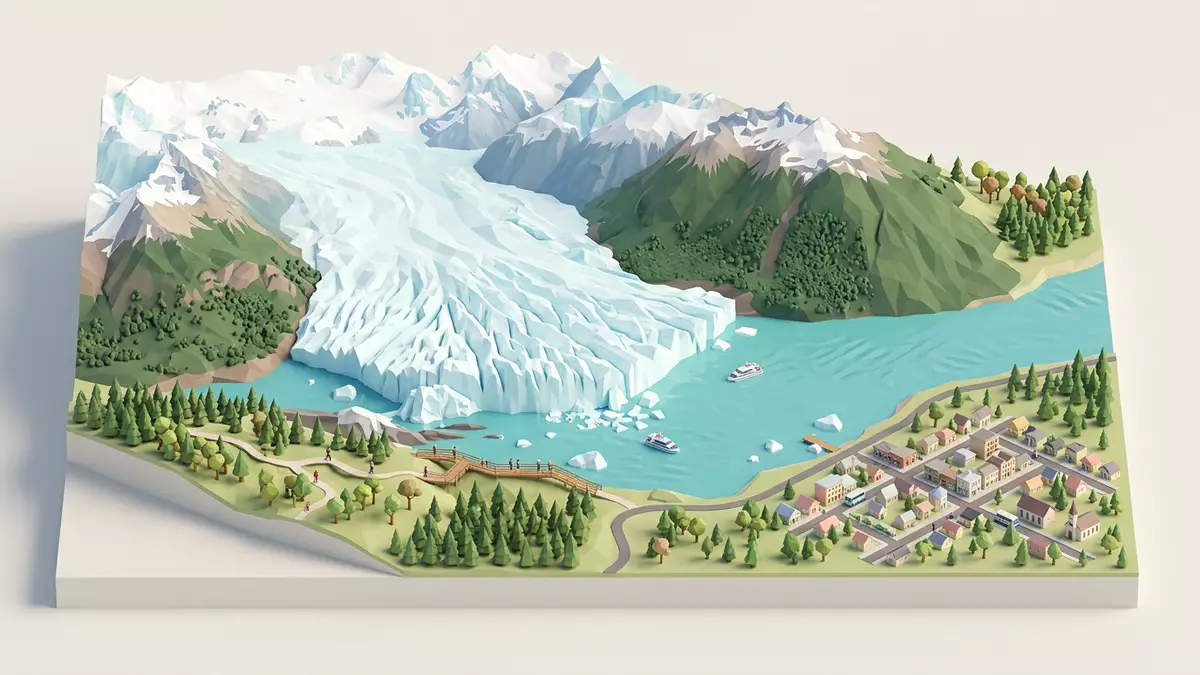
Glaciar Perito Moreno is a vast river of ice in southern Patagonia, descending from the Andes to meet the waters of Lago Argentino in Argentina’s Santa Cruz Province. Its name honours Francisco Pascasio Moreno, an Argentine explorer and naturalist associated with nineteenth?century surveys of Patagonia, and the glacier forms part of Los Glaciares National Park, a protected landscape recognised for its concentration of outlet glaciers and mountain scenery.Francisco Pascasio Moreno
A Patagonian ice wall meeting open water
What most visitors remember first is the glacier’s frontal wall, where old ice reaches the waters of Lago Argentino in a blunt, jagged face. At this terminus the glacier is commonly described as rising around 70 to 80 m (230 to 260 ft) above the lake surface, with a width along the front of roughly 5 km (3 mi), creating a continuous facade of ice that stretches across the narrow Brazo Rico arm of the lake.frontal width of about five kilometres From the shore, the ice forms a broken wall of towers, clefts and overhangs, their surfaces banded by layers of compacted snow that have travelled down from the Southern Patagonian Ice Field.
The meeting of ice and water is set within the wider basin of Lago Argentino, the largest lake entirely within Argentina, fed here by the Brazo Rico arm.Lake Argentino drainage basin The glacier advances from the west towards a rocky peninsula on the southern shore, enclosing Brazo Rico until the flow and meltwater reshape the contact again. This shifting edge has made Glaciar Perito Moreno one of the most studied outlets of the Southern Patagonian Ice Field, because the ice repeatedly forms natural dams across the lake arm and then fails, sending blocks of ice into the water.
From the Southern Patagonian Ice Field into Los Glaciares National Park
Glaciar Perito Moreno is one of dozens of major glaciers that descend from the Southern Patagonian Ice Field, the large expanse of ice shared between Argentina and Chile in the southern Andes.Southern Patagonian Ice Field The glacier’s accumulation zone lies at higher elevations on the ice field, where snowfall compacts into dense glacial ice which then flows downslope toward Lago Argentino. Over time this movement has carved a trough between surrounding mountains, shaping the valley that carries the glacier towards its terminus.
The glacier sits within Los Glaciares National Park, a protected area that was inscribed as a World Heritage Site by UNESCO in the early 1980s for its combination of large outlet glaciers, rugged peaks and Patagonian steppe.World Heritage Site by UNESCO Within the park, Glaciar Perito Moreno occupies the southern sector, opposite the Magallanes Peninsula, and is one of the glaciers most easily reached from a town. Its position west of El Calafate, with road access across the steppe and along the southern shore of Lago Argentino, has made it the best?known face of the park’s glacial landscape.ubicado en el extremo sur, frente a la Península de Magallanes
Scale, structure and a glacier in relative equilibrium
In plan view Glaciar Perito Moreno covers a surface on the order of 250 km², with a length of several tens of kilometres from its highest accumulation zones down to the lakefront.Total area 250 km² Measurements within the glacier indicate an ice thickness that can reach hundreds of metres, with seismic surveys suggesting thicknesses around 700 m (2,300 ft) in central sections of the flow.ice thickness of 700 m These figures underline the glacier’s role as a major local store of fresh water, adding to the broader Patagonian ice reserves.
Unlike many mid?latitude glaciers that have retreated markedly in recent decades, Glaciar Perito Moreno is often described as being close to a state of dynamic equilibrium.state of equilibrium Its terminus has shown a relatively stable position over recorded observations, with the advance and calving of ice balancing accumulation at higher elevations. This stability has allowed wooden walkways and viewing platforms to be laid out opposite the ice wall without the rapid retreat seen at some other glacier fronts, giving visitors long?term vantage points from which to watch blocks of ice fracture and fall into the lake.
Visiting Glaciar Perito Moreno: what travellers from Western Europe should know
- Glaciar Perito Moreno lies west of El Calafate in Argentina’s Santa Cruz Province and is reached by road that follows the southern shore of Lago Argentino into Los Glaciares National Park.
- The main viewpoints stand on solid ground opposite the glacier’s terminus, linked by a network of walkways that involve several flights of steps and some longer ramps over undulating terrain.
- The glacier sits within Los Glaciares National Park in southern Patagonia, where Spanish is the official language and the currency is the Argentine peso.
- Entry requirements depend on your nationality; UK travellers can check the FCDO travel advice at gov.uk/foreign-travel-advice, Irish travellers the Department of Foreign Affairs at ireland.ie.
Searching for Glaciar Perito Moreno on social platforms
These links open searches for Glaciar Perito Moreno on each platform.
Frequently asked questions about Glaciar Perito Moreno
Where is Glaciar Perito Moreno located?
Glaciar Perito Moreno lies in Los Glaciares National Park in Argentina’s Santa Cruz Province, west of El Calafate and beside the Brazo Rico arm of Lago Argentino.Los Glaciares National Park
What can visitors expect when viewing the glacier?
Visitors encounter a broad wall of ice rising tens of metres above the lake, viewed from walkways on the opposite peninsula, with lake water, mountains and Patagonian steppe forming the wider setting.
What makes Glaciar Perito Moreno distinctive among Patagonian glaciers?
Its combination of substantial dimensions, relative stability of the terminus position and accessible viewpoints within a World Heritage?listed national park gives Glaciar Perito Moreno a particular standing among the outlets of the Southern Patagonian Ice Field.Patrimonio de la Humanidad


