
Gosudarstvennyi Ermitazh and the Winter Palace on the Neva
Published on 09/17/2026 at 15:05 | Editorial responsibility: Rafael Müller, Editor-in-Chief AD HOC NEWS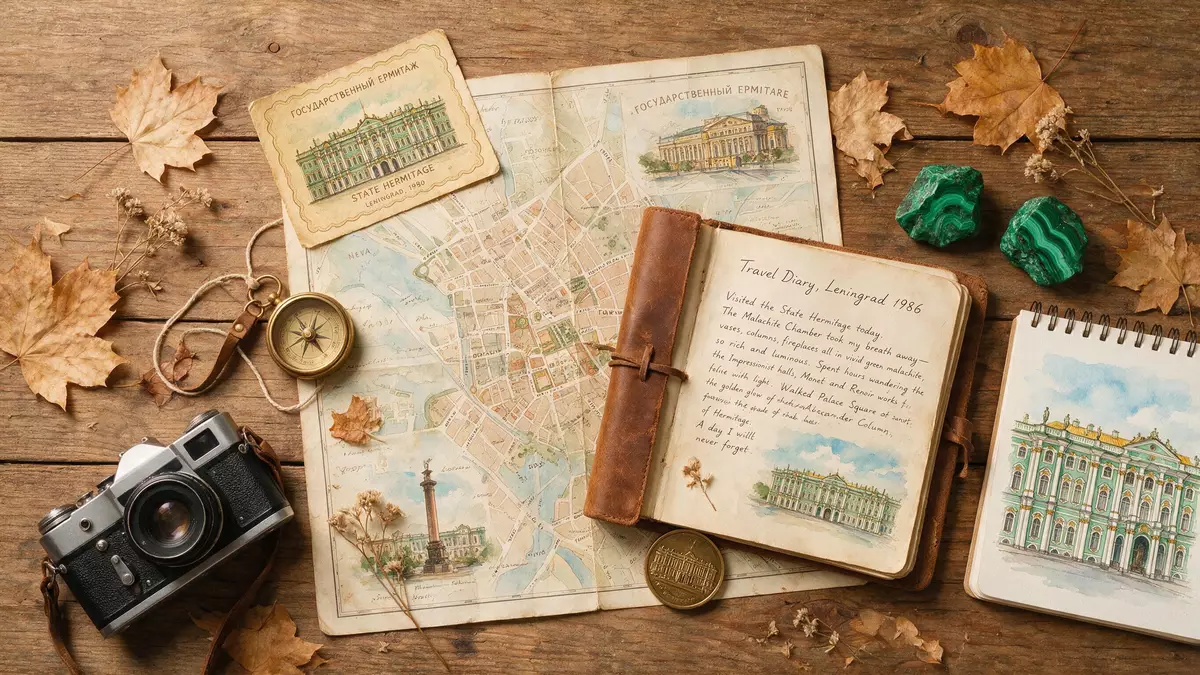
Gosudarstvennyi Ermitazh, known in English as the State Hermitage Museum, is an immense museum of art and culture housed in the former Winter Palace and adjoining Hermitage buildings on the Neva River in Sankt Petersburg, Russia. Founded in 1764 under Empress Catherine the Great as a court collection of European paintings, it has grown into one of the largest art museums anywhere, filling a continuous row of historic palaces with galleries, grand state rooms and intimate cabinets.State Hermitage Museum
The palace museum on Palace Embankment
The main complex of Gosudarstvennyi Ermitazh occupies a prominent stretch of Palace Embankment in the historic centre of Sankt Petersburg, directly beside the wide Neva River. The ensemble stands at Palace Embankment, 34, in the Dvortsovy Municipal Okrug of the Central District, facing the waterway along which the city’s eighteenth-century core took shape.official address at Palace Embankment, 34 From the river, the row of palace facades forms a long green-and-white front punctuated by columns, sculptural decoration and high window bands rising above the embankment wall.imperial buildings along the Neva River embankment
The best-known part of this ensemble is the Winter Palace, completed in 1762 as the principal imperial residence of Russia in a richly ornamented Baroque style by the Italian architect Bartolomeo Rastrelli for Empress Elizabeth.Winter Palace completed in 1762 Its long facade faces Palace Square on one side and the Neva embankment on the other, tying the museum physically to the ceremonial centre of the city. Behind and beside it, a chain of buildings known as the Small Hermitage, the Old (Great) Hermitage, the New Hermitage and the Hermitage Theatre extend along the embankment, together forming the heart of the museum complex.museum complex occupies seven buildings
From Catherine’s private gallery to a vast collection
The story of Gosudarstvennyi Ermitazh begins in 1764, when Catherine the Great acquired a large group of paintings assembled by the Berlin merchant Johann Ernst Gotzkowsky, originally intended for Frederick the Great of Prussia.founding in 1764 under Catherine the Great These works were installed in rooms adjoining the Winter Palace, forming a private gallery that gave the museum its name: an “hermitage” in the sense of a retreat for viewing art. Over the following decades Catherine expanded the collection substantially, adding paintings, sculpture, decorative arts and antiquities from across Europe and beyond.
During the nineteenth century the museum gradually moved from court collection to public institution. The New Hermitage, designed by the German architect Leo von Klenze as a purpose-built museum, was constructed between 1838 and 1852 and ceremoniously opened to the public in 1852 as the Imperial Museum.New Hermitage opened in 1852 Over time the collections grew through further acquisitions, transfers from other imperial holdings and later state collections, so that Gosudarstvennyi Ermitazh now holds several million objects ranging from Palaeolithic tools and classical sculpture to nineteenth- and twentieth-century paintings and decorative arts.more than three million objects
Architecture and interiors of the Hermitage ensemble
Beyond its collections, Gosudarstvennyi Ermitazh is notable for the architecture of its palace complex. The Winter Palace presents an exuberant Baroque composition with tiers of paired columns, projecting bays and rich sculptural ornament that create a strong rhythm along both Palace Square and the river. Inside, a sequence of grand state rooms, staircases and galleries survives from the imperial period, adapted for museum use while retaining their decorative schemes.
Other parts of the ensemble reflect later architectural styles. The New Hermitage designed by Leo von Klenze on Millionnaya Street incorporates a prominent portico carried by tall granite figures of Atlantes, signalling its role as a public museum entrance.portico carried by Atlantes The Hermitage Theatre forms another wing of the complex, adding a specialised performance space to the chain of buildings along the embankment.Hermitage Theatre as part of the complex Together, these structures create a continuous architectural ensemble in which visitors move from palace interiors to purpose-built galleries and performance spaces without leaving the museum.
Visiting Gosudarstvennyi Ermitazh: what travellers from Western Europe should know
- Gosudarstvennyi Ermitazh stands on Palace Embankment beside the Neva River in the Central District of Sankt Petersburg, with the Winter Palace and other Hermitage buildings forming a continuous frontage; metro stations such as Admiralteyskaya, Nevsky Prospekt and Gostiny Dvor lie within walking distance.
- The main complex occupies historic palaces with broad staircases, long corridors and extensive galleries, so a visit involves covering substantial distances indoors and negotiating stairways between different floors.
- The museum lies in Sankt Petersburg, in the north-west of Russia, where winter conditions bring low temperatures and snow, while the White Nights period around midsummer is characterised by very late sunsets and extended twilight.
- Russian is the official language and the national currency is the rouble.
- Entry requirements depend on your nationality; UK travellers can check the FCDO travel advice at gov.uk/foreign-travel-advice, Irish travellers the Department of Foreign Affairs at ireland.ie.
Searching for Gosudarstvennyi Ermitazh on social platforms
These links open searches for Gosudarstvennyi Ermitazh on each platform.Frequently asked questions about Gosudarstvennyi Ermitazh
Where is Gosudarstvennyi Ermitazh located in Sankt Petersburg?
Gosudarstvennyi Ermitazh stands on Palace Embankment beside the Neva River in the Central District of Sankt Petersburg, with its address recorded as Palace Embankment, 34.
What can a visitor expect inside the museum complex?
Visitors move through palace interiors and museum galleries containing art and artefacts from many periods, with grand state rooms, staircases and themed collections spread across several interconnected buildings.
What makes Gosudarstvennyi Ermitazh distinctive among major museums?
It combines one of the world’s largest art collections with an extensive ensemble of imperial palaces, including the Baroque Winter Palace and the purpose-built nineteenth-century New Hermitage, all linked along the Neva embankment.


