
Granada, Nicaragua’s colonial city between lake and volcano
Published on 08/26/2026 at 11:47 | Editorial responsibility: Rafael Müller, Editor-in-Chief AD HOC NEWS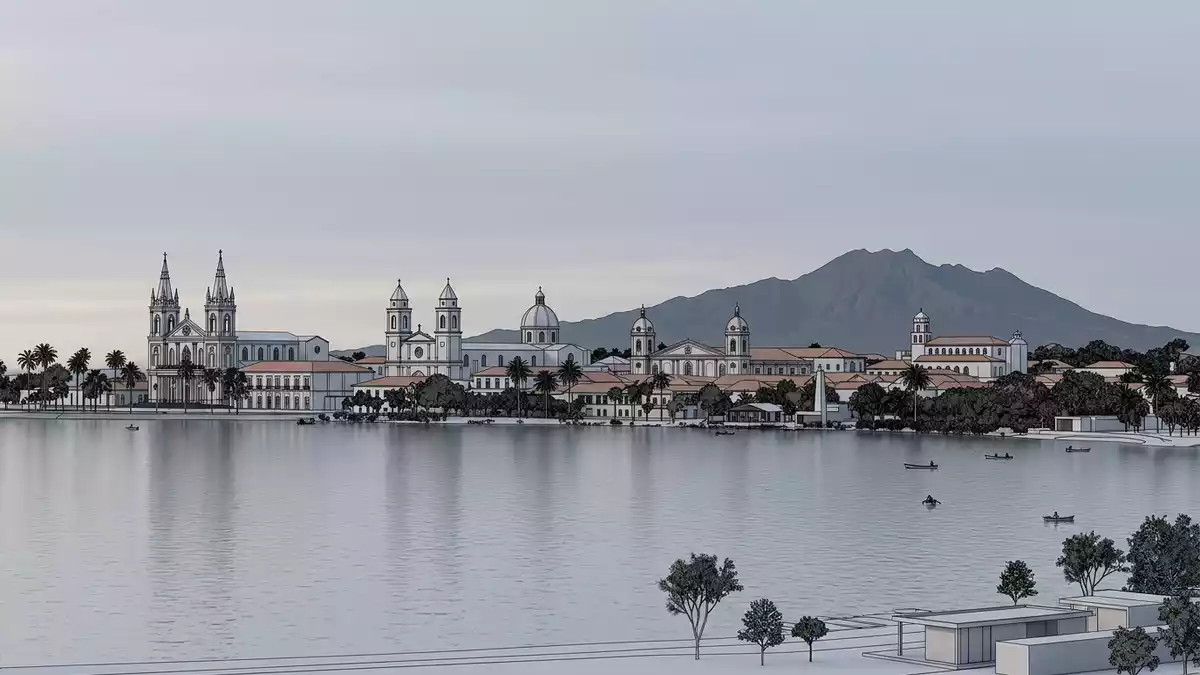
Granada in Nicaragua is a colonial city laid out between Lake Nicaragua and the slopes of Mombacho volcano, with streets of colourful houses and church towers rising behind heavy wooden doors. Founded in 1524 by the Spanish conquistador Francisco Hernández de Córdoba, it is among the earliest European-founded cities on the mainland Americas to remain in its original location, and its historic core still follows a Spanish colonial grid of straight, intersecting streets.Founded in 1524 by Francisco Hernández de Córdoba
A city of courtyards, façades and church towers
Granada’s centre is built on a grid plan that reflects Spanish colonial town-making, with long, straight streets running between low buildings and opening into squares and small parks.Granada is built on a grid Behind brightly painted façades, many houses are organised around interior courtyards, combining thick walls and tiled roofs with shaded arcades and planted central spaces.Cool interior courtyards with gardens and fountains
The skyline is marked by church towers and domes, including La Merced Church, the San Francisco complex and the canary-coloured Catedral de Nuestra Señora de la Asunción beside Parque Central.Catedral de Nuestra Señora de la Asunción beside Parque Central The cathedral faces the city hall and historic mansions such as La Gran Francia, giving the main square a frame of neoclassical and colonial façades.La Gran Francia dating back to the founding of the city Many buildings combine colonial and later styles, but the low, arcaded fronts and pastel colours give the centre a unified character that recalls Andalusian-influenced architecture.
Lake Nicaragua, the islets and the shadow of Mombacho
Granada lies on the western shore of Lake Nicaragua, also known locally as Cocibolca, where streets run down towards the water and the lakefront forms a separate zone with jetties and simple docks.Granada stretches along the west coast of Lake Nicaragua Offshore, a scatter of small volcanic islands known as the Islets of Granada spreads out from the Asese peninsula, forming a low archipelago close to the city’s lakeside.Islets of Granada in Lake Nicaragua near the city
The islets were formed when part of Mombacho’s cone collapsed into the lake thousands of years ago, leaving rocky islands with trees and small buildings dotted across the water.Isletas de Granada as volcanic islands off Granada Among them stands Fort San Pablo, an eighteenth-century defensive structure built to protect Granada’s lakeside approaches from attacks during the colonial period.San Pablo fort built to protect Granada from pirates From the city and the lake, the bulk of Mombacho volcano rises to the west, giving Granada a backdrop of forested slopes and a clear sense of its position between high ground and inland sea.
Five centuries of colonial history and identity
Granada was founded in the early sixteenth century and has been continuously inhabited since then, making it one of the oldest colonial cities in Latin America to stand on its original site.Oldest continuously inhabited city in Central America The city was an important hub for trade through Lake Nicaragua towards the Caribbean and the Pacific, and its wealth drew both merchants and raiders during the colonial era.Granada as an active centre of commerce from the sixteenth century
Granada’s built fabric reflects this long history. Churches such as the San Francisco Convent and Church, founded in 1529, stand alongside later fortifications like La Pólvora and San Pablo.San Francisco Convent and Church founded in 1529 The city is widely known within Nicaragua by the nickname “La Gran Sultana”, a reference to its Andalusian and Moorish-influenced appearance, with arcades, courtyards and decorative details that link Central America visually back to southern Spain.Known as “La Gran Sultana” for its Andalusian appearance Despite damage and rebuilding during conflicts such as the National War in the nineteenth century, Granada has retained a broad ensemble of colonial and neoclassical architecture across houses, streets and squares.Colonial, neoclassical and baroque architecture visible in houses and churches
Visiting Granada: what travellers from Western Europe should know
- Granada lies in western Nicaragua on the shores of Lake Nicaragua, south-east of Managua, and is reached by road from the capital and other major Nicaraguan cities.
- The historic centre is largely flat, with cobbled and paved streets; walking involves short distances across squares and between churches, with some internal staircases in tower viewpoints.
- The lakeshore area stretches away from the colonial grid, with simple paths, docks and jetties along the water and boat access to the nearby islets.
- The official language is Spanish and the currency is the Nicaraguan córdoba.
- Entry requirements depend on your nationality; UK travellers can check the FCDO travel advice at gov.uk/foreign-travel-advice, Irish travellers the Department of Foreign Affairs at ireland.ie.
Searching for Granada on social platforms
These links open searches for Granada on each platform.
Frequently asked questions about Granada
Where is Granada in Nicaragua?
Granada is a colonial city in western Nicaragua, situated on the western shore of Lake Nicaragua and south-east of the national capital, Managua.
What can travellers expect on a visit to Granada?
A visit centres on walking through a historic grid of colourful streets, exploring courtyards and churches, spending time in Parque Central and reaching the lakefront and nearby islets.
What makes Granada distinctive among Nicaraguan cities?
Granada is distinctive for its long colonial history, ensemble of low, pastel colonial and neoclassical buildings, lakeside position and the volcanic islets scattered just offshore.


